Tuesday, 13 October 2026

Warehouses that are unfit for modern supply chains could cost India its emerging logistics edge.
Warehouses that are unfit for modern supply chains could cost India its emerging logistics edge.
 Lalita Subrahmanyam
Every time an Indian e-commerce delivery arrives late, or a pharma shipment spoils in transit, the culprit is rarely the truck driver. It is the warehouse it came from. Legacy warehouses create a clear gap in infrastructure quality and execution, as they fail to improve throughput when the demand spikes and calls for higher efficiency. Most of them are manually operated. This means a dependency on labour that affects results when seasonal spikes demand better performance. On the other hand, automated Grade-A logistics parks scale up as needed.









Legacy warehouses are also isolated, fail to support new demand models, lack the kind of networking that newer, corridor-led warehouses enjoy, and invite compliance-driven exclusions from global partners. In many ways, inventory visibility, rapid redistribution, and automation are becoming the defining capabilities of modern logistics infrastructure.
For decades, logistics was the part of India's economy that absorbed the consequences of poor planning. That is no longer acceptable or affordable. The sector has crossed an inflection point, moving from a structural vulnerability to a source of competitive advantage. It now sits at the centre of how India manufactures, distributes and delivers at scale.
Fragmented and fragile, the warehousing systems in India have suffered many disruption shocks, whether due to the climate, shutdowns during the pandemic, labour shortages and even fuel volatility. The aim now is to create large-format logistics parks that are compliant and automation-ready, unlike the legacy storage facilities that could never offer scalability, throughput certainty and operational resilience.

Initiatives like the PM GatiShakti, Bharatmala Pariyojana, Dedicated Freight Corridors, and the rollout of Multi-Modal Logistics Parks (MMLPs) are all undertaken by the government to accelerate this transition. The sector is attracting institutional capital, with an aim to create logistics platforms that demonstrate long-term relevance, network effects, and execution readiness. It is prioritising the reduction of transit friction and enabling optimisation at the network level.
The focus is not on square footage. It is about control over inventory velocity, service-level predictability, labour risks and cost volatility. It’s about the strategic benefits of creating Grade-A logistics parks that enable storing, sorting and routing goods with high confidence and low stress. This matters because India suffers a logistics deficit that is structural, not cyclical.
Grade-A logistics parks are more than just passive storage facilities. They act as valuable nodes in a network that absorb variability in production, transportation, and demand as they track inventory velocity and volume. They are designed with the operational capability to quickly redirect the inventory to regions with a shortfall, reallocate SKUs to areas with demand spikes and support demand even when pressures run high.
This enables e-commerce players to have visibility into inventory levels at a system-wide level, and allows them to maintain them closer to the hubs of consumption. Manufacturers across pharma, electronics, automotive and FMCG gain the ability to reduce working capital cycles with warehouses near them ready to dispatch inventory faster, or export finished goods quickly.
When pressure built from export surges, festive/discount sales, or supply chain disruptions, legacy warehouses turn into bottlenecks with their dependency on manual labour, longer turnaround times for trucks, and their inability to adopt any kind of automation. Their operational inefficiencies expose their users to higher compliance, safety and insurance risks, and increase their vulnerabilities.
Modern logistics parks resolve many of these issues by offering higher clear heights, with optimised column grids, superior dock-to-floor ratios, redundant power systems, and integrated fire and safety compliance.
They make it possible for operators to scale throughput without proportional increases in either cost or headcount. These facilities are designed with an eye to operational KPIs like truck turnaround times, dock-to-floor ratios for better throughput, and compliance and insurance cost reductions. They enable growth through automation and retrofitting based on evolving operational needs. More than premium specifications, they offer predictability under pressure.
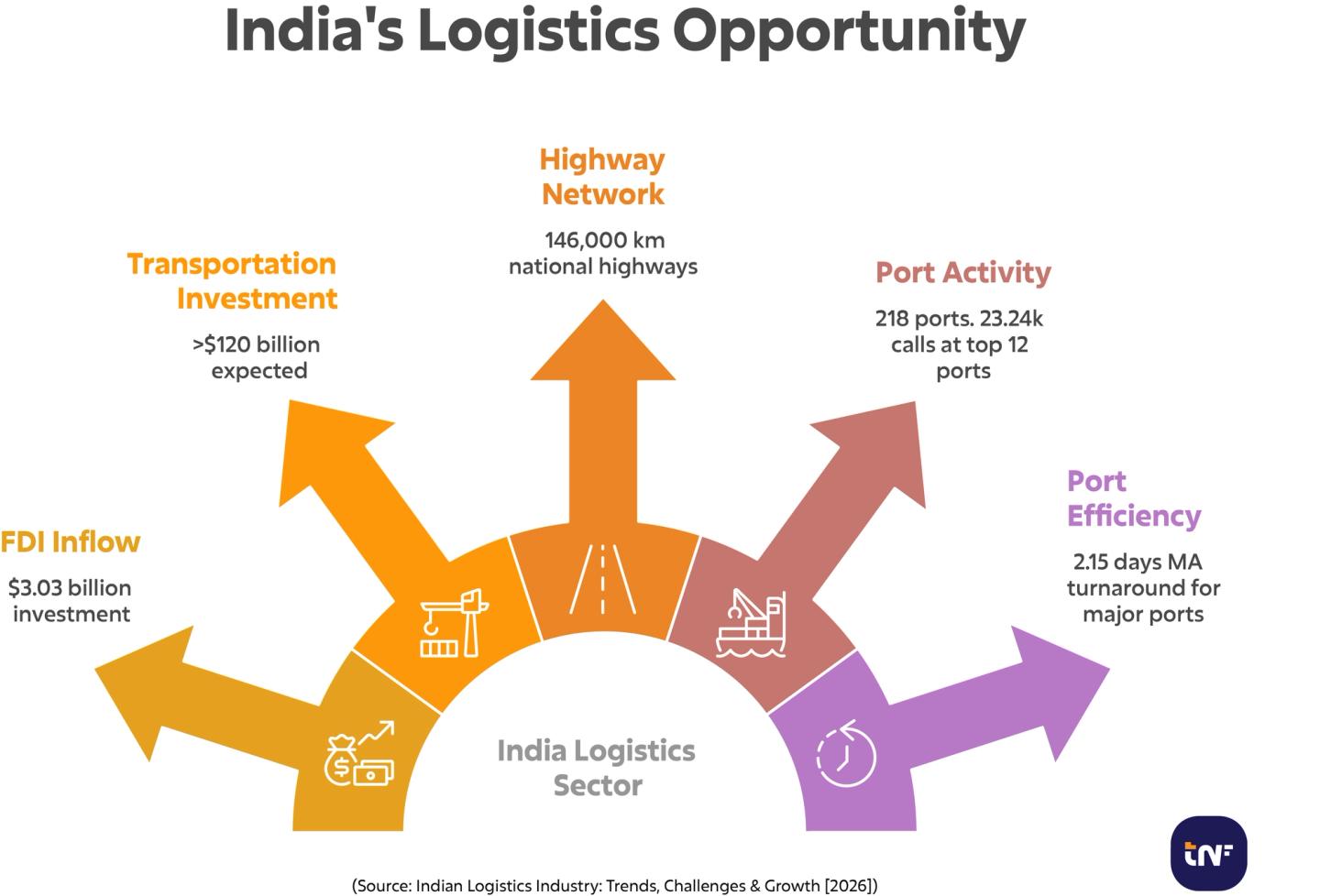
India's logistics sector is large, fast-growing, and structurally underserved. It is a combination that rarely stays unaddressed by capital for long.
(Source: Indian Logistics Industry: Trends, Challenges & Growth [2026])
Availability of labour is a real constraint, especially when peak seasons or tightened compliance requirements demand enhanced deliverables. Skill gaps, rising wages and attrition affect the reliability of labour and also prove detrimental to efficient performance. Automation is the only solution to avoid missed SLAs, penalties from anchor clients and losing one’s preferred status.

Operators are increasingly adopting automated storage and retrieval system (AS/RS) solutions and shuttle systems to overcome labour dependency. Warehouses integrated with transportation management systems (TMS) and enterprise platforms offer real-time visibility into operations enabling consistent service levels in delivery.
Automation translates to efficiency in operations and also provides the logistics facility with the necessary resilience to manage demand spikes with accuracy during peak seasons or extended operating cycles. AS/RS, robotics and conveyor-based sorting can increase picking productivity by up to three times, while reducing manual handling errors and improving order accuracy.
Grade-A logistics parks support this shift through integrated digital platforms like warehouse management systems (WMS), transportation management systems (TMS), and enterprise resource planning (ERP) systems. The use of these systems provides real-time visibility into inventory movement, reduces truck turnaround times, and allows operators to scale throughput without corresponding increase in labour or operating costs.
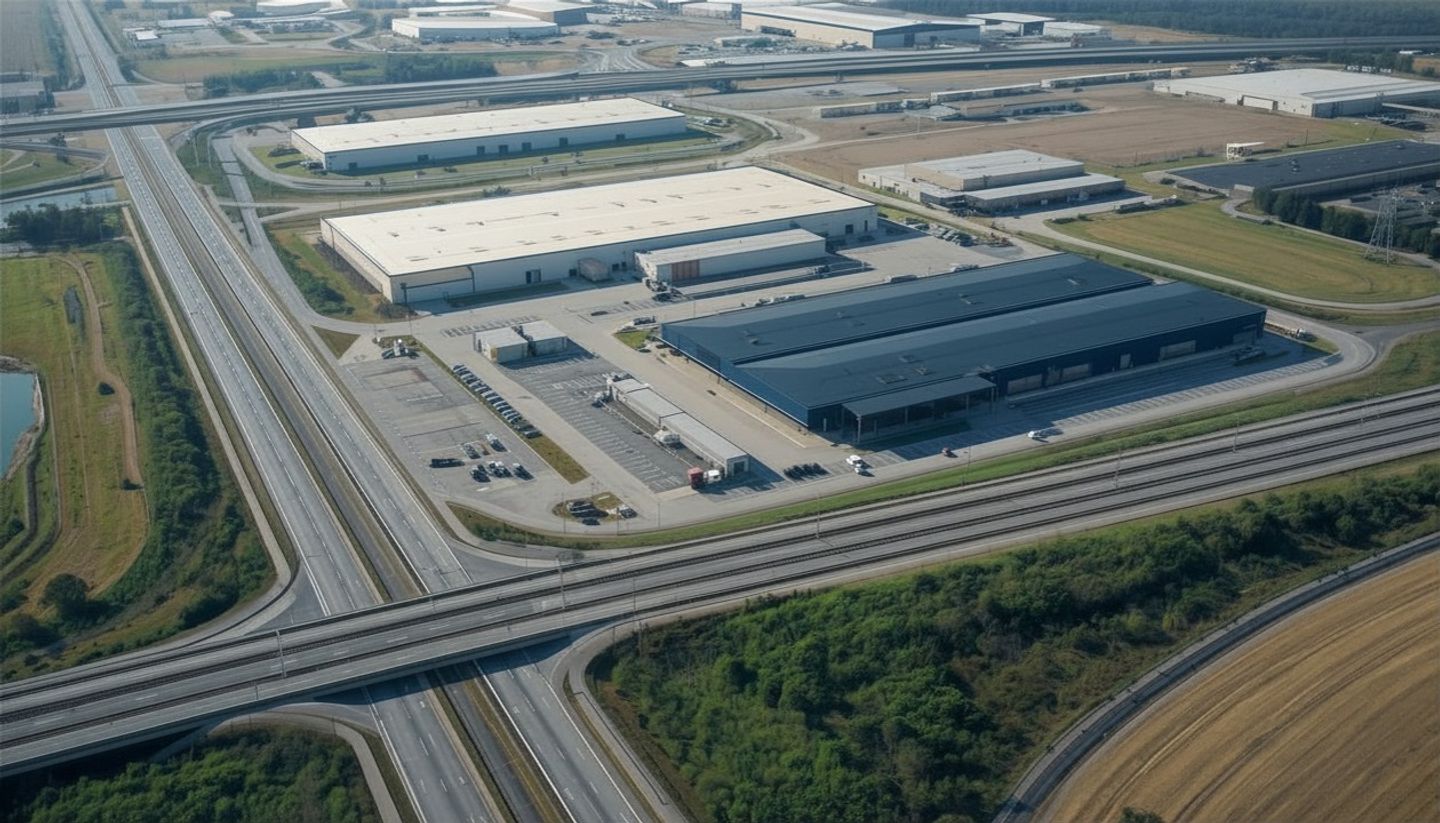
India's logistics growth will continue to be anchored to a network of established and emerging clusters, each serving a distinct strategic role in the supply chain. These clusters are taking shape at the intersection of consumption patterns, Dedicated Freight Corridors (DFCs), expressways, and ports. They will function around primary control hubs near metropolitan areas, which will continue to anchor national distribution. On the other hand, secondary nodes in tier 2 cities offer shock-absorption value during disruptions by making rerouting and redistribution possible. Export gateways, like Sanand, Chakan, Sriperumbudur and Oragadam, support manufacturing supply chains that link to global markets.
Logistics hubs in Jaipur, Kolkata, Lucknow and Kochi function as e-commerce-driven velocity hubs, to enable faster last-mile fulfilment and reduce pressure on core hubs within the metros. Such clusters promote efficiency in operations, balancing cost, speed and risk dynamically, by building a redundant and resilient supply chain.
As India is looking at industrial and logistics real estate as one of the most sought-after asset classes, Grade-A logistics parks are emerging as the most premium and preferred platforms. This continues even during a period of macroeconomic uncertainty, given how they enable operational relevance, ensure tenant stickiness and function as key nodes in a broader logistics network.
Logistics parks linked to India’s national corridors are increasingly finding favour with institutional investors, given their multimodal infrastructure, and ability to support automation and compliance at scale.
As the execution certainty ensures tenant stickiness, they offer steady yields to investors, drawing in further capital into Grade-A facilities.
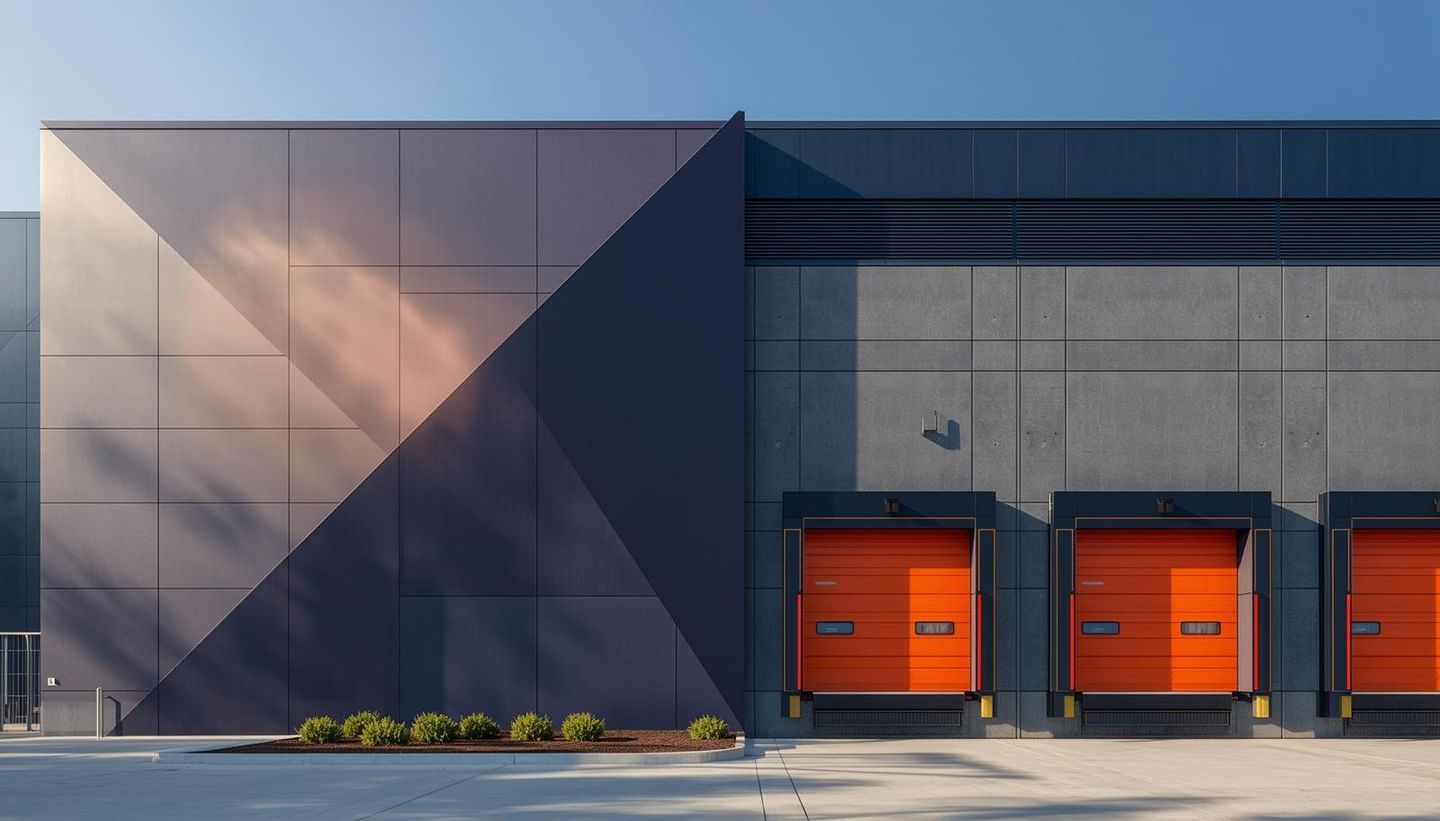
Operators are not looking for the cheapest warehouse any more as Grade-A logistics parks shift focus to safety, speed, and efficiency by assuring operators of reduced uncertainties over labour, compliance, throughput, and timely deliveries. With supply chains facing pressure being the norm, the ability to absorb shocks, reroute inventory, avoid disruptions, and scale as needed offers competitive edge to Grade-A logistics parks.
Logistics operators: Audit your warehouse against Grade-A standards before your next peak cycle. Throughput capacity, dock ratios, WMS integration and power redundancy are the baseline your anchor clients will require within two years.
Investors: Score every logistics asset on three non-negotiable criteria: automation-readiness, freight corridor proximity and tenant mix diversity. Assets that score poorly on all three will underperform in the next demand cycle regardless of location or lease structure.
Real estate developers: Build at corridor intersections, not on the periphery of them. The Grade-A premium in India's logistics market is paid for network position. Facilities that sit between a Dedicated Freight Corridor, a consumption hub and a manufacturing cluster will attract institutional tenants.
Disclaimer: Content provided by TNF India is for informational purposes only. While we aim to provide accurate data and strategic insights, information is subject to rapid market and technological shifts. This content should not replace independent due diligence or professional consultation. TNF India bears no responsibility for any actions taken, or financial losses incurred, in reliance on this material.
What an owner should receive at handover, and what actually arrives.