Tuesday, 13 October 2026

The bottleneck is no longer construction, it is a mix of fuel quality, operational systems and suboptimal contracts.
The bottleneck is no longer construction, it is a mix of fuel quality, operational systems and suboptimal contracts.
 Lalita Subrahmanyam
India has spent a decade building bioenergy capacity and largely succeeded. It now has 11.58 GW installed with plants commissioned, turbines in place, and agreements signed. The problem is that commissioning is where the policy framework stops and where the hard operational work begins. Across the country, waste-to-energy plants are running at a fraction of their design output, held back not by missing technology but by wet feedstock, unenforceable municipal contracts and unviable supply chains. So, the capacity milestone has been reached, the return on investment (ROI) case has not.
Real value from bioenergy can be derived only when energy costs are stable, fossil fuel exposure is low to nil and there is access to baseload thermal energy. India's bioenergy projects need to focus now on operational stability and ROI to deliver real value to the ecosystem. Only then can the programme mitigate climate change effects, generate rural employment and spur economically inclusive development.









50%-60% - Operating expenditure for a standalone agricultural biomass plant
Waste-to-energy and biomass do not complement renewables as effectively unless fuel availability is stabilised. Most waste-to-energy (WtE) projects are underperforming today due to:
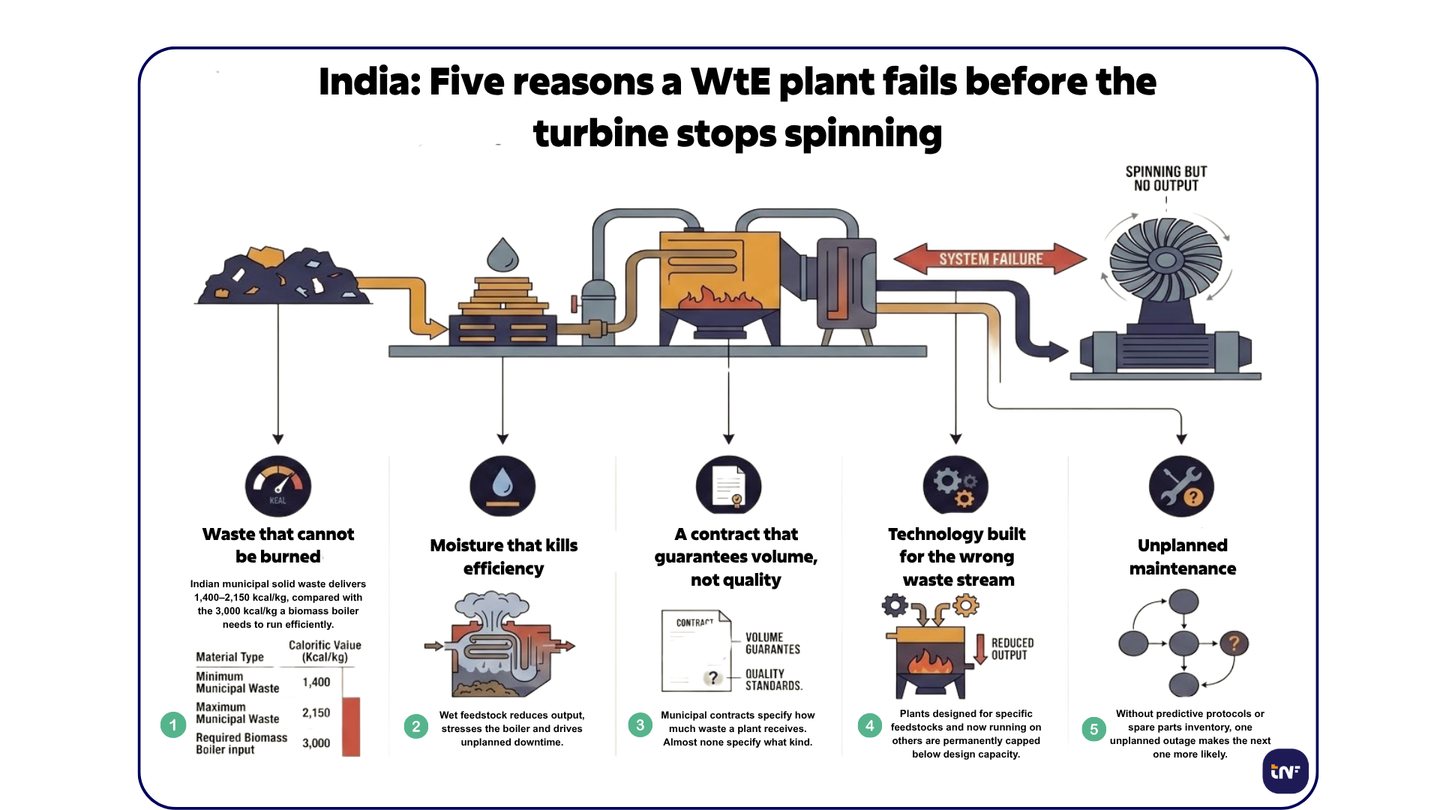
Tracking metrics like operational efficiency (approximately 0.70 MWh per tonne as a design-case benchmark at 400°C and 40 bar pressure) and system uptime should be undertaken along with measurement of feedstock's lower heating value (LHV) (MJ/kg or kcal/kg), moisture content (%), ash content (%), combustible fraction (%) and C/N ratio (carbon-to-nitrogen) depending on its constitution. Contractually enforcing these standards would help improve plant performance. All of these affect operations and reduce energy output.
Given the gap between energy output and policy targets, metrics like installed vs. operating capacity, average PLF and downtime frequency matter because they directly influence energy delivered and revenue realised. Such plant performance KPIs frame WtE projects without considering root causes like feedstock inconsistency, technology misfit and logistics failure. Operations face unplanned downtime due to fuel quality variation, ash handling failures, boiler fouling and slagging and delayed spare parts. Bioenergy uptime must be earned operationally and offers no guarantees.
What an owner should receive at handover, and what actually arrives.