Tuesday, 13 October 2026
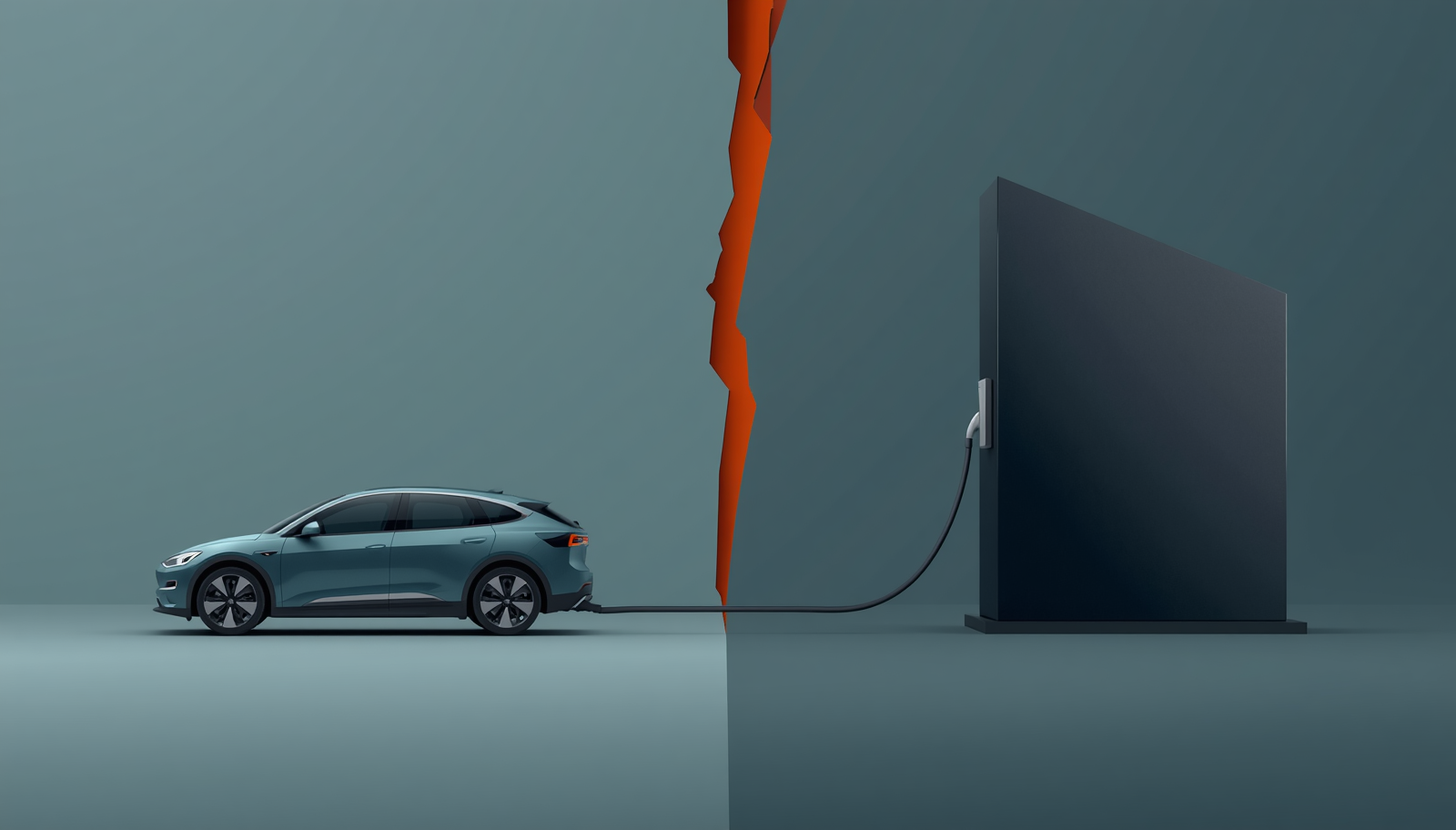
India is building EV chargers fast, but charger reliability and network issues are killing consumer confidence.
India is building EV chargers fast, but charger reliability and network issues are killing consumer confidence.
 Priya Dialani
Data note: Most supporting data in this article draws on studies from the US and Europe, where structured uptime reporting exists; comparable India-specific benchmarks remain limited but directionally consistent.
Electric vehicles (EVs) deliver on their promise of instant torque, quieter rides, and lower running costs. The problem emerges the moment an owner pulls up to a public charging station, plugs in, and nothing happens. This is not uncommon. For a growing share of Indian EV owners, it is an increasingly familiar frustration. What was once framed as range anxiety has evolved into a more operationally specific problem: charging anxiety.
A 2023 survey by Parkopedia, conducted across EV drivers in the US, Germany, France, the UK, and Italy, found that more than 90% felt anxious about finding a charger away from home. In the US, a found that drivers could successfully recharge at non-residential charging stations only 78% of the time.






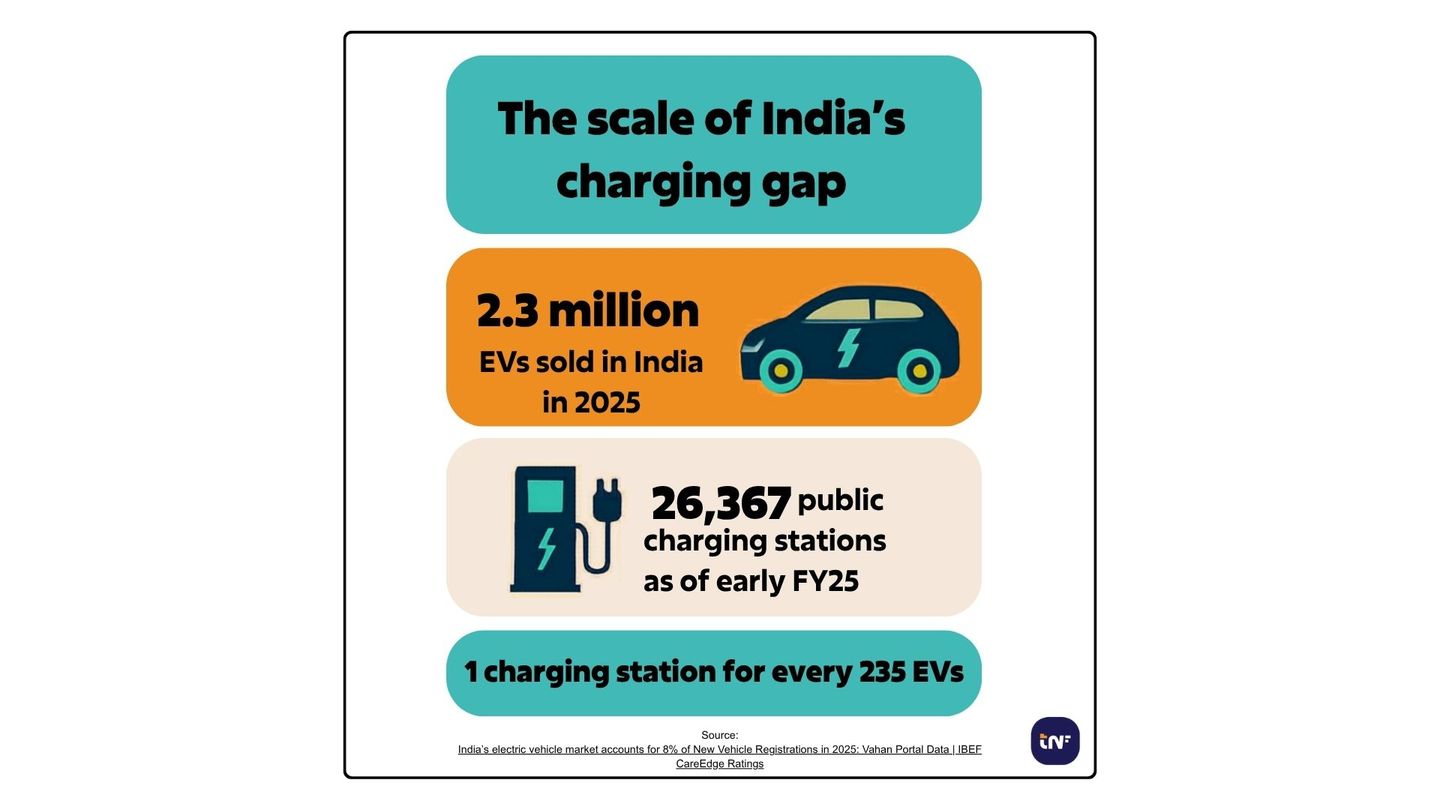
From an Indian perspective, according to CareEdge Ratings (July 2025), as of early FY25 (April–June 2024), only 26,367 public charging stations were operational, one for every 235 EVs on the road.
Accessibility is the starting problem; reliability is the next.
Network connectivity failures, defective hardware, supply chain gaps, and grid instability are the four primary contributors to charger downtime.
Source:
EV charging stations work as networked Internet of Things (IoT) assets. Each station must communicate continuously with a central charge point management system (CPMS) to authenticate users, process payments, initiate sessions, and monitor energy usage. The driver-facing app is the interface that begins this chain. A failure at any point breaks the session entirely.
According to the Qmerit Electrification 2030 white paper, based on network data monitored across the US, connectivity failures, specifically, a station's inability to reach its network for authentication, account for 55% of all failed charging attempts. Payment processing failures share the same root cause. Without network connectivity, transactions cannot be verified.

India relies heavily on imports for critical electric vehicle supply equipment (EVSE) components, including connectors, charging guns, and associated hardware. When a component fails, the absence of a domestic supply chain means maintenance turnaround times can stretch significantly, leaving stations inoperative until replacement parts arrive.
Dedicated EV service centres in India remain limited, and component availability is largely managed by aftermarket providers rather than original equipment manufacturer (OEM) supply chains. After-sales services specialising in EVs are developing, but coverage is insufficient relative to the pace of deployment. The lack of standardised charging hardware across India's network further complicates efforts to build a localised service ecosystem. This problem will compound as installation volumes scale.

Stable power supply is a non-negotiable condition for charger uptime. Without it, stations experience frequent outages, voltage fluctuations, and distribution network overload. Grid instability can cause chargers to shut down entirely or trip breakers.
DC fast chargers, in turn, adversely affect grid power quality. They generate harmonic distortion that damages electrical equipment and places excessive strain on power transformers, causing energy loss across the distribution network. Voltage fluctuations degrade both equipment lifecycle and battery health.
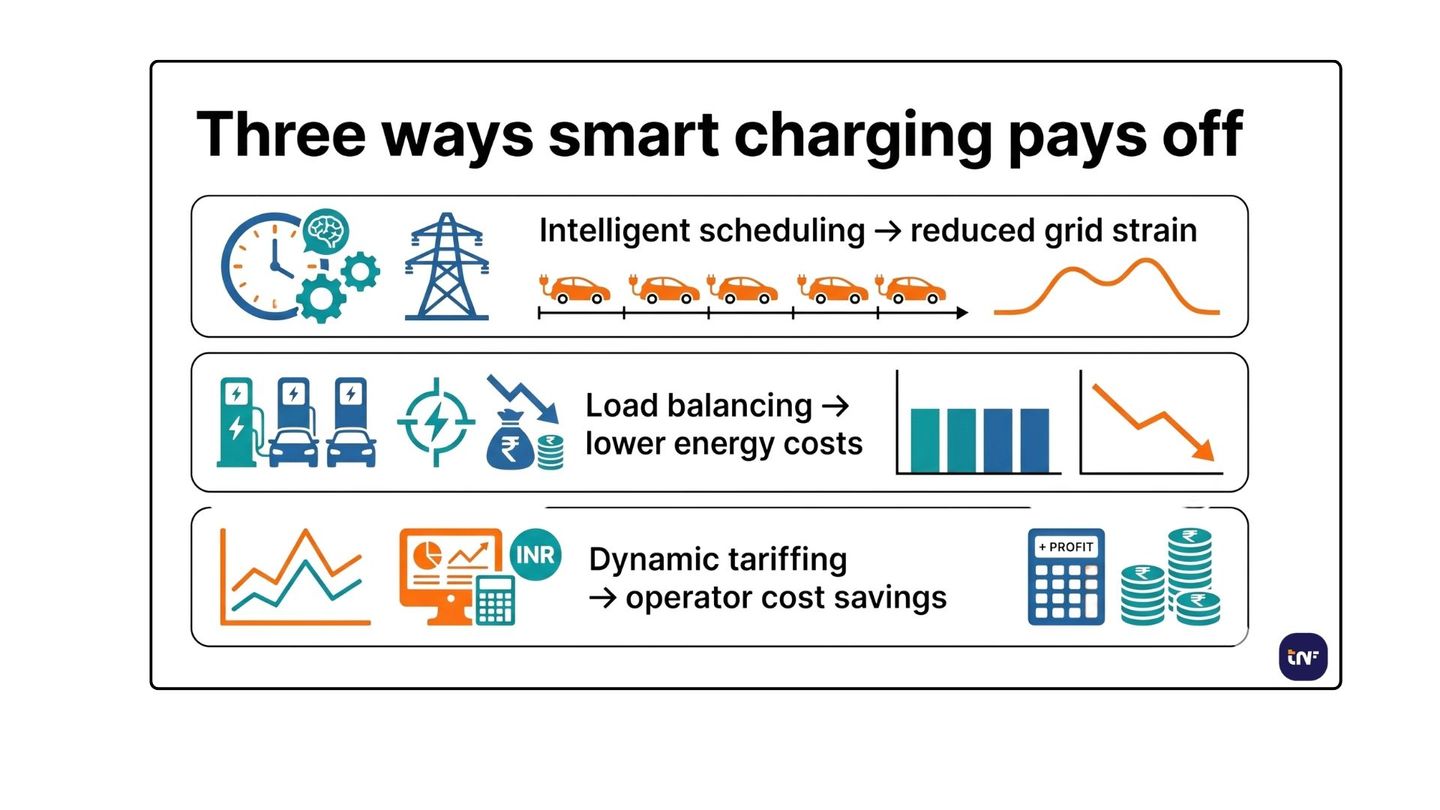
Smart charging with intelligent scheduling, load balancing, and dynamic tariffing can mitigate the strain on grid infrastructure and deliver meaningful cost savings for operators. At scale, this is required to maintain grid power quality.
A 2025 survey by Consumer Reports' EV Charging Community, conducted among 1,230 owners of fully electric and plug-in hybrid vehicles, found that EV owners experience problems at one out of every five public charging sessions they initiate. Among hardware failures, 76% came down to screens that were broken, unresponsive, or showing error messages. Among payment failures, 19% saw drivers billed for a charge that was never initiated.
A separate body of research highlights the downstream commercial consequence: EV drivers who experience at least one charging failure report that their next vehicle purchase will not be an electric vehicle.
Predictive maintenance, already standard practice in fleet and internal combustion engine (ICE) vehicle management, is now being applied to EV charging infrastructure. Using data on temperature variations, power fluctuations, and component wear, operators can schedule planned maintenance windows, notify drivers through the app, and prevent failures before they affect uptime.
According to the 2025 State of EV Charging Network Operators Report by Driivz, based on a survey of 300 charging network professionals across North America and Europe, 42% of charging operators identified defective hardware components as a leading cause of charger downtime. A further 33% of operators identified streamlining operations as their top investment priority for improving the driver experience.
The business case is clear. Downtime costs more than most operators account for. Expedited shipping and emergency labour are visible on a balance sheet; lost charging revenue and eroded driver loyalty are not. Thus, predictive maintenance becomes very important to minimise unplanned services, reduce expensive repairs, and let the technicians focus on high-priority infrastructure developments over minor troubleshooting that can be solved remotely.
Uptime metrics that measure hardware availability alone mask the true scope of reliability failures. A charger that reports a near-perfect uptime can still fail to deliver a successful first-time charge because software failures, payment system errors, and network authentication breakdowns do not register as downtime in conventional reporting. The metric that matters to the driver and to the operator's revenue is first-time charge success rate (FTCSR). Operators that integrate real-time session monitoring, remote fault resolution, and predictive scheduling can gain market differentiation.
Policymakers: Mandate standardised uptime reporting for all public charging networks receiving government support. Create incentives for domestic EVSE component manufacturing to reduce import dependency and maintenance lead times. Align grid standards with the harmonic distortion requirements of DC fast charging at scale.
Charge point operators: Move beyond availability metrics. Invest in CPMS platforms with predictive diagnostics, remote fault resolution, and automated session-level monitoring. Co-locate maintenance contracts with hardware deployment from day one.
OEMs and hardware providers: Develop standardised connector and charging gun components suited to India's grid conditions. Work towards domestic manufacturing capability to reduce supply chain exposure and maintenance turnaround times.
Investors: Prioritise operators with software-first infrastructure management, active maintenance protocols, and transparent session-level performance data.
Disclaimer: Content provided by TNF India is for informational purposes only. While we aim to provide accurate data and strategic insights, information is subject to rapid market and technological shifts. This content should not replace independent due diligence or professional consultation. TNF India bears no responsibility for any actions taken, or financial losses incurred, in reliance on this material.
What an owner should receive at handover, and what actually arrives.