Tuesday, 13 October 2026
It is India's biggest bet on green hydrogen, but policy intent still needs industrial execution.
It is India's biggest bet on green hydrogen, but policy intent still needs industrial execution.
 Lalita Subrahmanyam
India has allocated through the Strategic Interventions for Green Hydrogen Transition (SIGHT) programme to resolve a single, high-stakes question: can green hydrogen be made cheaper than the fossil fuel it must replace? The first tranche will tell us whether that bet is well-structured.









Green hydrogen is produced via electrolysis powered by renewable energy, making it climate-neutral across its production cycle. Grey hydrogen, by contrast, is produced from fossil fuels, primarily natural gas via steam methane reforming. With incentives and declining renewable tariffs, India is targeting cost parity between green and grey hydrogen by 2030, in line with targets set under the National Green Hydrogen Mission (NGHM).
SIGHT targets two strategic levers: domestic electrolyser manufacturing and large-scale green hydrogen production. India's competitive strategy requires its electrolyser ecosystem to scale rapidly in line with deployment cycles, using critical components produced indigenously to reduce costs without compromising quality, efficiency, or reliability.
The first two tranches under Mode 1 of SIGHT have awarded a combined annual production capacity of 862,000 tonnes, roughly 17% of the 5 MMT the NGHM has set as India's 2030 goal. Beyond production targets, SIGHT also works to close the infrastructure gaps that could constrain delivery: supply chain bottlenecks, transport connectivity, and water access all require parallel resolution if that capacity is to be commercially operational, not just nominally awarded.
Falling renewable tariffs are closing the cost gap between green and grey hydrogen.
Cost parity is no longer a question of whether, but when.
The production of green hydrogen for export has emerged as a strategic lever for India's economic growth. With demand rising to meet decarbonisation goals across global supply chains in steel, fertilisers, refining, mobility, and chemicals, India aims to export green hydrogen at globally competitive prices, backed by cheap solar and wind power and a fast-scaling domestic manufacturing base. Cost parity with grey hydrogen, achieved at scale, would simultaneously reduce India's fossil-fuel import exposure and underpin an export-oriented, low-carbon industrial base.
SIGHT is the primary vehicle for mobilising private capital at scale. Global demand signals, from EU decarbonisation mandates to Japanese import frameworks, are reinforcing the export case. By driving demand aggregation and incentivising innovation while mitigating risks, the government is laying the path to durable commercial outcomes: narrowing the green-grey hydrogen cost gap, managing resource constraints such as water, enabling export readiness, and ensuring that public subsidies deliver commercially viable results.
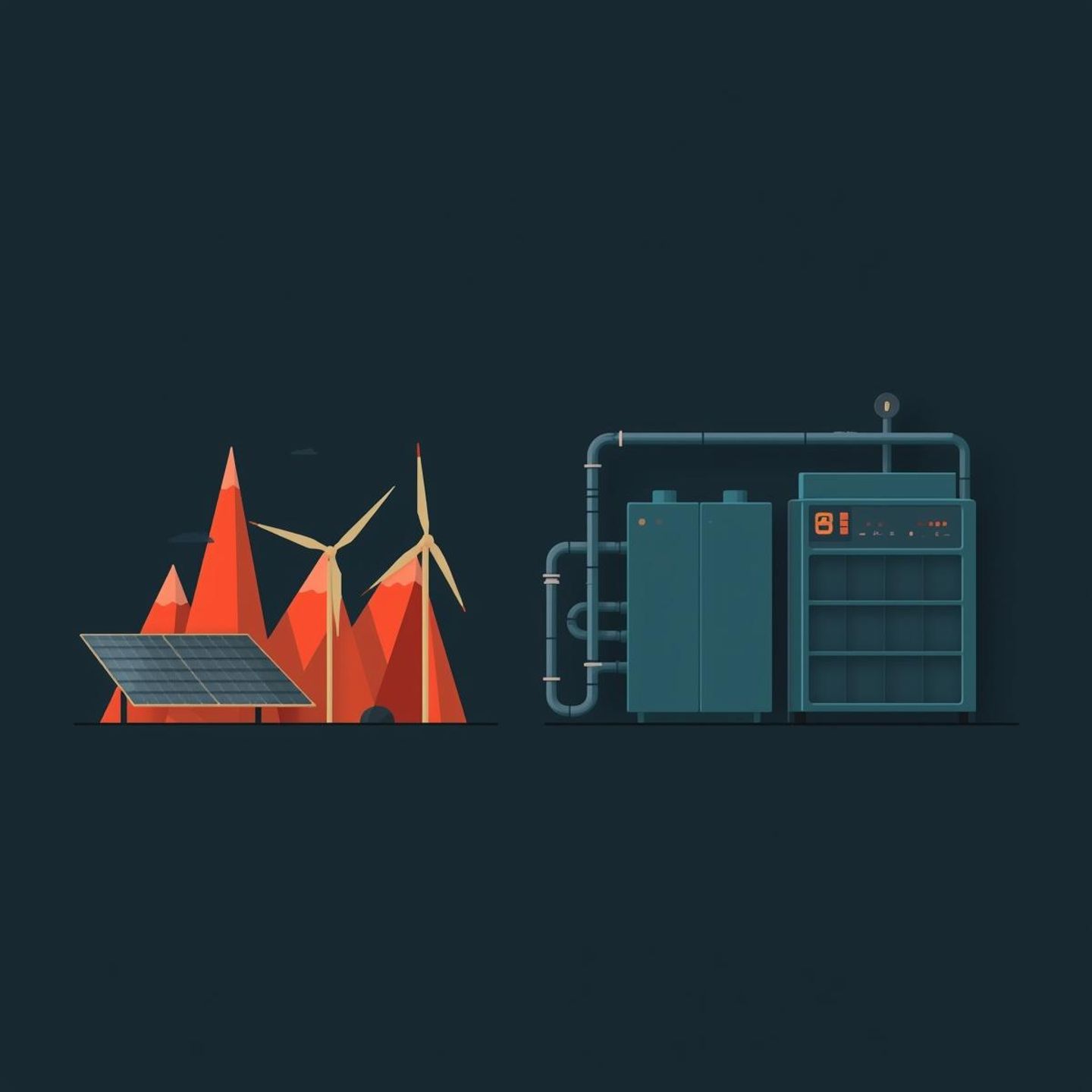
The cost gap with grey hydrogen is the metric that will determine green hydrogen's adoption.
Globally, grey hydrogen produced from natural gas costs approximately $1.3–3 per kg depending on the region. In India, the grey hydrogen cost range sits at approximately $2–2.5 per kg. Green hydrogen, produced via electrolysis using renewable energy, currently costs $3.7–6 per kg in India, depending on project scale, renewable tariffs, and electrolyser efficiency.
As electrolyser prices decline and renewable energy gets cheaper, the National Green Hydrogen Mission targets a green hydrogen production cost of $1.5 per kg by 2030. Policy initiatives like SIGHT are helping bridge the gap in the interim, improving investor confidence and early deployment economics. Early movers benefit as cost compression improves project bankability and reduces reliance on long-term subsidies.
Local manufacturing could reduce import dependence and anchor India's path toward hydrogen cost leadership.
Green hydrogen can decarbonise sectors that have traditionally carried a large carbon footprint and reduce India's reliance on imported fossil fuels. For this to happen, production costs need to fall and infrastructure gaps need to close.
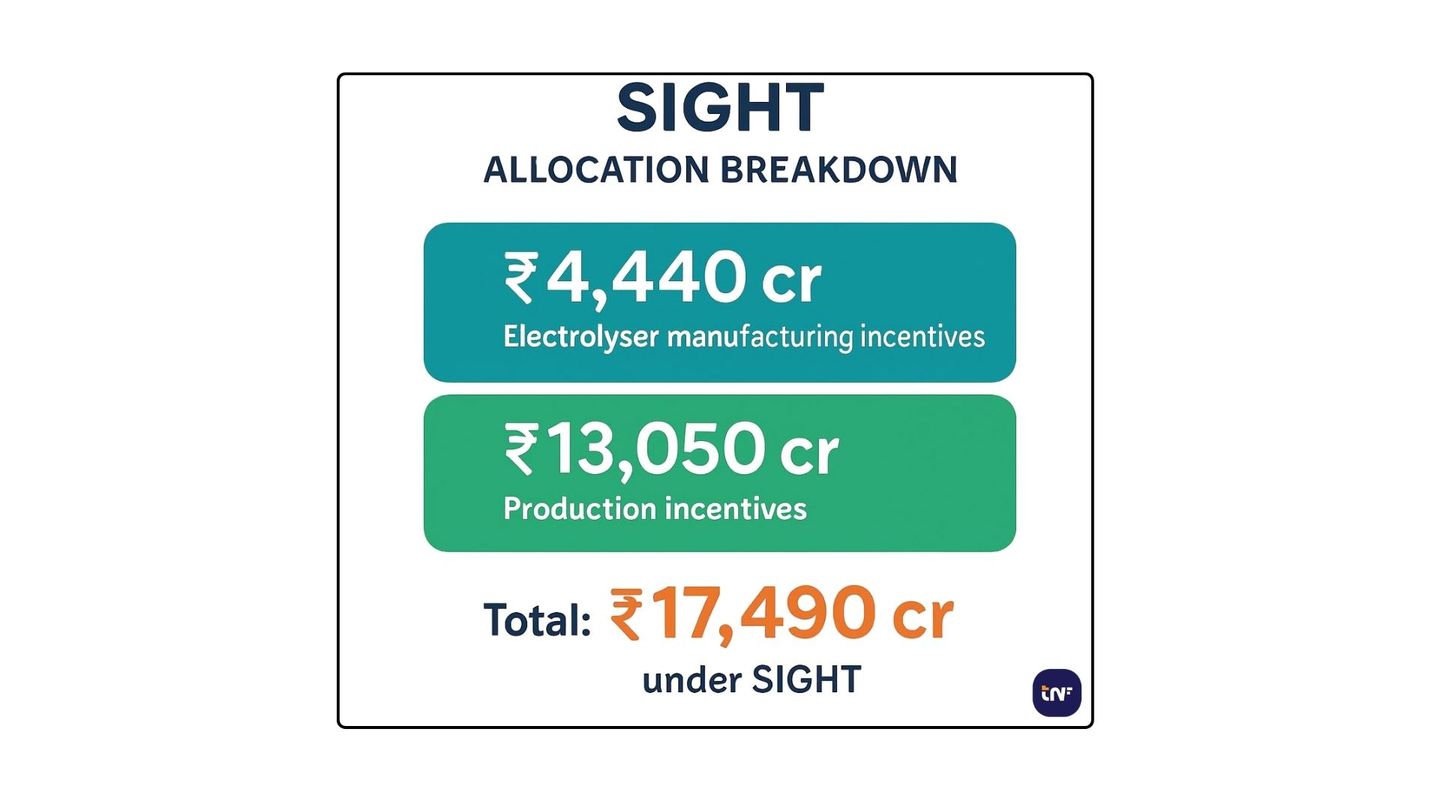
SIGHT allocates ₹4,440 crore for domestic electrolyser manufacturing over FY26–30. Across two tranches, the government has awarded contracts to 15 companies across two tranches to achieve approximately 3,000 MW of electrolyser manufacturing capacity. With bids exceeding initial targets and strong investor interest from India and abroad, this capacity could scale ten-fold over the following decade, provided supply chain risks around critical minerals are managed.
Interested players include major engineering firms, energy conglomerates with global technology partners, and emerging clean-tech firms, all recognising the central role of electrolysers in establishing India as a key player in the clean energy transition. The sector also benefits from 100% FDI permitted under the automatic route.
Alongside alkaline and PEM electrolysers, Anion Exchange Membrane (AEM) electrolysers are emerging as a promising option with lower material costs, though commercial-scale AEM deployments remain limited globally.
India's electrolyser industry is experiencing significant momentum, supported by industry-academia partnerships focused on reducing manufacturing costs and extending operational lifespans to lower total cost of ownership. A key risk is dependence on scarce and geographically concentrated critical minerals, particularly iridium and platinum used as catalysts in PEM electrolysers. Their supply chains carry meaningful geopolitical exposure, with production concentrated in South Africa and Russia.

Locational strategies are needed to overcome resource constraints, with water availability as a key operational variable.
Water is the primary feedstock for green hydrogen production through electrolysis, unlike grey hydrogen which uses fossil fuels. Under operational conditions, the process requires approximately 18–25 litres of water per kilogram of green hydrogen produced, with 9 litres representing the theoretical stoichiometric minimum. This makes water access a significant constraint for regions facing acute shortages. India's coastal regions will require desalination systems, while arid regions will need water reuse strategies to participate in this opportunity.
Water purity directly governs electrolyser efficiency and membrane longevity. Sites requiring pre-treatment will carry a structural cost disadvantage. This is a locational variable that developers must model at the project design stage. Policy guidelines encourage co-location with desalination infrastructure to mitigate freshwater stress, as well as the use of treated wastewater.
Export agreements will shape project economics in the emerging green hydrogen market.
Demand for green hydrogen is growing significantly across the world, driven by the need to adopt clean energy sources and multiple industrial sectors striving to decarbonise to meet net-zero targets. India has set a target of producing 5 MMT of green hydrogen annually by 2030. The government has separately stated its ambition to capture 10% of projected global green hydrogen demand, estimated to exceed 100 MMT by 2030.
Demand signals remain strong, but near-term visibility is uneven. Policy uncertainty in Europe, particularly around renewable fuels of non-biological origin (RFNBO) certification rules and evolving EU hydrogen import targets, creates timeline risk for offtake agreements.
Long-term contracts and clarity around the EU Carbon Border Adjustment Mechanism (CBAM) will be determinative for export economics. Deployment must move quickly to mitigate delays that could affect near-term export readiness.
Incentives need to ensure capital efficiency and commercial scale for India to translate policy ambition into market leadership. India holds a structural advantage in its ability to produce renewable energy at highly competitive prices, given the abundance of solar and wind resources and a renewable energy focus.
The SIGHT programme brings forward adoption of green hydrogen by reducing production costs. Supplementary policy measures include exemptions from Approved List of Models and Manufacturers (ALMM) solar module procurement requirements for export-oriented green hydrogen projects, reducing system costs. Transmission charge waivers for a defined period further reduce the renewable energy levelised cost of electricity (LCOE) for electrolyser use. By targeting both manufacturing and production, SIGHT improves capital efficiency without perpetuating long-term subsidy dependency.
Becoming a price-maker requires India to move faster than China's manufacturing scale, Europe's subsidy depth, and the Middle East's capital access. The first tranche of SIGHT is the opening move in that contest. Producing hydrogen alone will not ensure success. Energy developers will have to control input costs, secure long-term contracts, and integrate the value chain end-to-end.
Policymakers: Accelerate SIGHT disbursements, compress project approval timelines, and align domestic carbon frameworks with EU CBAM timelines before 2026. Prioritise infrastructure development for water access and logistics corridors.
Energy developers: Invest in scalable electrolyser deployment. Co-locate hydrogen plants with renewable energy and water resources to minimise operational constraints. Secure long-term offtake agreements before capital commitment.
Industrial hydrogen users: Evaluate hydrogen substitution opportunities in steel, refining, and fertilisers. Adopt phased integration strategies and establish long-term supply contracts with producers who have secured incentives under SIGHT.
Investors: Assess hydrogen projects through long-term cost trajectories rather than current economics. Diversify across hydrogen value chain segments. Prioritise projects with secured offtake agreements and co-located renewable assets.
Disclaimer: Content provided by TNF India is for informational purposes only. While we aim to provide accurate data and strategic insights, information is subject to rapid market and technological shifts. This content should not replace independent due diligence or professional consultation. TNF India bears no responsibility for any actions taken, or financial losses incurred, in reliance on this material.
What an owner should receive at handover, and what actually arrives.