Tuesday, 13 October 2026

Long-term investors are watching India's PPP model. Here's what would actually make them commit.
Long-term investors are watching India's PPP model. Here's what would actually make them commit.
 Lalita Subrahmanyam









India’s need for infrastructure development is growing by leaps and bounds but capital in India is focused on low-risk formats, like engineering, procurement, and construction (EPC) contracts, and asset recycling. The deficit is not due to any lack of ambition or capital. It is primarily a result of how risk has been structured in public-private partnership (PPP) frameworks. Traditionally, this has meant following practices that ignored operational risks and eroded the bankability of projects, affecting investor confidence.
The solution is not more capital. It is a fundamentally different approach to pricing, allocating and protecting risk within PPP frameworks. Attracting patient capital to infrastructure requires building differentiated risk estimation models, inflation-linked revenue mechanisms, and credible downside protection into the PPP structure itself. Through this, long-term investors see not just an opportunity, but a structure designed to protect them through the cycles that test it.
PPP frameworks can be redesigned as bankable capital market instruments, and not administrative contracts to bring in sizeable private investment, while expediting infrastructure delivery with better discipline. PPPs can emerge as reliable and durable investment pathways, to bridge India’s infrastructure deficit and transform the achievement of public objectives, without burdening the exchequer.
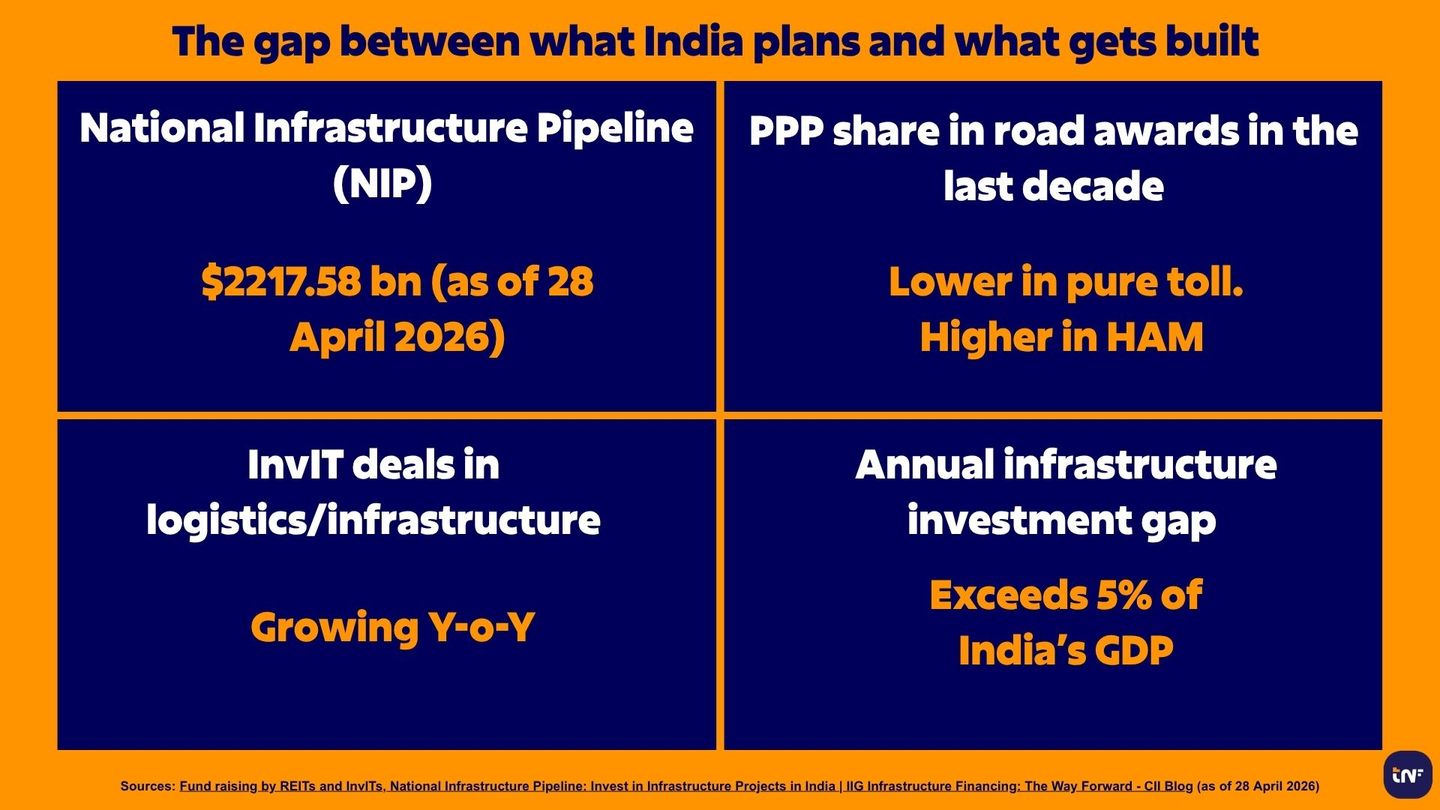
Private investment into infrastructure in India falls short of expectations, in spite of programmes like PM GatiShakti and the National Infrastructure Pipeline (NIP) that increase project visibility, encourage cooperation and enable timely execution. Traditional PPP investment asked private investors to own all the risk and control none of it. Regulatory compliance, land acquisition, operational delivery sat with the public sector. The consequences of getting them wrong sat with the investor. That asymmetry is why private capital left.
Sources: Fund raising by REITs and InvITs, National Infrastructure Pipeline: Invest in Infrastructure Projects in India | IIG, Infrastructure Financing: The Way Forward - CII Blog (as of 28 April 2026)
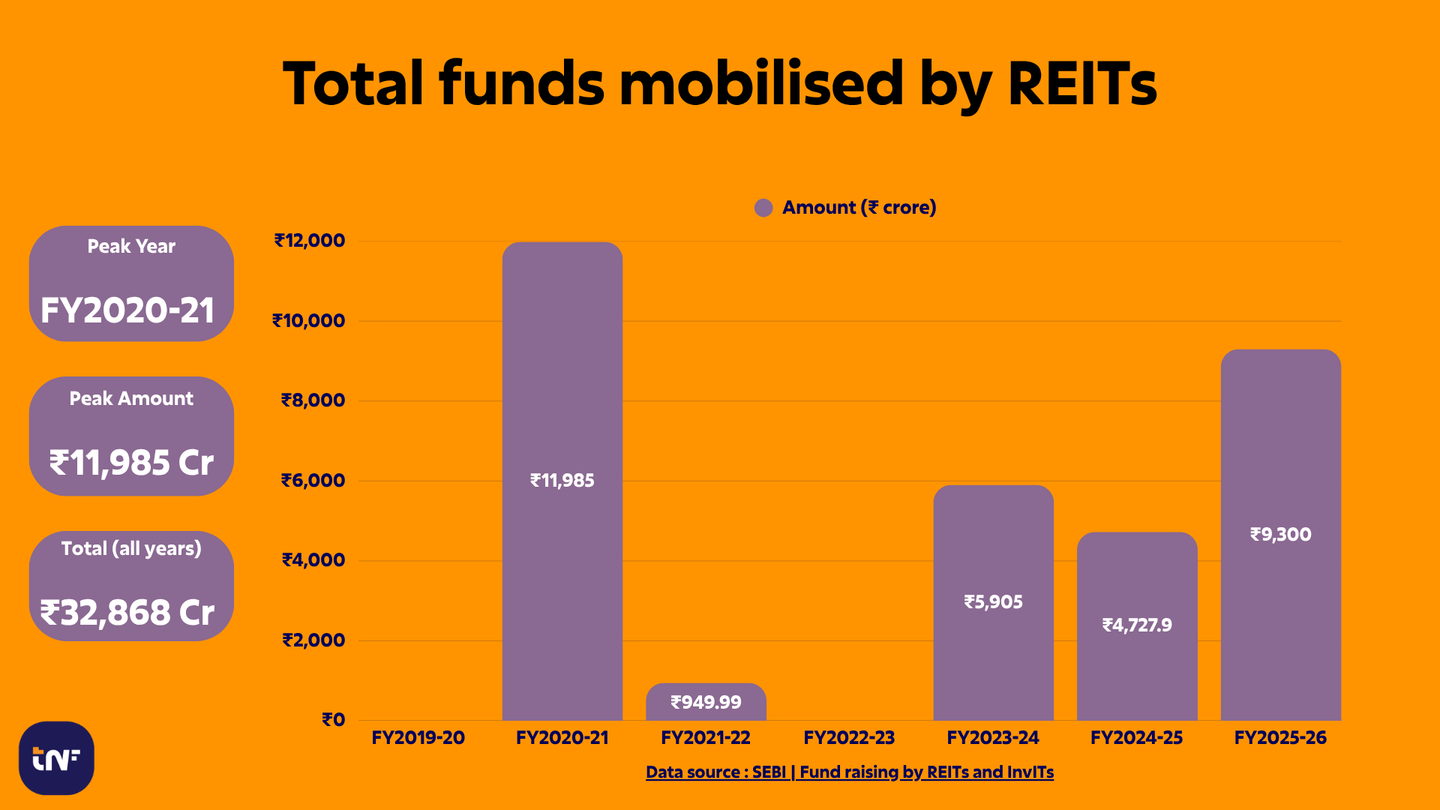
To encourage better private participation in large-scale PPP projects, there’s a need to assess risks better before allocating them fairly, and mitigate the uncertainties in operations, execution as well as revenue generation when inviting investor interest into public projects.
Source: SEBI | Fund raising by REITs and InvITs

New risk/revenue models in PPP are being designed, especially with large infrastructure like roads, ports and metros, to align better and account for project delays, issues with bankability, and uneven risk allocation.
From a decision-making perspective, infrastructure revenue models can be evaluated based on the type of risk they address for investors and project developers. Let us look at some revenue models that make investment into infrastructure attractive:
These models define the core relationship between the public and private sectors, determining how the project is built and paid for over time.
Hybrid Annuity Model (HAM):
This model combines elements of EPC and Build, Operate, Transfer (BOT) models. HAM projects see government entities pay 40% of a project’s cost, with the private entity taking care of construction and early operations. The remaining 60% is paid through annuity over time, reducing the demand for capital upfront, re-engaging private investors.
These are "bridge" mechanisms used to make a project bankable when the initial internal rate of return (IRR) is too low or the risk of default is too high.
Viability Gap Funding (VGF):
Typically invited in the form of grants, deferred payments or convertible loans, this type of funding helps governments bridge the financial gap for infrastructure projects that are essential for economic development but may not be financially viable.
Minimum revenue guarantees:
Often used in ports and airports, this model allows the government entity to commit to covering any shortfalls in project revenue, thereby mitigating financial risks for private investors.
These models manage the uncertainty of long-term cash flows and protect both the investor and the public from extreme volatility. They also consider the value created by the infrastructure itself.
Revenue pooling mechanisms:
These methods help cross-subsidise profitable corridors with weaker ones to reduce demand risk while ensuring sustainable financing.
Land value capture (LVC):
This allows governments to establish new public infrastructure and recover costs through the increase in property value.
Value capture finance (VCF):
This helps improve the financial health of local bodies such as municipalities and enhance infrastructure delivery by leveraging land or other underutilised resources to raise finances.
Financial pooling:
This refers to aggregating funds from multiple sources to create a centralised pool for undertaking infrastructure projects.
These frameworks establish structured safeguards to ensure predictable cash flows and protect private partners against counterparty default or market-driven revenue volatility.
Availability payments and milestone-linked payments:
These structured payment systems help ensure financial accountability as well as transparency. Milestones refer to specific tasks or deliverables that need to be completed for payments to be released, while availability tracks defined service intervals with predetermined deliverables. Both mechanisms help manage cash flow and risk by aligning payments with outcomes while ensuring quality standards and project timelines are maintained.
Payment guarantees:
These are particularly useful in managing early operational risk. Guarantees enhance the bankability of infrastructure projects by covering revenue shortfalls and regulatory disruptions. Payment guarantees ensure that private partners receive the payments agreed upon, improving investor confidence.
Revenue share with floor and cap:
Floor refers to the minimum amount the company must earn before sharing any revenue with stakeholders, while cap refers to the maximum amount it can earn. This model establishes clear boundaries for revenue sharing, allowing investors to limit risk exposure while enabling companies to raise funds at a fair valuation.
These models help address several risk categories that have traditionally affected investor confidence in infrastructure projects.
India’s National Infrastructure Pipeline proposes an investment of approximately ₹208.9 trillion (as of 28 April 2026) which signifies a massive funding gap in public resources. PPP seems to be flowing into projects with EPC/EPC hybrid contracts, as the risk is lower. However, there is clear evidence of declining PPP interest in road projects, while EPC+ HAM projects had higher interest, along with Toll-Operate-Transfer (TOT) auctions, as private capital avoided capital risk.
Investors with patient capital like insurance companies, sovereign wealth funds and pension funds demand protection against risk along with stable cash inflows. While institutional investors are taking up infrastructure debt and InvITs, PPP equity requires robust, risk-sharing frameworks. Blended finance plans based on HAM are bringing in private capital to take on operational risks, with public capital absorbing initial investment risks.
Regulated by the Securities and Exchange Board of India (SEBI), InvITs offer a structured and transparent investment avenue into public infrastructure, assuring investors of regular income. Green bonds encourage investments into environmentally sustainable projects, while masala bonds are issued in rupee denominations overseas to enable Indian companies to raise long-term capital in international markets. These bonds are without currency risk to the issuer, as the exchange rate risk is borne by the foreign investor.
Capital that is willing to absorb longer gestation and operational risk, especially for social and strategic infrastructure, is also known as patient capital because it accrues over decades, not quarters. NITI Aayog recommends the introduction of longer tenures in PPP financing, and encourages hybrid annuity structures and institutional frameworks which reduce risk to private investors by underwriting early demand/operational risk.
NITI Aayog also argues for fair risk-sharing, and recommends multi-stakeholder risk pools which allow the pooling of risk across projects, and offer diversification as an option to private investors.

Since 2016, HAM has been adopted by most road sector PPP projects, in preference over pure toll BOT (Build-Operate-Transfer) models. While this brought down private demand risk, it created mismatches between execution and cash flow, with delays in annuity payments. HAM projects also suffer from implementation stress due to slow land, Right-of-Way (RoW), and cascading cash flows resulting in delayed payments and extended timelines.
Partial risk transfer works when cash flow is predictable. This means, HAM projects work when annuity is released on a timely basis, land and RoW disputes are resolved early, inflation is managed right and contract terms are enforced strictly. Managing HAM projects right can help devise new PPP models that help balance risk without overly burdening public funds.

Most PPP projects do not fail at financial close. They fail eighteen months later, when the land is still not cleared and the annuity payment is running sixty days late. Projects face operational risks at various levels in managing a project, with the primary hurdle being faced when undertaking land acquisition and obtaining RoW, followed by environmental and forest clearances. Once the project is underway, they experience labour and execution delays, followed by contract enforcement and change orders. Projects also run into technology and asset management issues, and revenue and demand shortfalls, especially with toll roads.
These issues and risks can be mitigated by adopting front-loaded land acquisition policies, while standardising contracts and dispute resolution mechanisms. Performance-linked payment guarantees protect investors when delivery slips. Advance liquidity drawdowns prevent cash flow gaps from becoming project failures. Operational risk insurance absorbs what neither party can forecast. Together they make PPP risk manageable, priceable and investable. Proper escalation mechanisms and early warning systems also help to manage the risks and ensure success.
Digital tools need to be adopted to ensure superior operational outcomes. This can include using dashboards to monitor project performance, and predictive analytics for operational planning, and measuring institutional capability gaps and map geographic risk. When institutions manage operational risk right, they build the capacity to turn their projects into key investment opportunities.
The Economic Survey 2025–26 makes the case plainly: 'PPPs should be treated as evolving financial assets rather than one-time contracts frozen at financial close.' The future of PPP in India will depend on whether policy intent recognizes that the country’s infrastructure deficit can be bridged when the investment proves attractive.’ Capital in 2026 will not flow to the most generous PPP framework. It will flow to the most credible one.
Policymakers: Set statutory approval timelines. Require land acquisition completion target before financial close. Measure PPP agencies on completion rates, not contract awards.
Infrastructure developers and contractors: Audit execution readiness before the next bid. Order books that cannot be converted to billed revenue destroy margins and lose clients.
Institutional investors: Add three non-negotiables to every PPP due diligence: land acquisition status, annuity payment track record of the contracting authority, and contractor billing conversion rate.
Disclaimer: Content provided by TNF India is for informational purposes only. While we aim to provide accurate data and strategic insights, information is subject to rapid market and technological shifts. This content should not replace independent due diligence or professional consultation. TNF India bears no responsibility for any actions taken, or financial losses incurred, in reliance on this material.
What an owner should receive at handover, and what actually arrives.