Tuesday, 13 October 2026
The Signal, every MondayLinkedInXLog in
TNF India
AnalysisSeriesThe SignalEventsAccess
Join free
IndustriesEnergySpaceTransport, Logistics and TradeConstruction and InfrastructureManufacturing and EngineeringUtilities and Public ServicesFinancial ServicesHealthcare and Life Sciences
TNF IndiaIntelligence you can act on, and events worth being at.Connecting digital analysis with real-world conversations across India's growth industries.
LinkedInXRSS
Observer · FreeRead TNF India free as an Observer.Five articles a month, two industry reports a year, and 25% off delegate passes across TNF events worldwide.
No card needed. We handle your details as set out in our Privacy Policy.
TNF IndiaAnalysisSeriesExploreEventsAccessThe Signal
IndustriesEnergySpaceTransport, Logistics and TradeConstruction and InfrastructureManufacturing and EngineeringUtilities and Public ServicesFinancial ServicesHealthcare and Life Sciences
PillarsBridging the DeficitLogistical LeapProfit and PlanetThe Compute LayerThe Intelligence YieldThe Multinational MandateThe New Work Order
PersonasThe Growth DriverThe GuardianThe InnovatorThe OperatorThe Strategist
CompanyAbout UsCareersContact UsPartner with UsAdvertise
AccessObserver, freeSpecialistVisionaryLog in
© 2026 The Niche Foundry Asia Positive Media LLP. All rights reserved.
Terms of ServicePrivacy Policy
Home/The Signal
The SignalEnergy and Utilities · Week 37, 2026 · 7 September 2026

Is India about to produce jet fuel from alcohol?

Five reads on India's oil and gas system this week.

Energy and UtilitiesConstruction and InfrastructureTransport, Logistics and TradeAll editions
The AwardTwo refinery expansions being bought as dozens of component lots rather than turnkey packages.The Shift339 authorised city gas areas against 92 authorised pipelines to feed them.The WindowAn Expression of Interest for sustainable aviation fuel pathways at Bina, closing 11 September.The NumberNinety-two authorised pipelines, approved under seven different provisions.The PatternThree ONGC coal bed methane blocks hold tie-in authorisation to the same trunk system.
The Award

The Operator · The Strategist · The Intelligence Yield
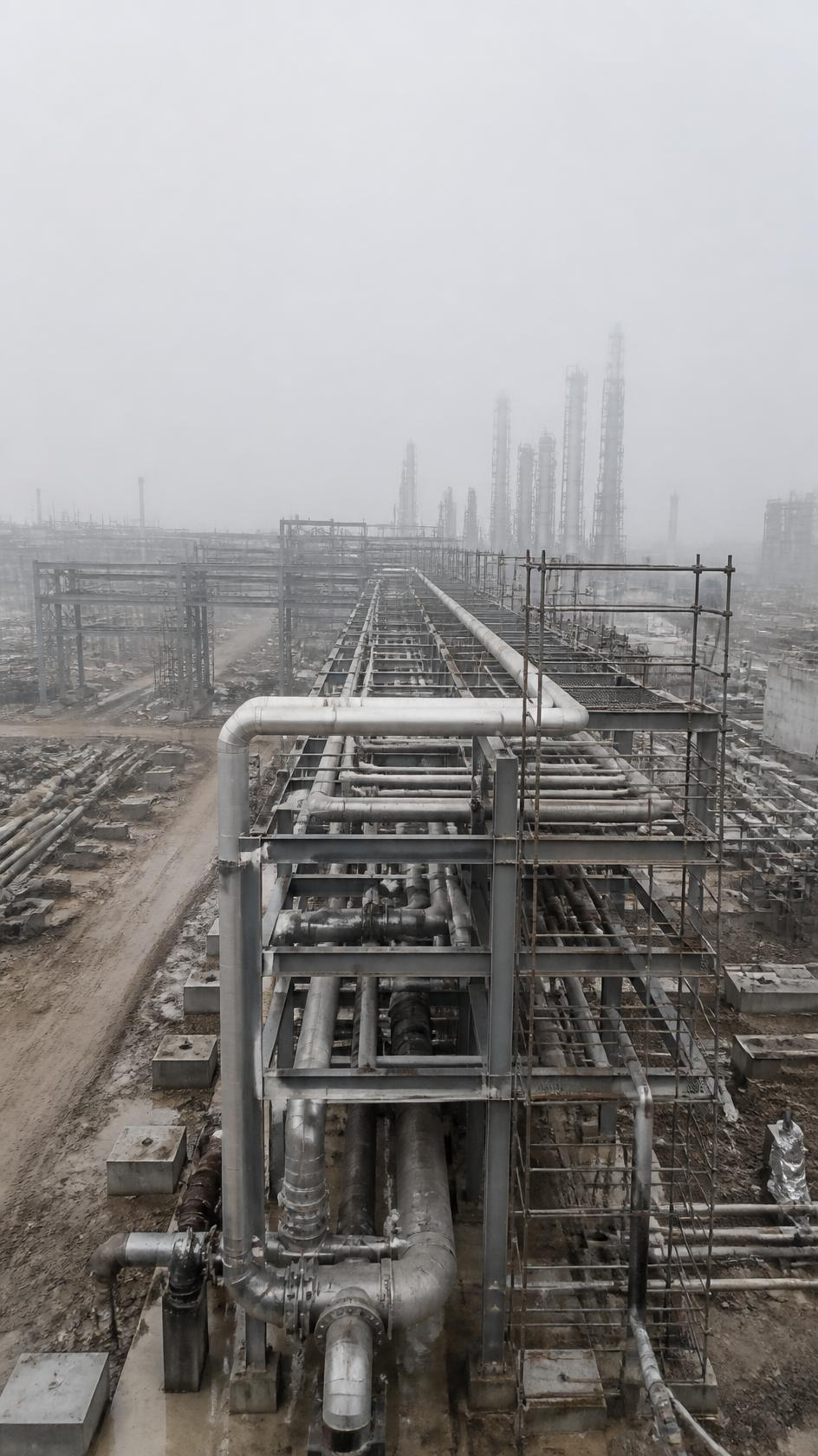
Multi-tier refinery pipe rack with flanged joints and partly applied insulation
Process piping at a refinery expansion. Illustrative.

One contractor, two refinery expansions. How many packages?

There are seventy live packages, forty-seven of which are due to close this month. Engineers India Limited is carrying out its refinery expansion work by means of a large number of separate supply lots rather than a small number of turnkey contracts, and by looking at the lots together it is clear which two projects are currently in the procurement phase.

The Bina cluster is the larger one. For BPCL's Bina Petrochemical and Refinery Expansion Project, carbon steel fittings, temperature elements and thermowells, as well as self-actuated pressure control valves, are all being procured. The Numaligarh cluster runs alongside it: mounded storage bullets and medium-voltage cables for the polypropylene project and the Numaligarh Refinery Expansion Project, and water-cum-foam monitors, remote-controlled fire monitors and deluge valves for the propane dehydrogenation and polypropylene plant.

The key factor is the structure. Fittings, instruments, valves, cables and fire protection are being purchased as individual lots by the engineering contractor rather than being bundled into a single mechanical package to be sub-contracted by one EPC firm. To us, this means the buyer is opting to take on the supply chain risk in return for a lower price, and as a result two of the country's largest refinery expansions are now open to suppliers who would not have been able to submit a turnkey package.

It also shows where both projects stand in their programme. Instrumentation, valves and fire protection are purchased once the process design has been finalised and the layout is fixed, which is well after the long-lead equipment has been ordered and well before commissioning. The fact that all these items are visible in the market at the same time on two different refineries means that both projects have passed the stage at which the scope is still subject to change, which is the point at which a supply order becomes worth pursuing.

Who should act

Manufacturers of piping, fittings and valves, suppliers of instrumentation, cable makers, fabricators of storage vessels and specialists in fire protection. Since these are component-level lots, the qualification barrier is product approval and not project reference.

Next step

Take the entire Engineers India tender book rather than searching for your product, since the lots are identified by specification and not by category. Use the 'Tenders by Organisation' view on etenders.gov.in and go through all seventy in one go. Forty-seven of them will close before the end of September.

Source and reference: Central Public Procurement Portal. Check the date on the portal before taking any action. · etenders.gov.in · Engineers India Limited


The Shift

The Growth Driver · Profit and Planet

Open pipeline trench with coated pipe joints strung out unwelded alongside
A natural gas transmission pipeline under construction. Illustrative.

What portion of India's gas grid has been authorised but isn't currently delivering?

Ninety-two pipelines and 339 city gas distribution geographical areas have been given authorisation by the Petroleum and Natural Gas Regulatory Board. Authorisation means permission to build and operate, not that gas is actually flowing, and it is the gap between authorisation and actual gas supply that reflects the sector's true progress.

The two figures refer to different things and are often quoted as if they measured the same thing. A natural gas pipeline authorisation includes both trunk and spur transmission lines: the steel infrastructure used to transport gas between regions. A city gas distribution geographical area is a licence to supply consumers within a specific area, with its own minimum work programme covering domestic connections, commercial and industrial demand, and compressed natural gas stations. One relates to the capacity to move gas; the other to the obligation to sell it.

In our view, the fact that there are 339 authorised areas compared to 92 authorised pipelines expresses the sector's fundamental dilemma in numerical form. The obligation to distribute has been granted more quickly than the transmission capacity required to feed it, which is why it is connectivity to the trunk network, rather than authorisation, that determines whether a particular area can carry out its work programme.

The result falls on the licensee rather than on the regulator. A minimum work programme is a commitment made at the bidding stage against a connection date that the licensee cannot control, and failing to meet it has its own consequences no matter why the gas is delayed. Therefore, anyone selling natural gas into a city gas network should find out which of the 339 areas have gas available at the gate today, since that number is considerably smaller than what the authorisation figure implies.

Who should act

Suppliers of line pipes and coatings, compressor and metering equipment vendors, city gas companies that are preparing a minimum work programme, and industrial consumers who are deciding whether to commit a site to gas. If your area has been authorised but is not connected, your fuel switch date is a question of transmission.

Next step

Instead of checking the authorisation list, compare your geographical area with the trunk connectivity register, because authorisation tells you who has the licence and connectivity tells you when gas can arrive. Both registers are available at pngrb.gov.in.

Source and reference: Petroleum and Natural Gas Regulatory Board, authorisation registers. The figures are stated in TNF India's own words. · pngrb.gov.in · authorisation registers

The Window ◆

The Innovator · The Growth Driver · Profit and Planet

New process unit under construction inside an operating refinery
A new process unit within an operating refinery. Illustrative.

Is India about to produce jet fuel from alcohol?

The plan was announced some time ago, but what has just come to light is the question of how it will function. Engineers India has issued an Expression of Interest in order to assess alternative methods for producing sustainable aviation fuel, specifically mentioning the Alcohol-to-Jet route, for a SAF unit at the Bina refinery. The deadline for submission is 11 September.

An Expression of Interest is not a purchase, and that is precisely why it is worth looking at. A tender indicates that a decision has already been made and that the buyer is now looking around for suppliers. An Expression of Interest shows that no decision has yet been taken and that the buyer is still working out what to buy. It is the first opportunity for an external supplier to influence the specification rather than merely react to it.

By naming the Alcohol-to-Jet route in the notice, it is clearly defined and this is done within a policy context that already supports this method: India has updated its specification for aviation turbine fuel to allow for blending using ethanol via the alcohol-to-jet pathway. Ethanol is the largest and most well-established alternative feedstock the country has, unlike used cooking oil or municipal waste when used on a refinery scale. Siting the unit at Bina places it within the refinery whose expansion is already underway and in the procurement phase, so the issues concerning utilities, offsite facilities and storage have already been resolved before the SAF question is even raised.

The sequence of events appears to be intentional. A refinery that is already seeking fittings, instruments and fire protection has construction management, access for contractors and site services in place. Adding a SAF unit to an already active expansion is considerably cheaper than setting one up on a site that is not currently in use.

Who should act

Companies that licence Alcohol-to-Jet, HEFA or gasification technologies, ethanol producers and aggregators, catalyst suppliers, and process engineering firms. It is cheap to respond to an Expression of Interest and this gives your technology a chance to be considered when the final specification is drawn up.

Next step

Even if you wouldn't submit a bid for the final package, you should still respond, since the value lies in being part of the evaluation process at the moment the pathway is selected. The notice is available under Engineers India Limited on etenders.gov.in. Make sure to check the closing date on the website before proceeding.

Dates to mark

The deadline is 11 September 2026.

Source and reference: Central Public Procurement Portal. Be sure to verify the date on the portal before taking any action. · etenders.gov.in · Engineers India Limited

AdvertisementThe site is a line, not a plot. Data Stack Global India, 16 February 2027, Nagpur. Register interest.
The Number

The Strategist · The Guardian · The Intelligence Yield

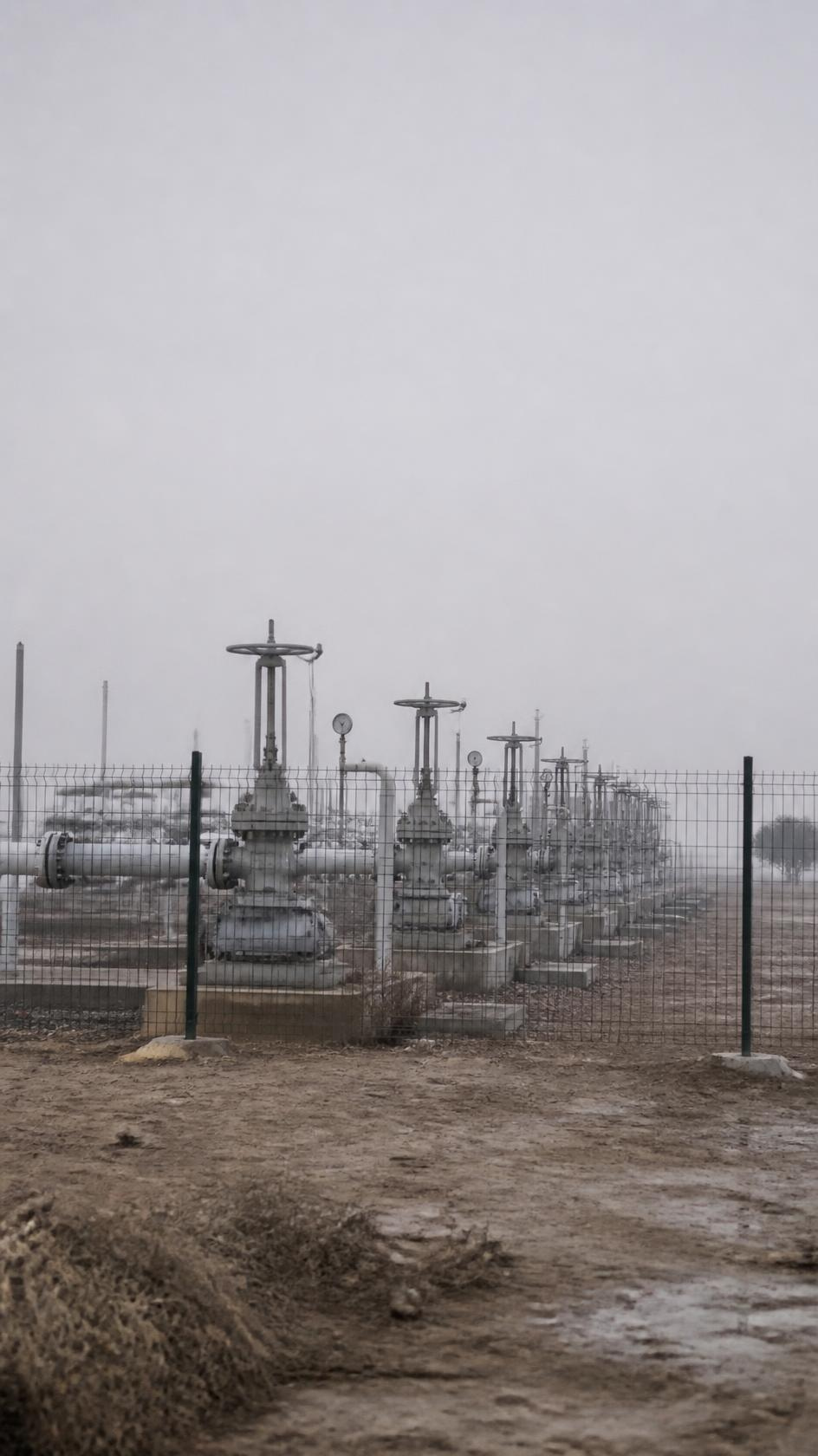
Above-ground gas pipeline valve station with handwheel stems and gauges
An above-ground valve station on a gas pipeline. Illustrative.

In how many different ways can a gas pipeline be approved in India?

There are seven. The ninety-two natural gas pipelines approved by the Petroleum and Natural Gas Regulatory Board have not been authorised under one provision but under seven separate ones, and it is the particular provision that determines who is allowed to build the pipeline and on what terms.

The seven provisions are Regulation 5, Regulation 17, Regulation 18, Regulation 19, Regulation 21, Regulation 42 and Section 20. They are not different stages or procedures of the same approval process. Among other things, they distinguish between pipelines awarded by means of competitive bidding and those granted to an entity that already owned them or was already laying them, and also set those apart from dedicated lines constructed to serve a single named consumer.

The real effect of this is that an authorised pipeline cannot be treated as a single category when planning. In our view, a supplier or an industrial consumer who treats the register as a single list of ninety-two opportunities is misinterpreting it. Some of those routes were never open to third parties, and it is essential to know which ones are the difference between a pipeline you can bid for and one that has already been settled before it appeared.

The dedicated lines under Regulation 19 make this point most clearly. These lines are intended to serve one specific plant, are not part of common carrier infrastructure, and were never open for competition to anyone other than the party that requested them. When included in the total of ninety-two, they appear as part of the national grid expansion. But looked at individually, they are twenty-five private connections, which is a quite different situation to base a business plan on.

Who should act

Anyone whose plans depend on a pipeline reaching them, anyone who intends to bid for one, and also lenders, since the method of authorisation has a material impact on who carries the volume risk on a line.

Next step

Before considering any authorised pipeline as an opportunity, you must find out the provision under which it was approved, because that one piece of information will tell you whether it was ever open to competition. The registers are available at pngrb.gov.in.

Source and reference: Petroleum and Natural Gas Regulatory Board, authorisation registers. The figures mentioned are stated in TNF India's own words. · pngrb.gov.in · authorisation registers

The Pattern

The Strategist · The Growth Driver · Profit and Planet

Coal bed methane wellhead with a beam pump dewatering the well
Coal bed methane wellhead with dewatering pump. Illustrative.

What is quietly linking itself to India's gas trunk network?

The answer is coal bed methane. The ONGC blocks at Raniganj, Bokaro and Jharia each have authorisation for tie-in connectivity to the Jagdishpur and Dobhi trunk networks. There are three blocks and three separate authorisations, all going in the same direction, and this is only apparent if you look at the connectivity register rather than the production figures.

Tie-in connectivity is the rather unexciting permission that determines whether an unconventional gas field becomes a viable business or remains a stranded asset. Coal bed methane in the Damodar valley has been drilled for twenty years and the main limitation has never been geological. It has been that gas without a route to a trunk line has no buyer other than those people who are within trucking distance.

The fact that there are three separate authorisations all pointing to the same trunk system is the pattern. On our interpretation this shows that domestic unconventional gas is being treated as grid supply rather than as a collection of individual field projects, and that changes who the customer is. It is not a nearby industrial user under a bilateral agreement, but the network itself.

It also changes what the field has to prove. A bilateral buyer will accept intermittent gas at a price that has been negotiated. A trunk network will not, since it requires a certain quality at a specified pressure according to a schedule. Therefore, tie-in connectivity is as much a commitment to deliverability as it is a permission to connect, and that is the more difficult part of the problem for coal bed methane.

Who should act

The operators of coal bed methane and their service contractors, the gathering and compression suppliers, and the gas marketers who are putting together a domestic supply book. Also the city gas distribution companies on the Jagdishpur and Dobhi systems, since domestic tie-in gas competes with imported gas.

Next step

Before doing anything based on this, check the current status of each authorisation, because the extension letters recorded in the register go as far as February 2026 and we have not confirmed what has happened since. The registers can be found at pngrb.gov.in.

Source and reference: Petroleum and Natural Gas Regulatory Board, tie-in connectivity register. The details are as stated in TNF India's own words. · pngrb.gov.in · tie-in connectivity

Next Monday, five moreThe Signal lands every Monday morning with five reads for Energy and Utilities, each one traced to the record it came from.
Get it by
EmailLinkedIn

One email a week. Change industry or unsubscribe from any issue.

We use your details to send The Signal and, where relevant, to tell you about TNF India events. Privacy notice

Disclaimer

The Signal is an independent weekly briefing by TNF India. We are not affiliated with or endorsed by any government body or portal. We write our reads using public records, restating them in our own words alongside our own analysis. This briefing provides general information only and does not constitute bid, procurement, legal, financial or investment advice.

Public notices change often after publication. Corrigenda, extensions and cancellations may not be reflected in our past editions. While TNF India takes care over accuracy, we give no guarantee of completeness or timeliness and are not responsible for any loss arising from reliance on The Signal. Always verify the original documents with the issuing authority before making a bid or investment decision, as the original notice prevails.

If you spot an error, anyone can ask for a published and dated correction via our Corrections and grievances page.

The five slots
The AwardWho won what, and what the contract structure indicates about how the buyer now buys.
The ShiftPerformance against a stated target or schedule, what is running ahead, and what that costs the supply chain.
The WindowSomething open right now that closes. A tender, a consultation, an incentive scheme. Always with the deadline and the link.
The NumberOne figure that overturns a prevailing assumption, with the arithmetic shown when the figure is ours.
The PatternThe thing that only appears when you look across several records at once.
Past editions · since Week 35Week 41 · Construction and InfrastructureEight design consultancies close between 5 and 9 October, including the Tambakhani tunnel and two Uttarakhand hill alignmentsWeek 41 · EnergyNTPC Limited's 400 MWh battery EPC package at Mouda closes on 12 OctoberWeek 41 · Manufacturing and EngineeringSpares are being tendered by make and model, which hands the aftermarket to the original manufacturerWeek 41 · Transport, Logistics and TradeTwo coal legs from one mine were awarded in a week, Talabira to Kudgi and Talabira to MoudaWeek 40 · Construction and InfrastructureIndia's highway authority has started buying method rather than outcome, and that changes who can bidWeek 40 · EnergyIndian storage is now bought as availability by the month, not as equipment by the megawatt hourWeek 40 · Manufacturing and EngineeringIndustrial buyers are contracting out the plants they used to build themselvesEvery edition