Monday, 12 October 2026
The Signal, every MondayLinkedInXLog in
TNF India
AnalysisSeriesThe SignalEventsAccess
Join free
IndustriesEnergySpaceTransport, Logistics and TradeConstruction and InfrastructureManufacturing and EngineeringUtilities and Public ServicesFinancial ServicesHealthcare and Life Sciences
TNF IndiaIntelligence you can act on, and events worth being at.Connecting digital analysis with real-world conversations across India's growth industries.
LinkedInXRSS
Observer · FreeRead TNF India free as an Observer.Five articles a month, two industry reports a year, and 25% off delegate passes across TNF events worldwide.
No card needed. We handle your details as set out in our Privacy Policy.
TNF IndiaAnalysisSeriesExploreEventsAccessThe Signal
IndustriesEnergySpaceTransport, Logistics and TradeConstruction and InfrastructureManufacturing and EngineeringUtilities and Public ServicesFinancial ServicesHealthcare and Life Sciences
PillarsBridging the DeficitLogistical LeapProfit and PlanetThe Compute LayerThe Intelligence YieldThe Multinational MandateThe New Work Order
PersonasThe Growth DriverThe GuardianThe InnovatorThe OperatorThe Strategist
CompanyAbout UsCareersContact UsPartner with UsAdvertise
AccessObserver, freeSpecialistVisionaryLog in
© 2026 The Niche Foundry Asia Positive Media LLP. All rights reserved.
Terms of ServicePrivacy Policy
Home/The Signal
The SignalTransport, Logistics and Trade · Week 37, 2026 · 7 September 2026

What is the value of a port berth when it is licensed rather than operated?

Five reads on India's freight and trade system this week.

Transport, Logistics and TradeConstruction and InfrastructureEnergy and UtilitiesAll editions
The AwardTwo berths going to operators this month, under two different concession structures.The Shift43 live tenders across Kolkata Port and the inland waterways authority, and a terminal going out on DBFOT.The WindowTwo inland cutter suction dredgers, full design to warranty scope, closing 8 September.The Number32 live tenders at the lighthouse authority, more than any single major port.The PatternFour SEBI moves on the InvIT and REIT framework in a single year, two of them on the same cash flow definition.
The Award ◆

The Strategist · The Operator · Logistical Leap
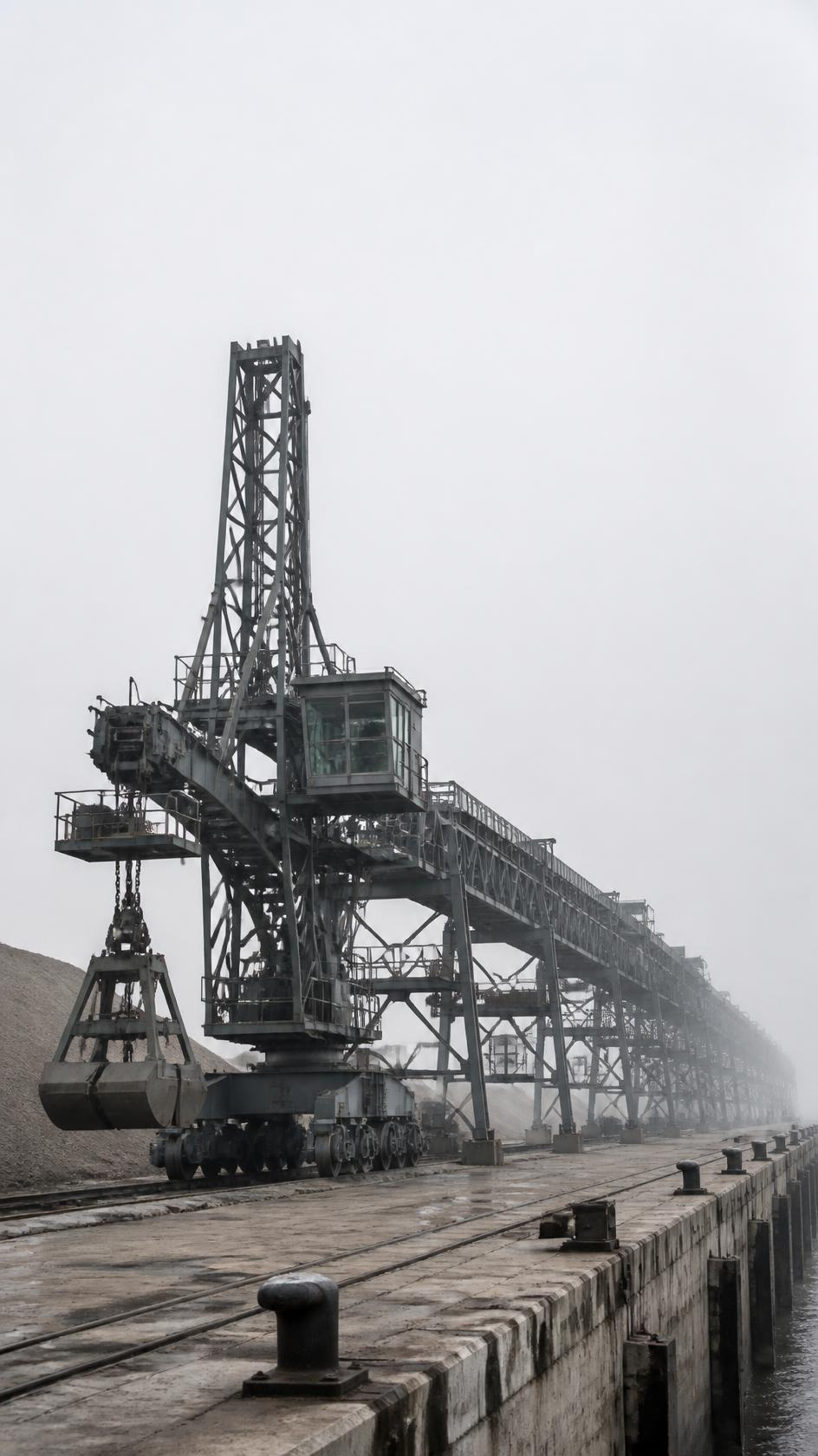
Grab ship unloader and conveyor gantry over an empty dry bulk berth
A dry bulk handling berth at an Indian port. Illustrative.

What is the value of a port berth when it is licensed rather than operated?

Two organisations are about to find out, and they are doing so in different ways. Haldia Dock Complex is providing Berth 1 for licensing in order to carry out integrated dry bulk handling, on an operation and maintenance royalty basis, with the deadline for submission being 15 September. The Ministry of Shipping is running a request for proposals for an operator of General Cargo Berth-1 under the UEOMT scheme, covering upgradation, equipping, operations, maintenance and transfer, with the closing date set for 21 September.

The two arrangements deal with the same fundamental decision but divide the risks differently. In the case of an operation and maintenance royalty licence, the asset and the capital remain with the authority and the authority receives operating performance in return, the licensee paying a royalty based on the volume of throughput. With UEOMT, the operator is required to carry out the upgradation and equipping of the berth first, and recovers the investment over the operating period before the asset is returned. One is an operating contract; the other is an investment contract disguised as an operating contract.

In our view, the choice indicates what each authority believes its berth is lacking. Haldia is purchasing productivity from an asset that it considers to be sufficient. The Ministry of Shipping is acquiring capital that it would prefer not to raise on its own. An operator who treats both cases the same way will be mispricing one of them.

Who should act

Terminal operators, specialists in dry bulk handling, and the financiers of the equipment behind them. In particular, the UEOMT package requires an operator willing to commit capital before earning revenue, and such operators are considerably fewer in number than those willing to run a berth.

Next step

When pricing the UEOMT bid, base it on the transfer condition rather than the operating margin, since it is the condition of the berth upon handback that determines where the money goes. Both notices are available on etenders.gov.in. Make sure to check the closing dates on the portal before taking any action.

Dates to mark

Haldia Berth 1 has a closing date of 15 September 2026. General Cargo Berth-1 closes on 21 September 2026.

Source and reference: Central Public Procurement Portal. Before taking action, confirm the date on the portal. · etenders.gov.in · Syama Prasad Mookerjee Port and Ministry of Shipping
The Shift

The Growth Driver · Logistical Leap

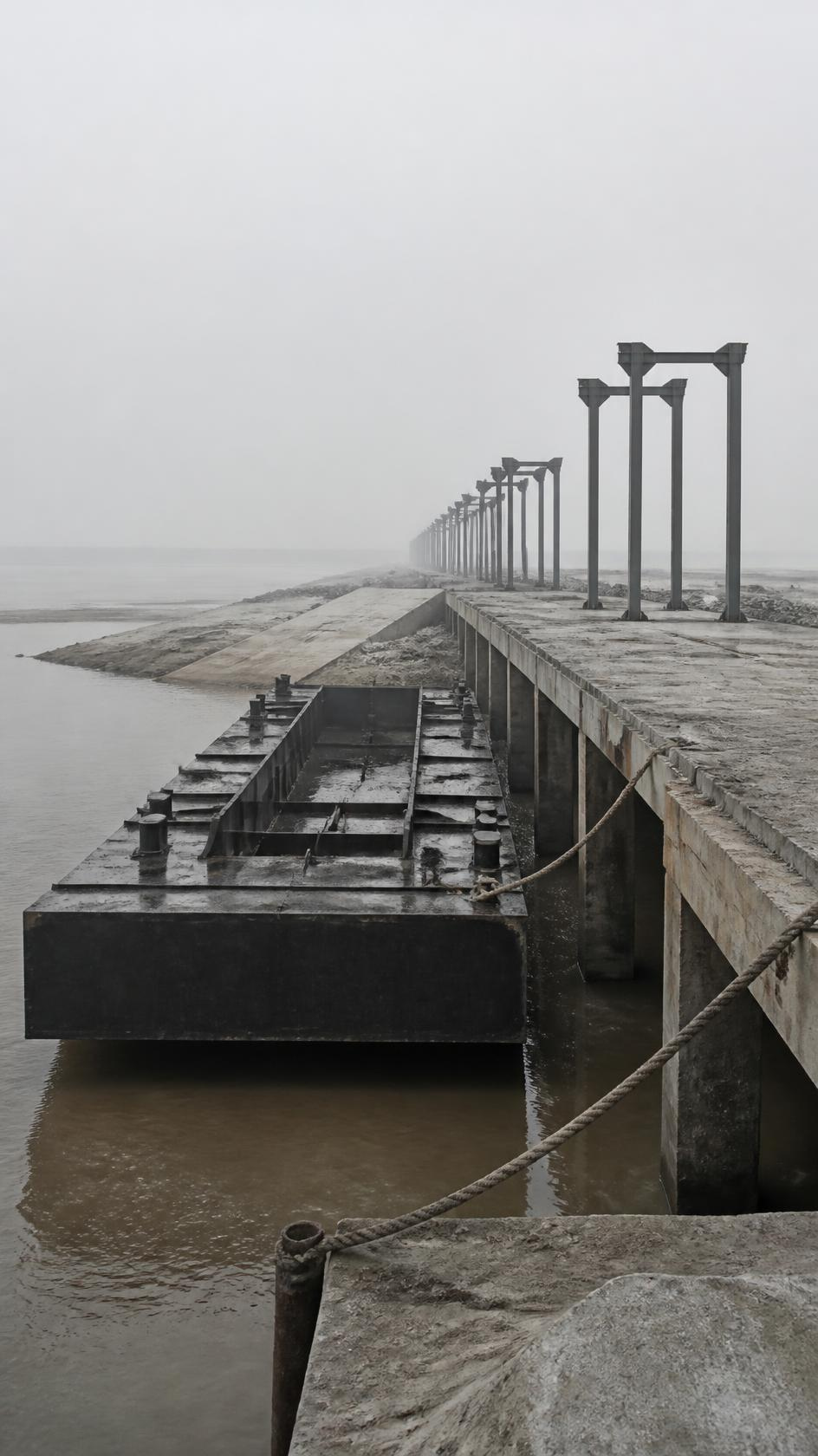
Cargo barge alongside a concrete river jetty at low water
A cargo terminal for inland waterways on a river. Illustrative.

How fast is Kolkata moving on the inland waterways?

So fast that the two organisations together have 43 live tenders, and that figure is ours. Two of the notices specify the direction of travel: the development of KPD II as a multi-modal terminal on a design, build, finance, operate and transfer basis, and dredging at Haldia being awarded on an EPC basis.

A multi-modal terminal on a DBFOT basis is not a port expansion; it is a modal transfer point obtained through a concession. Under the DBFOT arrangement, the developer takes on the finance and the traffic risk throughout the concession period. The fact that KPD II is being procured in this way shows that the authority believes there is a viable cargo case for goods to be carried by river into and out of Kolkata; a position that the inland waterways programme has held for ten years but which it has seldom put to the test with private investment.

The dredging indicates the constraint. By awarding the Haldia dredging work on an EPC basis rather than as a rolling maintenance contract, depth is treated as a capital project with a specific output rather than as an annual expense. In our view, this is the first step that must be taken if the terminal concession is to be financeable at all. No depth, no cargo, no annuity.

It is the most difficult place in India to make that argument work, which is why it is the most interesting one. Kolkata is a river port situated a long way upstream and has silted up since it came into existence; its throughput has always relied on maintained depth rather than natural depth. If the concession model can be made financeable here, then it can be made financeable at any point on the system.

Who should act

Dredging contractors, developers of multi-modal terminals, and operators of barges and river craft. Also, freight forwarders who would have to actually route their cargo through KPD II, since a concession without committed volumes would be one that no one would want to win.

Next step

Treat the KPD II concession and the Haldia dredging scope as a single document, because the terminal's business case depends on a depth that the dredging contract must provide. Both documents are available under Syama Prasad Mookerjee Port and the Inland Waterways Authority of India on etenders.gov.in.

Source and reference: Central Public Procurement Portal. Please check the date on the portal before taking any action. · etenders.gov.in · Tenders by Organisation

The Window

The Operator · Logistical Leap

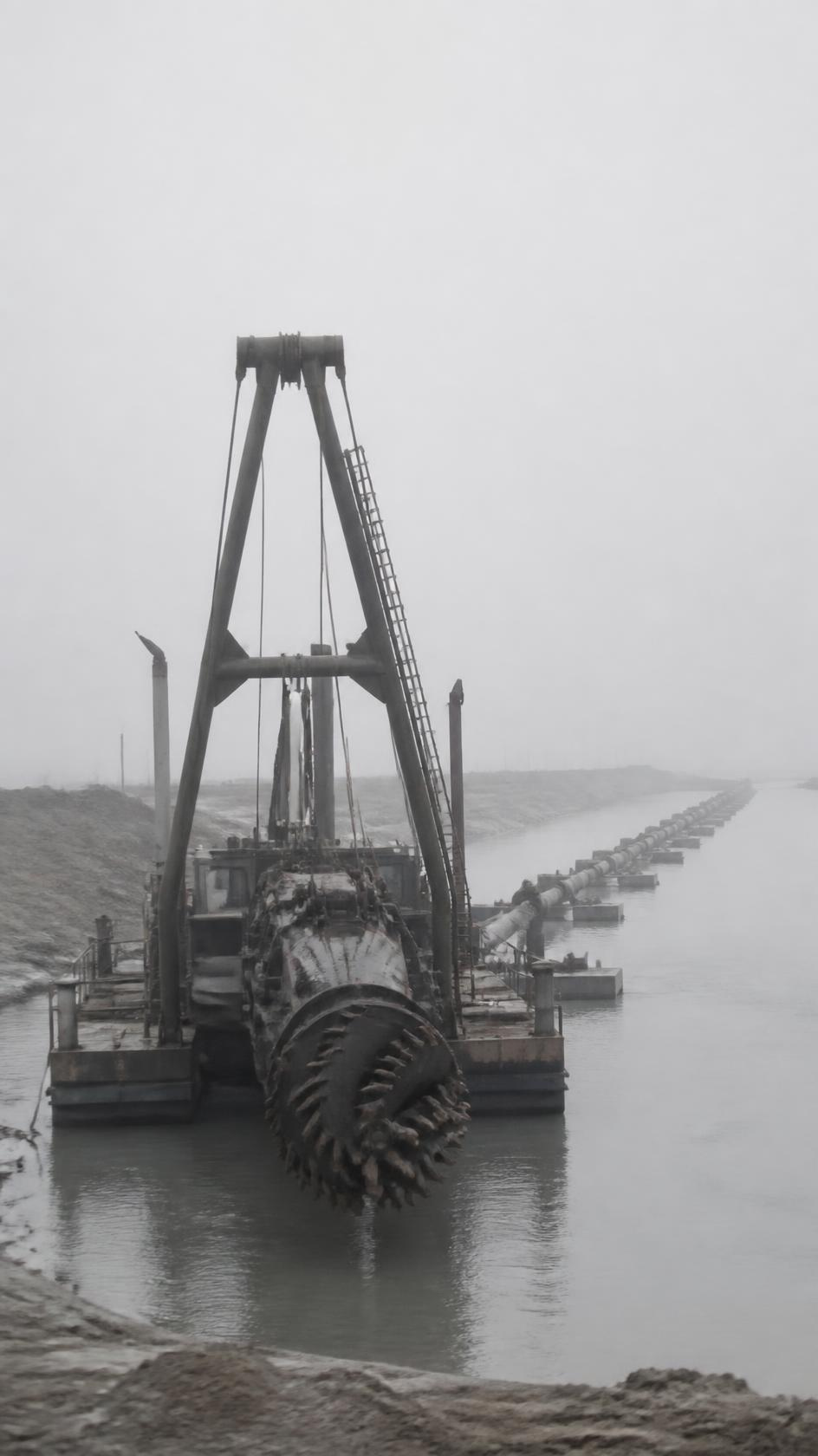
Cutter suction dredger with its ladder raised and floating discharge pipeline
A cutter suction dredger on an inland channel. Illustrative.

Which tender is due to close tomorrow?

Two inland cutter suction dredgers. The Ministry of Shipping is launching a tender for the design, engineering, construction, testing, commissioning, sea trials, delivery and warranty of two vessels, with the tender closing on 8 September. It is the most time-sensitive item in this week's transport book.

The scope is the key point. This is not a charter and it does not constitute a dredging services contract; it is actually shipbuilding, with a single contractor responsible for the vessels from the design stage through to sea trials and the warranty period. A cutter suction dredger is the type of machine used when the material is hard, compacted or rocky rather than free-flowing silt, and by specifying inland variants it indicates that the work will be carried out on rivers and canals rather than on approach channels.

When you compare this tender with the Haldia dredging package and the other items in the inland waterways section, a clear pattern emerges. You first buy the depth as a project and then take ownership of the equipment that maintains it. According to our interpretation, the government is choosing to hold onto the asset rather than renting out capacity from the seasonal contract dredging market.

The timing is the reason why this tender appears in The Window rather than in another section. A tender that ends the day after it is published is not an opportunity for anyone who reads about it here first, and we would prefer to state that clearly rather than pretend it isn't the case. Its value lies in acting as a marker: this is what the buyer wants, this is the way it is packaged, and the following tender will be similar.

Who should act

Indian and international shipyards with experience in dredger vessels, manufacturers of cutters and pumps, and the classification societies and marine design firms that would be involved in submitting a bid. This is a shipbuilding tender and not a dredging tender, and the suppliers are not the same.

Next step

If you are not already registered and qualified on the portal, then this opportunity has already passed, so treat it as an indication of the government's buying pattern and set an alert for the next vessel package. The notice is listed under the Ministry of Shipping on etenders.gov.in.

Dates to mark

Closes 8 September 2026.

Source and reference: Central Public Procurement Portal. Before taking any action, verify the date on the portal. · etenders.gov.in · Ministry of Shipping

AdvertisementClean Stack Forum India, Transport and Logistics, 17 February 2027, Nagpur. Register interest.
The Number

The Operator · The Innovator · Logistical Leap

Lighthouse on a bare rocky headland against a flat sea and sky
Coastal aid to navigation. Illustrative.

Which maritime organisation outbids the ports and why isn't it one?

The Directorate General of Lighthouses and Lightships. It has 32 live tenders on the central portal, compared with Mumbai Port having 19, New Mangalore Port having 16 and Jawaharlal Nehru Port having 7. The only body that has more is the Ministry of Shipping itself, with 41.

This figure contradicts a reasonable assumption. Maritime procurement is usually thought of as ports purchasing cranes, berths and dredging, and the ports are indeed making such purchases: Kolkata Port has 29 live tenders and Andaman and Lakshadweep Harbour Works has 12. Yet the most active maritime authority on the portal is the organisation responsible for aids to navigation, not any of the agencies that handle cargo.

There is a structural explanation. Lighthouses, buoys, beacons, racons and vessel traffic services constitute a spread-out estate made up of many small assets along the coastline, and such a distributed estate leads to a large number of low-value tenders. A port, on the other hand, is a concentrated estate that results in fewer, higher-value tenders. In our view, the tender count reflects the shape of an estate rather than the amount spent, and therefore a supplier who ranks buyers solely on the basis of count will end up targeting the wrong ones.

The opposite lesson is more useful. Although Jawaharlal Nehru Port handles a large portion of the country's container traffic and appears here with seven live tenders, this tells us very little about its spending. When assessing a maritime opportunity, count and value must be treated as two separate issues, and the portal only answers one of them.

Who should act

Suppliers of aids to navigation, manufacturers of marine electronics and racons, suppliers of solar and battery power for unmanned stations, and the small contractors who maintain remote coastal sites. A buyer that places a high number of low-value orders rewards a continuous presence rather than a bid team.

Next step

Rank your target buyers separately by count and by value, then sell to each in the appropriate way. Retrieve the Directorate General of Lighthouses and Lightships entry entirely from the 'Tenders by Organisation' view on etenders.gov.in rather than looking up entries by product category.

Source and reference: Central Public Procurement Portal. Check the date on the portal before taking any action. · etenders.gov.in · Tenders by Organisation

The Pattern

The Strategist · The Guardian · The Intelligence Yield

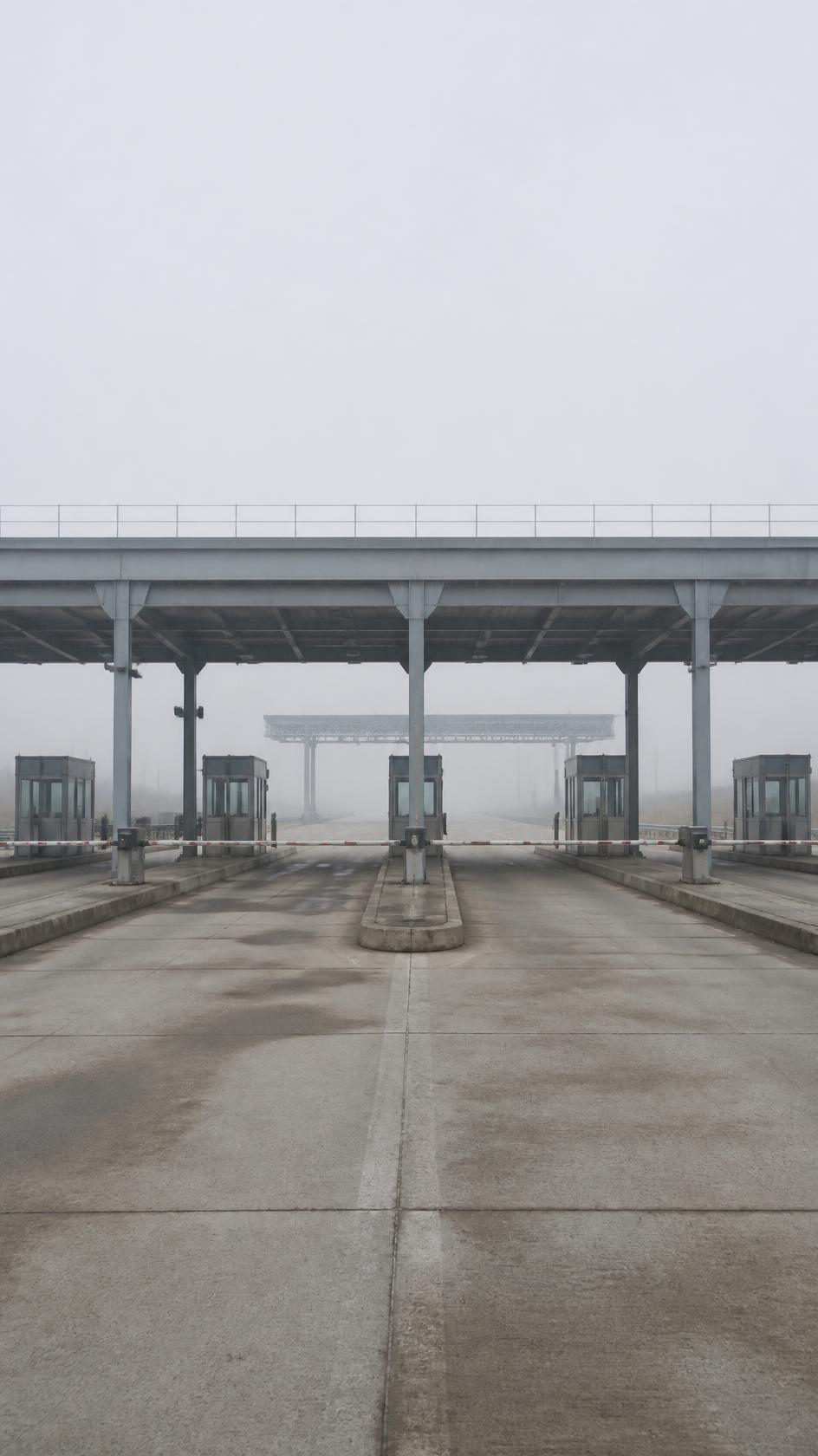
Toll plaza canopy with identical empty lanes and barriers down
An operating toll plaza on a national highway. Illustrative.

Who is altering the rulebook for the trusts that own India's infrastructure?

The Securities and Exchange Board of India (SEBI) is doing so, having moved four times this year. There were three separate consultations concerning the Infrastructure Investment Trust (InvIT) and Real Estate Investment Trust (REIT) frameworks in 2026, along with a circular being issued at the same time.

The four in chronological order were: a consultation on Net Distributable Cash Flows on 1 June, one on Depository Receipts relating to REIT and InvIT units on 4 August, another on the Ease of Doing Business for REITs and InvITs on 6 August, and a circular on the calculation of Net Distributable Cash Flows on 14 August. Two of the four deal with the same issue, namely how much cash a trust is required to distribute and how that amount is calculated.

None of these individual consultations is anything new. Taken together, they show a regulator who is adjusting the instrument that Indian infrastructure firms are increasingly using to hold finished assets such as roads, transmission lines, telecom towers, fibre networks and warehouses. In our view, the cash flow definition is the key one, since it determines the actual amount that a unit holder receives and thus what a sponsor can raise when selling a completed asset.

That is the reason why this matter should be considered in the context of transport rather than finance. The trusts currently being revised are the final owners of the roads, terminals and warehouses that fall within the remit of this department. A developer who focuses only on the procurement stage of the process sees the asset come into being and then completely loses sight of it at the very point when its value is determined. The rulebook applicable at that moment is now being rewritten.

Who should act

Infrastructure sponsors who intend to monetise completed assets, as well as the fund, legal and valuation advisers who are involved in arranging those transfers. If the cash flow definition changes, then the price the trust will pay for your road will also change.

Next step

Read the circular of 14 August before looking at the consultation papers, since the circular is the one that is currently in force and the consultations only explain its origin. The sequence is available on sebi.gov.in under Legal and under Reports and Statistics.

Source and reference: Securities and Exchange Board of India, the consultation papers and circulars published in 2026. · sebi.gov.in · consultations and circulars

Next Monday, five moreThe Signal lands every Monday morning with five reads for Transport, Logistics and Trade, each one traced to the record it came from.
Get it by
EmailLinkedIn

One email a week. Change industry or unsubscribe from any issue.

We use your details to send The Signal and, where relevant, to tell you about TNF India events. Privacy notice

Disclaimer

The Signal is an independent weekly briefing by TNF India. We are not affiliated with or endorsed by any government body or portal. We write our reads using public records, restating them in our own words alongside our own analysis. This briefing provides general information only and does not constitute bid, procurement, legal, financial or investment advice.

Public notices change often after publication. Corrigenda, extensions and cancellations may not be reflected in our past editions. While TNF India takes care over accuracy, we give no guarantee of completeness or timeliness and are not responsible for any loss arising from reliance on The Signal. Always verify the original documents with the issuing authority before making a bid or investment decision, as the original notice prevails.

If you spot an error, anyone can ask for a published and dated correction via our Corrections and grievances page.

The five slots
The AwardWho won what, and what the contract structure indicates about how the buyer now buys.
The ShiftPerformance against a stated target or schedule, what is running ahead, and what that costs the supply chain.
The WindowSomething open right now that closes. A tender, a consultation, an incentive scheme. Always with the deadline and the link.
The NumberOne figure that overturns a prevailing assumption, with the arithmetic shown when the figure is ours.
The PatternThe thing that only appears when you look across several records at once.
Past editions · since Week 35Week 41 · Construction and InfrastructureEight design consultancies close between 5 and 9 October, including the Tambakhani tunnel and two Uttarakhand hill alignmentsWeek 41 · EnergyNTPC Limited's 400 MWh battery EPC package at Mouda closes on 12 OctoberWeek 41 · Manufacturing and EngineeringSpares are being tendered by make and model, which hands the aftermarket to the original manufacturerWeek 41 · Transport, Logistics and TradeTwo coal legs from one mine were awarded in a week, Talabira to Kudgi and Talabira to MoudaWeek 40 · Construction and InfrastructureIndia's highway authority has started buying method rather than outcome, and that changes who can bidWeek 40 · EnergyIndian storage is now bought as availability by the month, not as equipment by the megawatt hourWeek 40 · Manufacturing and EngineeringIndustrial buyers are contracting out the plants they used to build themselvesEvery edition