Tuesday, 13 October 2026
The Signal, every MondayLinkedInXLog in
TNF India
AnalysisSeriesThe SignalEventsAccess
Join free
IndustriesEnergySpaceTransport, Logistics and TradeConstruction and InfrastructureManufacturing and EngineeringUtilities and Public ServicesFinancial ServicesHealthcare and Life Sciences
TNF IndiaIntelligence you can act on, and events worth being at.Connecting digital analysis with real-world conversations across India's growth industries.
LinkedInXRSS
Observer · FreeRead TNF India free as an Observer.Five articles a month, two industry reports a year, and 25% off delegate passes across TNF events worldwide.
No card needed. We handle your details as set out in our Privacy Policy.
TNF IndiaAnalysisSeriesExploreEventsAccessThe Signal
IndustriesEnergySpaceTransport, Logistics and TradeConstruction and InfrastructureManufacturing and EngineeringUtilities and Public ServicesFinancial ServicesHealthcare and Life Sciences
PillarsBridging the DeficitLogistical LeapProfit and PlanetThe Compute LayerThe Intelligence YieldThe Multinational MandateThe New Work Order
PersonasThe Growth DriverThe GuardianThe InnovatorThe OperatorThe Strategist
CompanyAbout UsCareersContact UsPartner with UsAdvertise
AccessObserver, freeSpecialistVisionaryLog in
© 2026 The Niche Foundry Asia Positive Media LLP. All rights reserved.
Terms of ServicePrivacy Policy
Home/The Signal
The SignalEnergy · Week 38, 2026 · 15 September 2026

Three equipment suppliers' order books are filling faster than the generators they serve

Five reads on India's energy estate this week. One slot is empty, and it says why.

EnergyConstruction and InfrastructureTransport, Logistics and TradeAll editions
The AwardThe throughput decreased during the building process, which is why the terminal is now running at about 72 per cent of its new nameplate. Gopalpur costs ₹1,271 crore per MMTPA, the cleanest unit benchmark in this edition.The ShiftThe module capacity is 11.1 GW as compared to a cell capacity of 3.6 GW, with 10 GW of ingot and wafer capacity being under construction at Naidupeta, and the 7.5 GW gap represents the portion of modules that still have to be imported into India.The WindowNo live tender, consultation or compliance deadline met the required standard, so the slot remained empty rather than being filled.The NumberCapacity increased by 18.6 per cent while sales rose by 4.13 per cent, which means that the seventy stations were actually buying up queue time rather than gas. Queue time is the barrier to the commercial fleet conversion.The PatternThe amount for CG Power is ₹15,719 crore, that for Hitachi Energy India is ₹29,555 crore, and that for Sterling and Wilson is ₹11,813 crore. Since Hitachi has booked 2.3 times the amount of what it has delivered, its backlog corresponds to 3.6 years of work and the equipment date determines the commissioning date.
The Award

The Operator · The Strategist · Bridging the Deficit
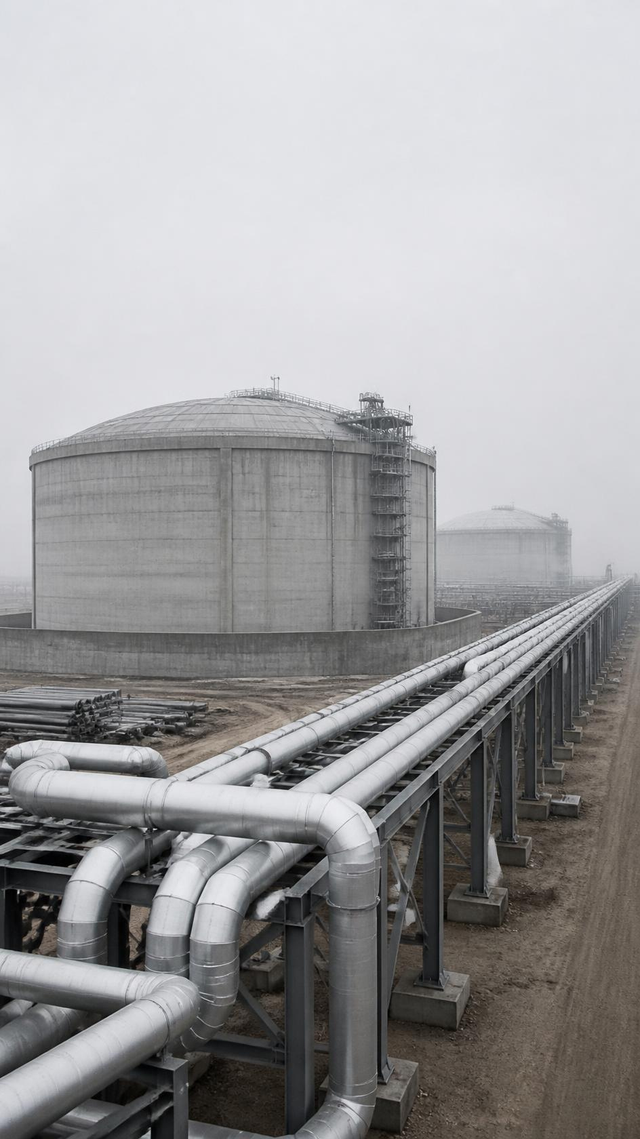
LNG terminal cryogenic storage tank with insulated pipework, no people present
An LNG terminal with a cryogenic storage tank and insulated pipework. Illustrative.

Petronet commissioned the 5 MMTPA unit at Dahej two months ahead of schedule, which brought the nameplate capacity to 22.5 MMTPA

On 31 March 2026 Petronet LNG put into operation an expansion of its regasification capacity at Dahej equivalent to five million tonnes per year, the terminal's nameplate capacity thus rising from 17.5 to 22.5 million tonnes per year, the work being completed two months earlier than the schedule which had been approved by the board. Expenditure on capital during the year amounted to ₹2,732 crore as compared with ₹1,584.28 crore the previous year.

It is uncommon for an LNG terminal expansion to be finished ahead of schedule, and what is noteworthy is the terminal's performance during the construction phase. The amount of LNG handled by Dahej fell from 16.91 to 16.09 million tonnes per year, its output declined from 875.78 to 832.91 trillion British thermal units, and the number of ships it discharged decreased from 258 to 247. The level of utilisation also fell from 96.6 to 91.9 per cent.

In one year the company increased its capacity by 29 per cent even though the volumes were falling. It should be noted that the figure of 91.9 per cent is based on the previous nameplate capacity of 17.5 million tonnes, not the new one; on the new base the same level of throughput is equivalent to about 72 per cent, and that figure is ours.

In the forward book, the commitment for the supply chain is recorded. The third jetty is approximately 70 per cent completed at an estimated cost of ₹2,013 crore and is targeted for fiscal year 2027-28. The petrochemical complex at Dahej is 38.6 per cent complete against a budget of ₹20,685 crore, with ₹13,346 crore having been committed. The five million tonne land-based terminal at Gopalpur has a cost of ₹6,354.80 crore, amounting to ₹1,271 crore per million tonne of capacity and representing the cleanest unit benchmark in this edition. A terminal which is currently operating at 72 per cent of its new nameplate capacity still has the possibility of increasing its output, and regasification prices also have scope to be adjusted accordingly.

Who should act

The people who should take action are those buyers and traders who are negotiating the terms for regasification, since spare capacity gives them bargaining power. Moreover, the EPC contractors, the cryogenic specialists and the jetty builders should also be included: the forward book this year is greater than it was last year.

Next step

When you are purchasing regasification capacity, you should restart the debate concerning the new nameplate rather than the old one, since quoting utilisation against a discontinued base makes a terminal appear fuller than it actually is.

Source and reference: Petronet LNG, Annual Report FY2025-26.
The Shift

The Operator · The Innovator · Profit and Planet

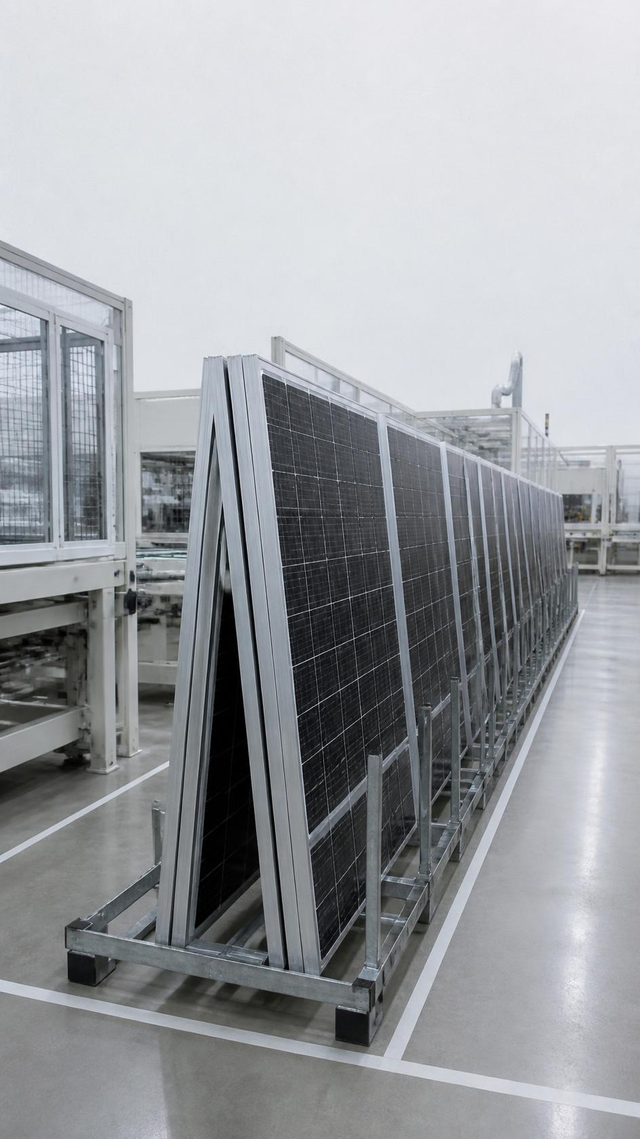
Framed photovoltaic modules racked at the end of an assembly line, no people present
Framed photovoltaic modules racked at the end of an assembly line. Illustrative.

Premier Energies has a module capacity of 11.1 GW and a cell capacity of 3.6 GW, the difference being due to imports

7.5 gigawatts: that is the difference between the capacity that Premier Energies can assemble and the capacity it can actually produce. For the financial year 2025-26 the company increased its module capacity from 5.1 to 11.1 gigawatts and its cell capacity from 2.0 to 3.6, which means the gap between the two capacities grew rather than shrinking. That figure is calculated by us, based on the four figures provided by the company.

The output was based on capacity. In the current year, Premier produced 3,570 MW of modules compared with 2,431 MW the previous year and 2,268 MW of cells compared with 1,611 MW. Revenue increased from ₹66,521 million to ₹80,259 million and profit after tax amounted to ₹15,097 million. Two years earlier, in FY2024, cell production had been 769 MW.

The upstream sector is the one in which money is currently being directed, since it is the part that determines the outcome. At the Naidupeta facility in Andhra Pradesh, there is planned capacity of 10 gigawatts for ingot and wafer production together with 7 gigawatts for TOPCon cell production, and the company states that the project is on schedule. The ingot and wafer stage is what decides whether a module manufactured in India is actually made there or merely assembled there. According to the company's own report, China has about 85 per cent of the global solar manufacturing capacity and 95 per cent of wafer production.

A neighbouring buying operation is part of a separate supply chain. Premier has acquired 51 per cent of Transcon Industries, which will result in an operational transformer capacity of 6.75 GVA together with an additional 10 GVA extra high voltage facility capable of reaching 765 kV, with this facility due to be completed in the third quarter of 2026. By 2028 a 12 GWh containerised battery plant is planned and an aluminium frame plant with an annual capacity of 18,000 tonnes is currently being constructed for use by the company itself.

Who should act

As to who should take action, the developers who are negotiating the terms for supplying modules should determine which stage is in fact carried out in India, since a split of 11.1 against 3.6 gigawatts gives you most of the answer before you even ask. Similarly, the equipment vendors and the EPC companies working on the cell, ingot and wafer lines should also do this, as that is where the factory construction over the next two years will take place.

Next step

In your next module supply agreement include the upstream question and find out which of the module, cell, wafer or ingot is manufactured in India for the units you are purchasing, incorporating this information into the contract not the brochure.

Source and reference: Premier Energies, Annual Report FY2025-26.

The Window

Nothing qualified this week

Since none of the live tenders, consultations, or compliance deadlines in India for this slot met the required standard, the slot is left empty rather than being filled.

Why it matters

Next step

AdvertisementThe site is a line, not a plot. Data Stack Global India, 16 February 2027, Nagpur. Register interest.
The Number

The Operator · The Growth Driver · Profit and Planet

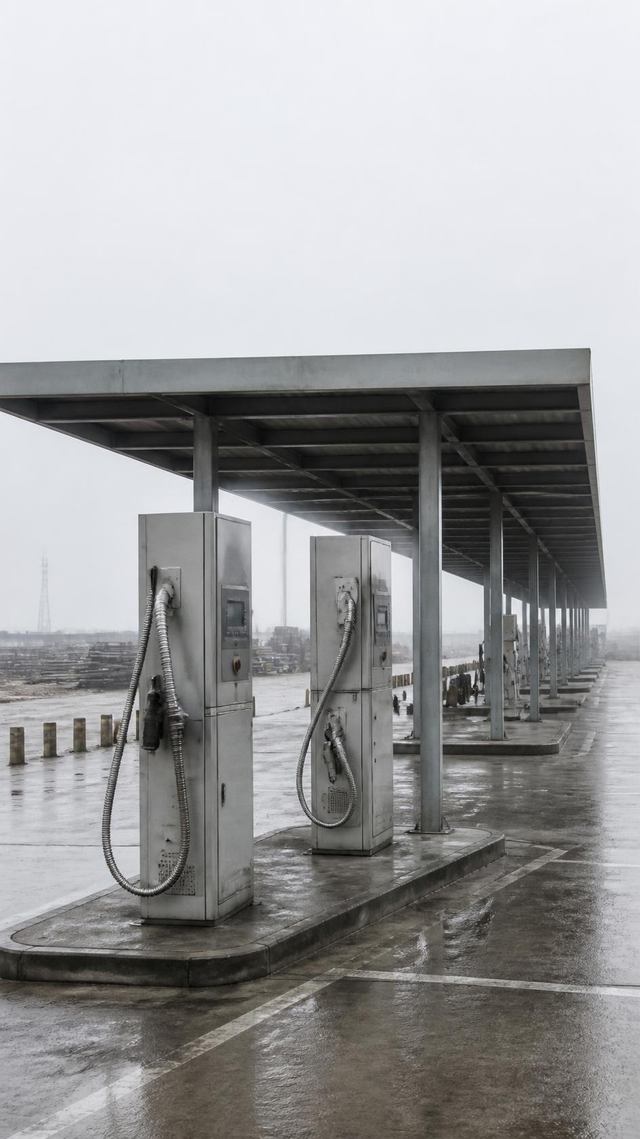
Compressed natural gas dispensers on a station forecourt, no people present
Compressed natural gas dispensers on a station forecourt. Illustrative.

IGL added 70 CNG stations and grew compression capacity four times faster than volume

129.81 lakh kilograms per day. This is the total compressed natural gas compression capacity of Indraprastha Gas Limited as of 31 March 2026, an increase from 109.44 lakh kilograms the year before. In order to achieve this, the company put into operation 70 new stations so that the total number would become 1,024, increased the capacity at nine additional stations, and changed 23 of its daughter booster stations to online supply.

The change in the arithmetic lies in the following figures: CNG sales volume rose by 4.13 per cent on the previous year, rising from 2,432.50 to 2,532.94 million standard cubic metres; compression capacity also increased by 18.6 per cent, this second percentage being our calculation based on the two figures given by the company.

Capacity increased more than four times faster than volume. In the case of a distributor adding seventy stations, the obvious conclusion is that it is trying to meet demand which it currently cannot serve. The figure for volume shows that demand has only increased moderately. The fact is that the constraint which has been removed was not the supply of gas but the queue time, and that is an inference rather than a stated fact.

If the situation is correct, then the inference has commercial importance since queue time is the main barrier to the conversion of commercial fleets and it is the fleet operators who are responsible for the volume involved. The other parts of the project showed the same pattern: the steel pipeline increased from 2,347 to 2,602 kilometres, medium density polyethylene rose from 27,399 to 29,734, and there were 3.70 lakh new domestic connections, with a capital expenditure of ₹1,120 crore.

Who should act

Who should take action? This includes the operators of commercial fleets in the National Capital Region who are considering a switch to CNG, as well as the businesses which provide the conversion kits and carry out cylinder testing; moreover, the suppliers of compressors and dispensers, as shown by the 70 stations in one year alone.

Next step

Check the lengths of the queues at the two stations that your fleet actually uses, at the times when it actually refuels, and then compare this with the corresponding figure from the same period a year ago; it is this comparison that determines the conversion case, not the national capacity figure.

Source and reference: Indraprastha Gas Limited, Annual Report FY2025-26.

The Pattern ◆

The Strategist · The Operator · Bridging the Deficit

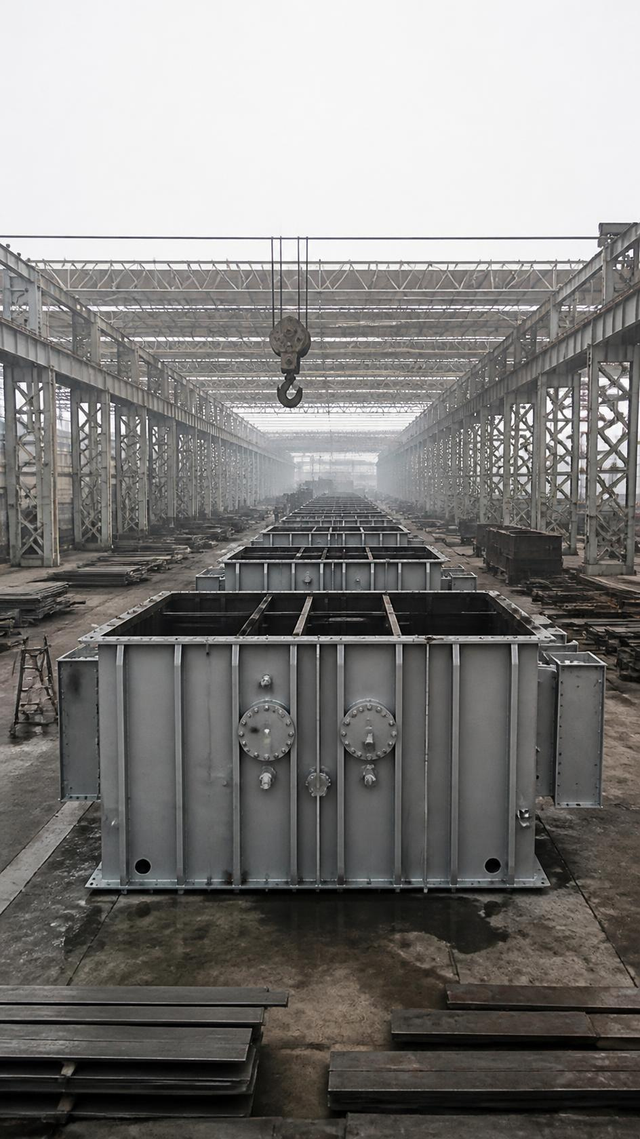
Power transformer tanks on an assembly floor before tanking, no people present
Power transformer tanks on the assembly floor before tanking. Illustrative.

Three equipment suppliers' order books are filling faster than the generators they serve

The amounts are ₹15,719 crore, ₹29,555 crore and ₹11,813 crore; there are three audited disclosures, three suppliers, and one difficulty for anyone who is planning a project. The total of the three books is ₹57,087 crore, and that sum is ours.

At the close of the year CG Power had a standalone order book amounting to ₹15,719 crore, an increase of 59 per cent, based on an order intake of ₹17,574 crore, which was up by 30 per cent. In the course of the year the company increased its transformer capacity from 42,400 to 74,900 MVA and approved an additional greenfield line of 45,000 MVA at a cost of ₹712 crore net of taxes, equivalent to about ₹1.58 lakh per MVA of new capacity. This figure is ours and it is the only public capital benchmark of its kind in this edition.

The order backlog at Hitachi Energy India at the end of the year reached a record high of ₹29,555.3 crore, an increase of 53.5 per cent. The company secured orders worth ₹18,456.5 crore compared with operational revenue of ₹8,147.7 crore, which means it secured 2.3 times as much in orders as it earned in revenue. At the delivery rate of last year, that backlog would take 3.6 years to complete. These two ratios are ours, having been calculated from the three figures stated by the company.

Sterling and Wilson had an unexecuted order value of ₹11,813 crore, an increase of 30 per cent, as a result of inflows amounting to ₹10,062 crore, up by 43 per cent, since they had commissioned around 4.5 GW of solar capacity during the year. None of the three is a generator; each one is a layer that a generator has to buy, and all three are filling up faster than they are emptying. The fact that a backlog is growing by 53.5 per cent while revenue is increasing by 27.6 per cent is not evidence of demand but rather a sign of a delivery issue.

Who should act

The people who should act are the developers and the independent power producers who have their commissioning scheduled for fiscal year 2027 and fiscal year 2028, along with the lenders whose drawdown schedules assume that the equipment will arrive on time; moreover, anyone who has transformer capacity to offer for sale.

Next step

Include the transformer and module delivery slots in your programme as dated dependencies instead of as procurement items. The equipment date determines the commissioning date, not the other way around.

Source and reference: CG Power and Industrial Solutions, Hitachi Energy India and Sterling and Wilson Renewable Energy, FY2025-26 annual results.

Next Monday, five moreThe Signal lands every Monday morning with five reads for Energy, each one traced to the record it came from.
Get it by
EmailLinkedIn

One email a week. Change industry or unsubscribe from any issue.

We use your details to send The Signal and, where relevant, to tell you about TNF India events. Privacy notice

Disclaimer

The Signal is an independent weekly briefing by TNF India. We are not affiliated with or endorsed by any government body or portal. We write our reads using public records, restating them in our own words alongside our own analysis. This briefing provides general information only and does not constitute bid, procurement, legal, financial or investment advice.

Public notices change often after publication. Corrigenda, extensions and cancellations may not be reflected in our past editions. While TNF India takes care over accuracy, we give no guarantee of completeness or timeliness and are not responsible for any loss arising from reliance on The Signal. Always verify the original documents with the issuing authority before making a bid or investment decision, as the original notice prevails.

If you spot an error, anyone can ask for a published and dated correction via our Corrections and grievances page.

The five slots
The AwardWho won what, and what the contract structure indicates about how the buyer now buys.
The ShiftPerformance against a stated target or schedule, what is running ahead, and what that costs the supply chain.
The WindowSomething open right now that closes. A tender, a consultation, an incentive scheme. Always with the deadline and the link.
The NumberOne figure that overturns a prevailing assumption, with the arithmetic shown when the figure is ours.
The PatternThe thing that only appears when you look across several records at once.
Past editions · since Week 35Week 41 · Construction and InfrastructureEight design consultancies close between 5 and 9 October, including the Tambakhani tunnel and two Uttarakhand hill alignmentsWeek 41 · EnergyNTPC Limited's 400 MWh battery EPC package at Mouda closes on 12 OctoberWeek 41 · Manufacturing and EngineeringSpares are being tendered by make and model, which hands the aftermarket to the original manufacturerWeek 41 · Transport, Logistics and TradeTwo coal legs from one mine were awarded in a week, Talabira to Kudgi and Talabira to MoudaWeek 40 · Construction and InfrastructureIndia's highway authority has started buying method rather than outcome, and that changes who can bidWeek 40 · EnergyIndian storage is now bought as availability by the month, not as equipment by the megawatt hourWeek 40 · Manufacturing and EngineeringIndustrial buyers are contracting out the plants they used to build themselvesEvery edition