The Strategist · The Operator · Profit and Planet
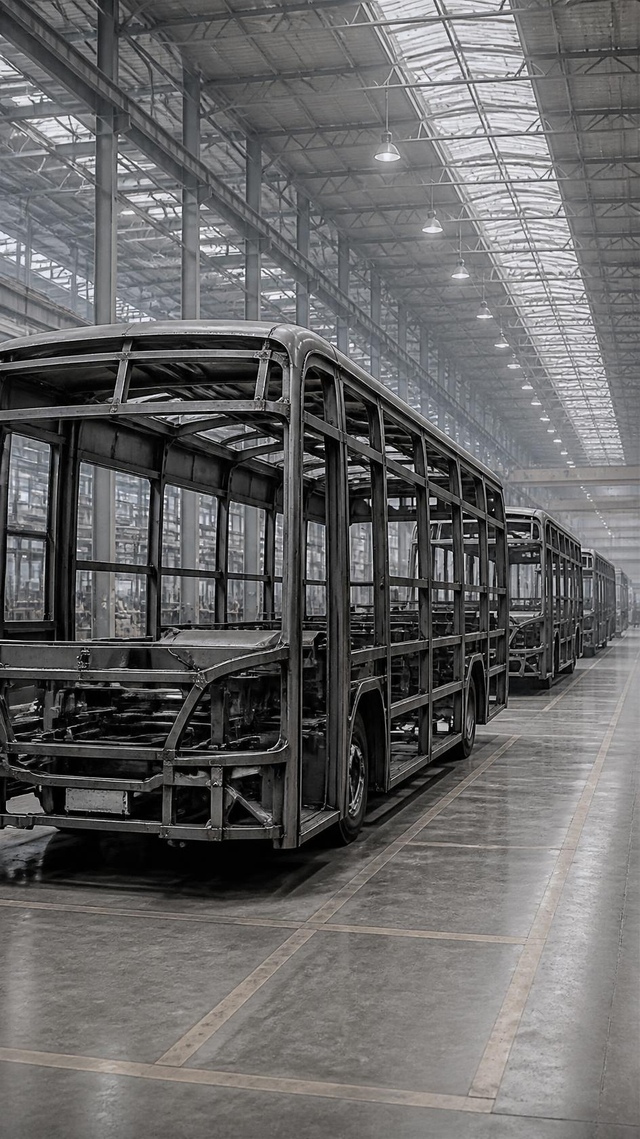
Switch Mobility delivered 1,530 electric buses in FY2026 and reached net profitability
Compared with its base of about 450, Switch Mobility India, the electric vehicle arm of Ashok Leyland, achieved a 238 per cent increase and delivered 1,530 electric buses in FY2025-26. The company also delivered 1,600 electric light commercial vehicles, representing a 56 per cent rise and thus taking the lead in the two to four tonne electric LCV segment.
In India electric bus companies have generally increased their output at prices which do not cover the cost of the asset and thus have carried the cost of the asset. It is uncommon for them to achieve profitability in a year when output triples, and it is the parent company's own audited statement and not a market estimate that shows this.
By its side is OHM Global Mobility, which offers mobility as a service by operating more than 1,400 electric buses. It is the same group with two different models: one deals in vehicles and the other in operated kilometres, and the group has decided not to pick between them.
The parent company is not reducing its funding of the venture. Ashok Leyland has achieved domestic sales of 128,033 units for medium and heavy commercial vehicles, 74,322 units for light commercial vehicles, and the highest level of exports ever recorded, which is 18,082 units, representing an 18.5 per cent increase and involving four new countries. Total commercial vehicle sales, when exports are included, amount to 220,437 as compared with 195,097, a rise of thirteen per cent. That calculation is ours. There is a memorandum of understanding with a state-owned manufacturer in Indonesia relating to the joint development of electric buses. It contains no figure relating to the number of units, and no such figure should be inferred.
As to who should act, fleet operators and state transport companies should do so when dealing with gross cost contracts, since a profitable supplier acts in a different way from one that is buying market share. Furthermore, component suppliers: those manufacturers who have stopped subsidising volume will push cost down the chain next.
When you put in a bid for electric buses over the next two quarters, you must ask bidders to separate out the price of the vehicle from the price of maintenance, since this manufacturer currently does so. A single rate on a per kilometre basis masks which of the two parts is being subsidised.
Source and reference: Ashok Leyland, Annual Report FY2025-26.