Between 23 December 2025 and 30 March 2026, the US FDA issued warning letters to five global pharmaceutical and testing facilities over destroyed, altered, or untraceable records.
The letters describe what people did to records more than what software failed to do.
Facilities must maintain on-demand electronic audit trail retrieval, eliminate bench-analyst administrative rights, and enforce immediate contemporaneous documentation.
Who answers when the US FDA identifies data integrity failures?
At the start of an August 2025 inspection of a Hyderabad testing laboratory, FDA investigators watched staff attempt to remove two garbage bags containing torn chromatographic results and method validation sheets. That facility was among a global cohort of five firms cited in FDA Warning Letters between late December 2025 and late March 2026 for pervasive data integrity breakdowns.
Under 21 CFR § 211.22, statutory responsibility for testing integrity and batch disposition sits squarely with the quality unit, while warning letters are addressed directly to executive management. The regulatory affairs (RA) head plays a critical steering role, translating inspection observations into comprehensive remediation commitments and liaising with the agency. But the RA head cannot substitute for the quality unit's operational authority over laboratory controls and audit trails.
The enforcement ladder is short:
Form FDA 483: Outlines objectionable conditions observed by investigators on site.
Official Action Indicated (OAI): Signals agency-level classification that administrative or regulatory sanctions are warranted.
Warning Letter: Formally details CGMP violations and mandates executive remediation.
Import Alert: Prohibits foreign sites from exporting affected finished products or active ingredients into the United States.
What do ALCOA, ALCOA+, and audit trails mean in an inspection?
Data integrity relies on data being Attributable, Legible, Contemporaneous, Original, and Accurate (ALCOA), as codified in FDA’s Data Integrity and CGMP Guidance. ALCOA+ incorporates four additional principles formalised by the UK MHRA: Complete, Consistent, Enduring, and Available. Both agencies maintain identical expectations regarding the evidentiary standard of GxP records.
The audit trail is the verification mechanism. The FDA defines an audit trail as a secure, computer-generated, time-stamped electronic record that allows for the independent reconstruction of the course of events relating to the creation, modification, or deletion of an electronic record. The MHRA specifies that it must capture who, what, when, and why, while strictly preventing user deactivation or unauthorised reconfiguration.
What does 21 CFR Part 11 require of electronic records and signatures?
Title 21 CFR Part 11 establishes criteria under which the FDA considers electronic records and electronic signatures trustworthy, reliable, and equivalent to paper records. It comprises three subparts:
Subpart A (General Provisions): Defines scope, implementation, and definitions.
Subpart B (Electronic Records): Sets controls for closed and open systems.
Subpart C (Electronic Signatures): Regulates signature execution and controls.
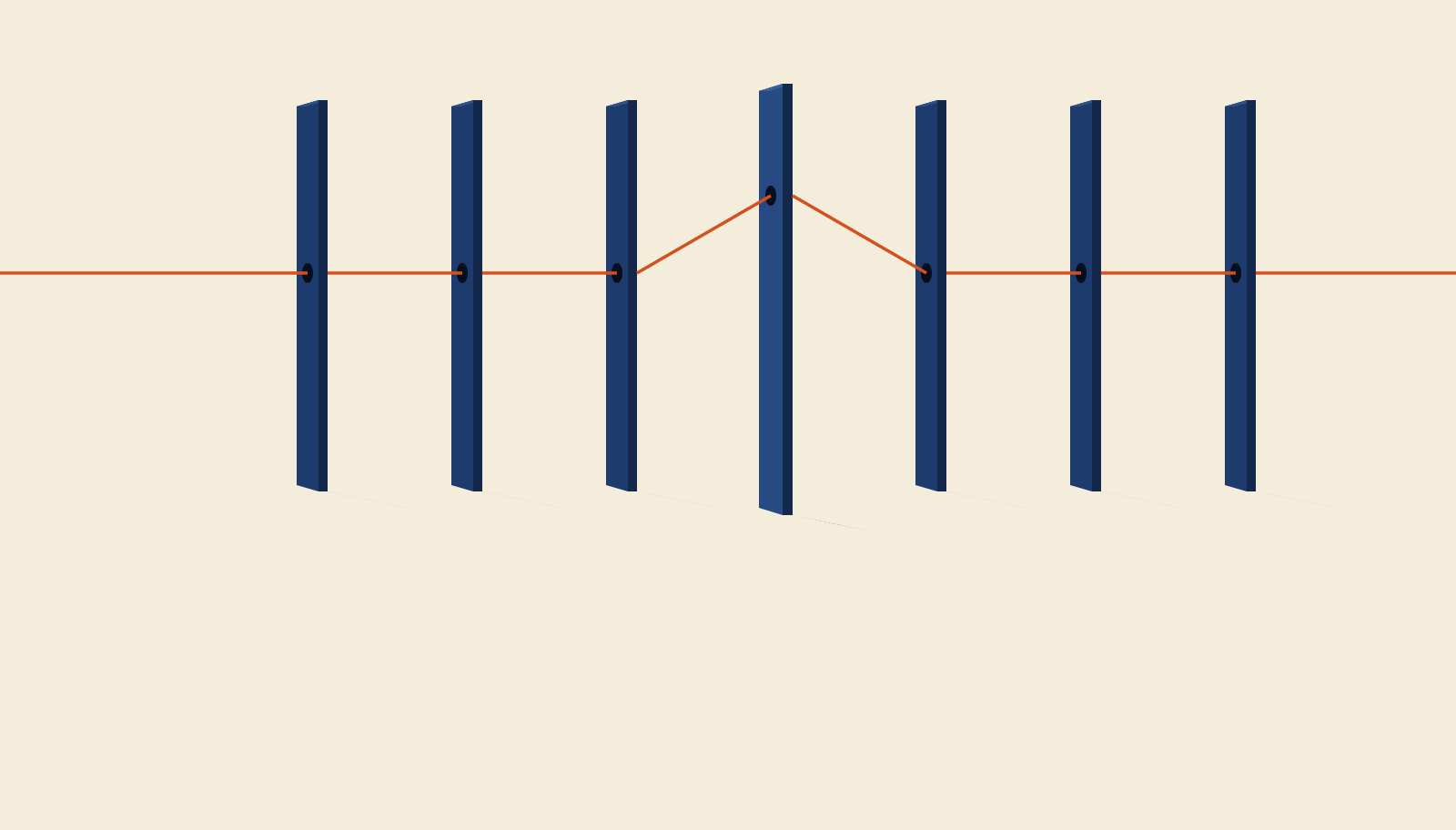
Many hands can touch a record. The audit trail has to show who did what, and when.
Two specific clauses drive core inspection scrutiny:
Section 11.10(e): Mandates the use of secure, computer-generated, time-stamped audit trails to independently record the date and time of operator entries and actions, without obscuring earlier entries.
Section 11.100(a): Requires that each electronic signature be unique to one individual, never reused by or reassigned to anyone else.
What do FDA warning letters reveal about systemic breakdowns?
Enforcement actions land heavily on the quality unit, with laboratory controls close behind. Across this enforcement cohort, citations consistently targeted failures in quality unit oversight alongside severe laboratory control violations. They reinforce that analytical contract testing facilities are held to rigorous CGMP release standards.
Audits consistently identify common behavioural lapses:
Shared analyst login credentials across workstations.
Overwritten analytical sequences and aborted runs excluded from the QC report.
Audit trail functionality disabled during non-conforming sample injections.
Records completed retrospectively from memory.
Backdated signatures to match production timelines.
The FDA’s Data Integrity Guidance highlights that shared logins inherently destroy individual accountability. Also, any testing, including preliminary, trial, or out-of-specification (OOS) runs, must remain part of the permanent analytical record. The verbs dominating FDA citations—destroyed, backdated, altered, replaced—make one truth clear: data integrity fails because of culture and governance, not software limitations.
Why inspectors prioritise audit trails and timestamp reconciliations
An audit trail provides contextual verification. The FDA treats audit trail reviews as the digital equivalent of inspecting manual cross-outs, corrections, and footnotes on paper records. Regulatory guidance mandates that personnel reviewing data packages examine the associated audit trails concurrently, with final verification certified by the quality unit prior to batch release.
For quality and compliance leadership, audit trail review must be an integrated, non-negotiable step in batch release protocols.
Timing reconciliation is equally critical:
An immaculate batch record completed days after execution indicates retrospective reconstruction rather than contemporaneous documentation.
System audit timestamps must align chronologically with laboratory preparation logs, shift rosters, and production schedules.
Any record revision executed after initial supervisor review must state a documented, validated rationale.
Where statutory rules do not mandate a specific review frequency, manufacturers must establish and document risk-based intervals tailored to their analytical workflows.
What quality and regulatory leaders must verify before an inspection
FDA remediation requirements mandate three elements in response to data integrity findings: a comprehensive retrospective investigation into the scope and root cause, a scientifically sound risk assessment evaluating patient safety and product efficacy, and an executive-backed global Corrective and Preventive Action (CAPA) plan.
Prior to an inspection, quality assurance and regulatory leadership should audit five core control points:
On-demand audit trail retrieval: Verify that full audit trails can be generated instantly for any batch and contain documented evidence of quality unit review prior to product disposition.
Strict identity access management: Enforce unique user accounts. Eliminate administrative privileges for bench analysts, remove generic logins, and prevent proxy credential usage.
Contemporaneous bench-level entry: Mandate immediate documentation during task execution. Prohibit interim scrap-paper records, transcribed bench notes, and delayed data entry.
Preservation of non-conforming results: Retain all raw data, failed runs, and aborted sequences. Invalidate analytical data only following an approved, scientifically justifiable OOS investigation.
Operational autonomy of the quality unit: Ensure the quality unit possesses independent authority, adequate capacity, and executive backing to halt production, invalidate suspect data, and reject compromised lots without commercial interference.
Every compliance check resolves to a single principle: can an external auditor accurately reconstruct the entire lifecycle of an operation, in strict chronological sequence, from the electronic and physical record alone? While enterprise software provides the infrastructure, data integrity depends entirely on organisational discipline. Quality and regulatory leaders must ensure these governance standards are operationalised across the shop floor long before an inspection takes place.
Disclaimer: Content provided by TNF India is for informational purposes only. While we aim to provide accurate data and strategic insights, information is subject to rapid market and technological shifts. This content should not replace independent due diligence or professional consultation. TNF India bears no responsibility for any actions taken, or financial losses incurred, in reliance on this material.
Next in The Audit TrailEvery part, as it publishes
Varad DiwateHead of Content, Industry Verticals at TNF India
Varad Diwate shapes the editorial narratives behind India's infrastructure, energy, and technology sectors. He focuses on the sector-specific nuances and structural shifts that determine how markets actually move, and what they mean for the leaders operating inside them. Varad brings deep expertise in B2B content strategy and editorial leadership.See every article by Varad Diwate
The As-Built
Construction and Infrastructure · 8 parts
What an owner should receive at handover, and what actually arrives.