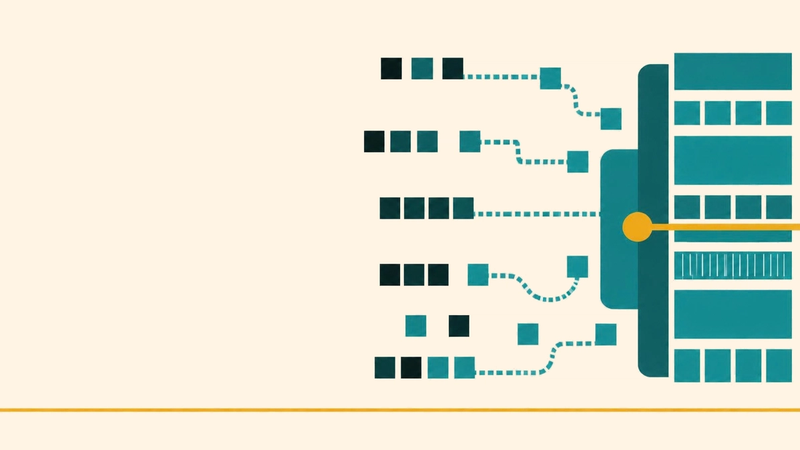
Data Lake 3.0 is mandatory for all NHAI projects, with contractors, authority engineers and project directors among its users.
While core workflows like progress reporting and conciliation are live, features like autonomous AI insights remain under development
Project records are only valuable post-construction if raw data, survey models, and as-built drawings are stored natively, exportable in open formats, and integrable into future asset management systems.
A physical progress report is no longer a stack of paper handed over in a site office. A contractor can submit a progress update digitally, routing it through the authority engineer to the project director for multi-level approval.
This workflow operates within Data Lake 3.0, a cloud platform built by Digital India Corporation (DIC) to manage the lifecycle of highway projects centrally, from inception to tolling. For procurement officers, the real value lies in the data. What matters most is whether those records remain accessible and usable long after construction ends.
Current active deliverables are limited to core modules like progress reporting and conciliation, as autonomous AI capabilities remain under development.
Progress reporting is paved. AI insights are still survey pegs.
What does Data Lake 3.0 hold?
The platform evolved from the National Highways Authority of India's earlier cloud-based contract and project management system, introduced in July 2020. The Ministry of Road Transport and Highways (MoRTH) describes the wider application as covering pre-construction, construction and post-construction activities.
NHAI's FY24 Annual Report identifies drone surveys, network service vehicles, falling weight deflectometers, satellite imagery and geographic information systems (GIS) among its highway monitoring inputs. DIC also lists daily attendance, site photographs and material testing among the information captured by the platform. The Unique Project Code, which predates Data Lake 3.0, links each project to its packages, budgets, expenditure and milestones.
While the platform brings together a range of project information, how that data is stored and made available remains unclear. Whether raw as-built drawings or building information modelling (BIM) models are stored natively, or whether the underlying data can be exported in open formats remains to be seen.
For an incoming operator, access to project documents does not necessarily mean the information can be transferred into the systems used to manage the highway after handover.
Who uses Data Lake 3.0?
As of DIC's June 2025 description, Data Lake 3.0 is designed for use across all NHAI projects, with users spanning the project delivery chain, from contractors and authority engineers to independent safety consultants, state Public Works Departments (PWDs) and NHAI project directors. In the progress-reporting workflow, contractors submit updates, authority engineers review them and project directors approve them. The platform also has a public-facing feature, QR Highway, which allows citizens to view information about highway projects in their area.
At the site level, mobile applications use geolocation and facial recognition to record attendance and field activities. An inaccurate location attached to a material test or site photograph can weaken its value as project evidence. NHAI’s field application was updated with GPS spoofing detection in December 2025 to help identify manipulated location data, followed by offline data capture for routine maintenance and road safety audits in May 2026 to support reporting in areas with limited connectivity.
A multi-level approval process establishes who reviewed and accepted an entry, but does not by itself guarantee its accuracy. Contracts should therefore clarify who is responsible for the underlying data. What also remains unclear is whether incoming concessionaires, operations and maintenance contractors and lenders' engineers can access these records after construction.
Which Data Lake 3.0 modules are live?
Physical progress reporting, road closure tracking and digital conciliation are live, while autonomous artificial intelligence insights remain under development.
The platform has also been integrated with PM Gati Shakti and PARIVESH. NHAI's Advanced Traffic Management System (ATMS) specifications require direct application programming interface linkage with the Data Lake and an integrated e-challan system. Earlier Data Lake modules covered land acquisition, land handover, toll notification, Extension of Time and Change of Scope.
NHAI's FY24 Sustainability Report also records 155 resolved conciliation claims, with the authority reporting savings of approximately ₹25,680 crore. These figures indicate the financial significance of dispute resolution, but the available evidence does not link the outcomes to the digital conciliation module now described under Data Lake 3.0.
What should procurement officers specify for handover?
The contractor leaves, but the records stay suspended.
The priority is not simply whether Data Lake 3.0 is in use, but whether the project records are complete, accessible and usable after construction. The digital progress reports and their approval history provide a starting point for verifying what has been recorded.
Operators need to know whether material test reports, site photographs, survey data and as-built drawings can be retrieved and used in their own asset management systems. They should also check whether API access is available beyond the specified ATMS linkages, and who is accountable for the accuracy of past project records.
The available public information does not make clear who owns the data or what access incoming operators retain once a contractor leaves the project.
Disclaimer: Content provided by TNF India is for informational purposes only. While we aim to provide accurate data and strategic insights, information is subject to rapid market and technological shifts. This content should not replace independent due diligence or professional consultation. TNF India bears no responsibility for any actions taken, or financial losses incurred, in reliance on this material.
Niharika PahwaContent Manager, Construction & Infrastructure, Energy & Utilities at TNF India
Niharika Pahwa leads content coverage for the construction, infrastructure, energy, and utilities sectors at TNF India. She focuses on industry trends, investment activity, and the evolving policy and regulatory landscape.
An Economics (Honours) graduate with experience in market intelligence, Niharika combines an analytical approach with deep sector research to translate complex industry data into clear, strategic insights for business decision-makers.See every article by Niharika Pahwa