Tuesday, 13 October 2026
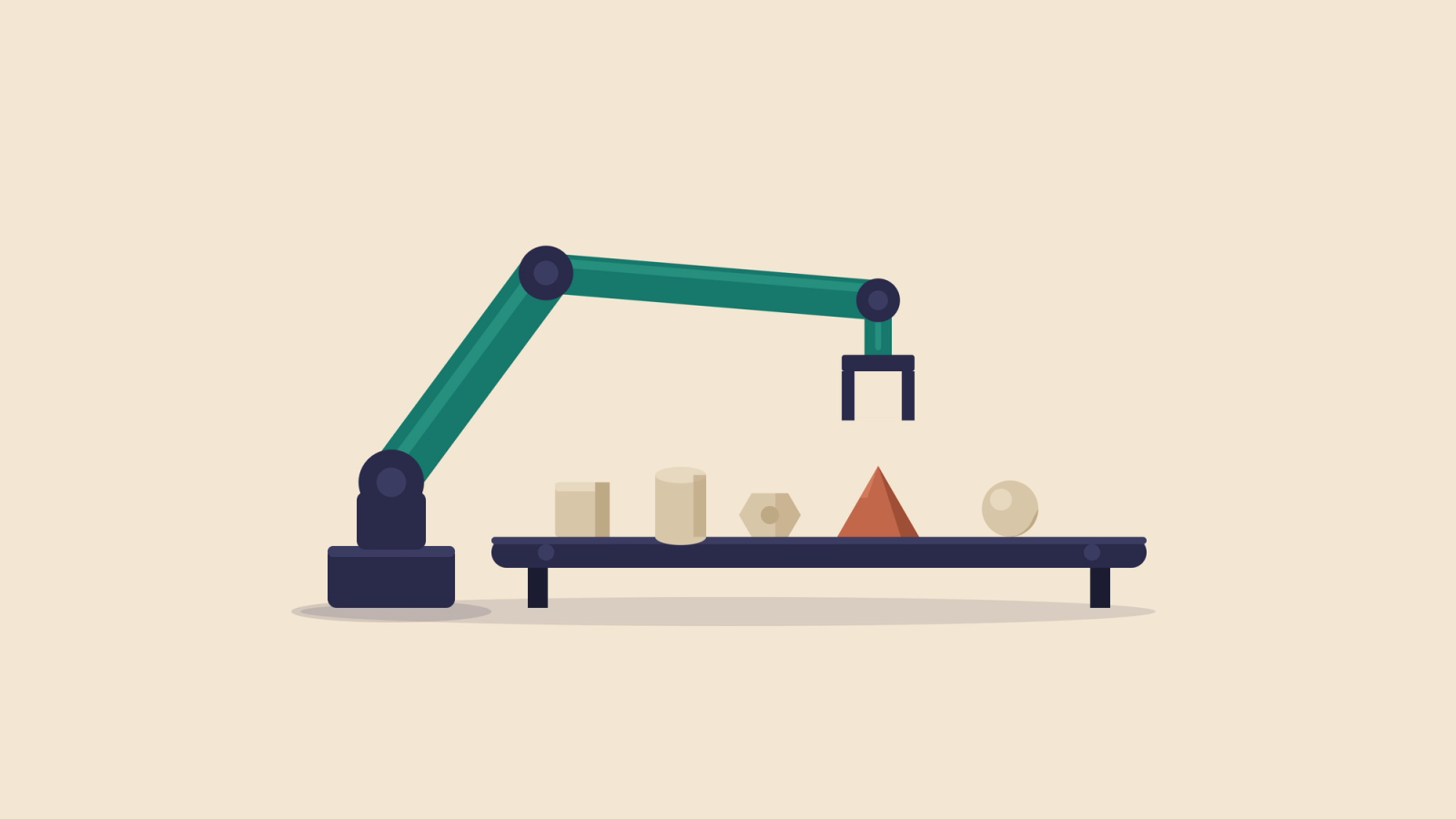
Indian manufacturers can now buy automation off the shelf. The advantage goes to those who turn their data into faster, better decisions.
Indian manufacturers can now buy automation off the shelf. The advantage goes to those who turn their data into faster, better decisions.
 Lalita Subrahmanyam
Robots can be bought. Better decisions cannot. That is the lesson Indian manufacturers are learning as automation becomes cheaper and easier to install. The factories pulling ahead are the ones that can see a failure coming, trace a defect to its cause and act fast. For Indian factories, the constraint is not the number of robots they can buy. It is whether they can use the data they already generate.






According to the Economic Survey 2025-26, micro, small and medium enterprises (MSMEs) account for 31.1 per cent of India's GDP, 35.4 per cent of manufacturing output and 48.6 per cent of exports. Because MSMEs produce more than a third of manufacturing output and supply large manufacturers, their momentum on automation will shape supply-chain performance and national competitiveness.
Smart factories detect and fix problems while production is still running. In other plants, critical production information remains trapped in programmable logic controllers (PLCs), spreadsheets or handwritten logs. Maintenance begins only after equipment fails. Quality issues emerge after production batches finish. Time goes into reconstructing yesterday's problems rather than preventing tomorrow's.
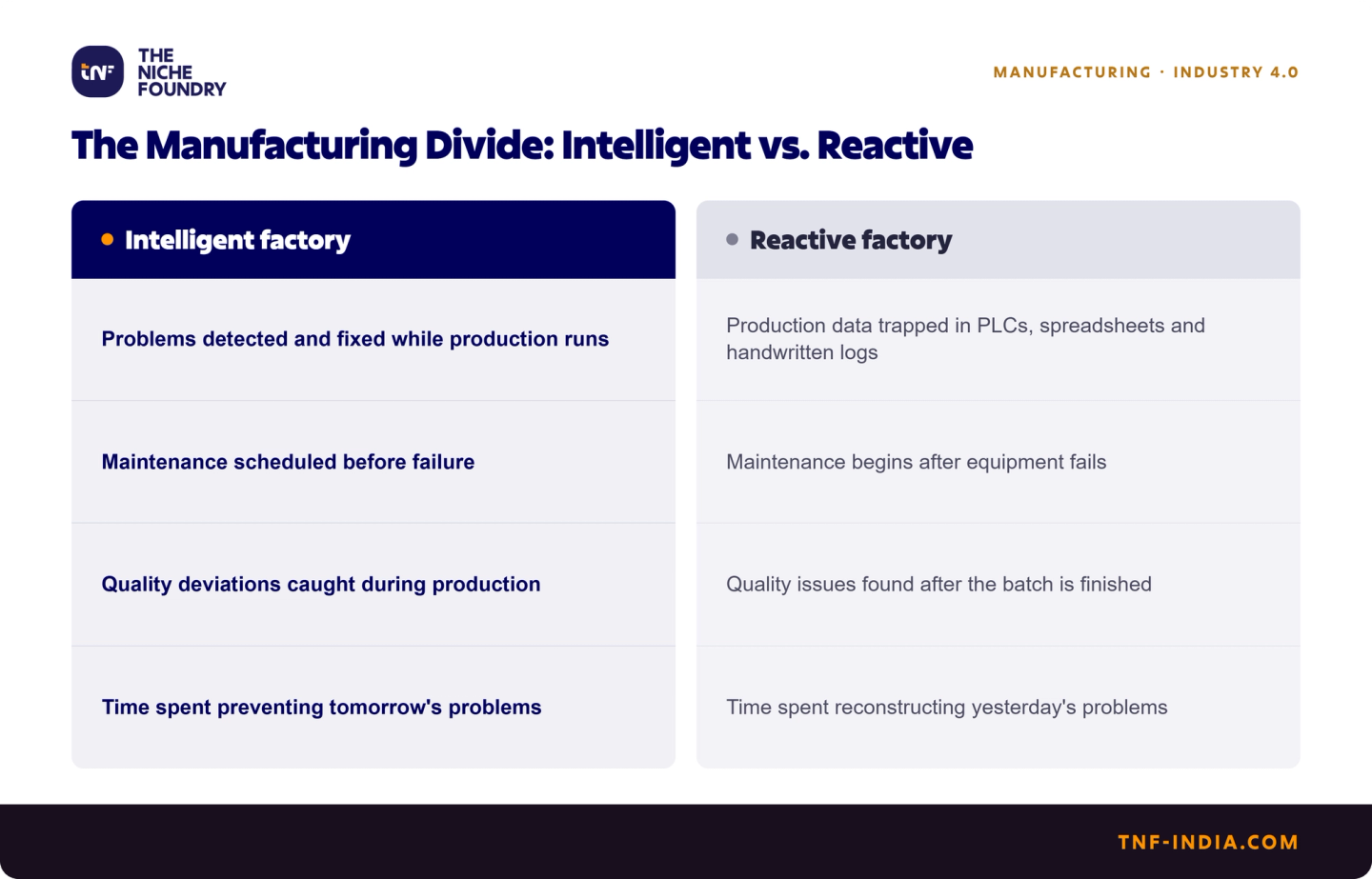
The constraint is not automation but the speed and quality of operational decision-making. Smart factories do not emerge by installing robots, sensors and AI. Factories outperform when they convert operational information into faster, better decisions.
"We haven't been trying to build an IoT platform or an AI platform. We've been trying to improve decision quality in factories," says Anup Wadhwa, Director, Automation Industry Association (AIA). The industry body represents the suppliers, software developers, and service providers driving factory automation and industrial process control.
India's robot base is growing fast from a low starting point. The International Federation of Robotics (IFR) reports that India installed a record 9,120 industrial robots in 2024, the sixth-highest globally, yet its operational stock of 52,570 units ranks 10th and is dwarfed by the 300,000 to two million robots in the five most automated economies. Globally, factories average 132 robots per 10,000 manufacturing employees.
Conventional industrial robots deliver the highest returns in stable, high-volume production. Many MSMEs run high-mix, low-volume production, where changing customer specifications force lines to switch products every few hours or days. Under these conditions, conventional automation creates lengthy programming cycles, expensive integration and extended payback periods.
Collaborative robots (cobots), autonomous mobile robots (AMRs) and robotics-as-a-service (RaaS) lower those barriers, but they pay back only where the manufacturer has already identified the bottleneck that automation will relieve.
Where MSMEs lack repetitive, standardised work, the case is for automating specific bottlenecks rather than entire factories, and finding those bottlenecks depends on data many plants do not yet have.
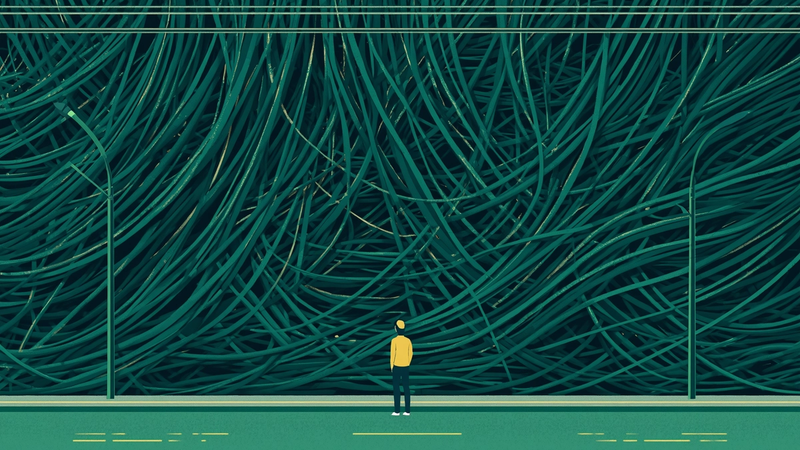
AI does not eliminate technical debt, it exposes it. When machines begin generating data, advanced analytics do not automatically follow. Machine controllers, ERP systems, maintenance records and quality databases often operate independently. They rarely provide a unified operational picture, and AI built on a fragmented picture produces unreliable output.
Artificial intelligence requires a strong digital foundation of clean, accurate data. Without it, AI cannot deliver meaningful results.Arvind Tilak, CEO, Ascent Intellimation
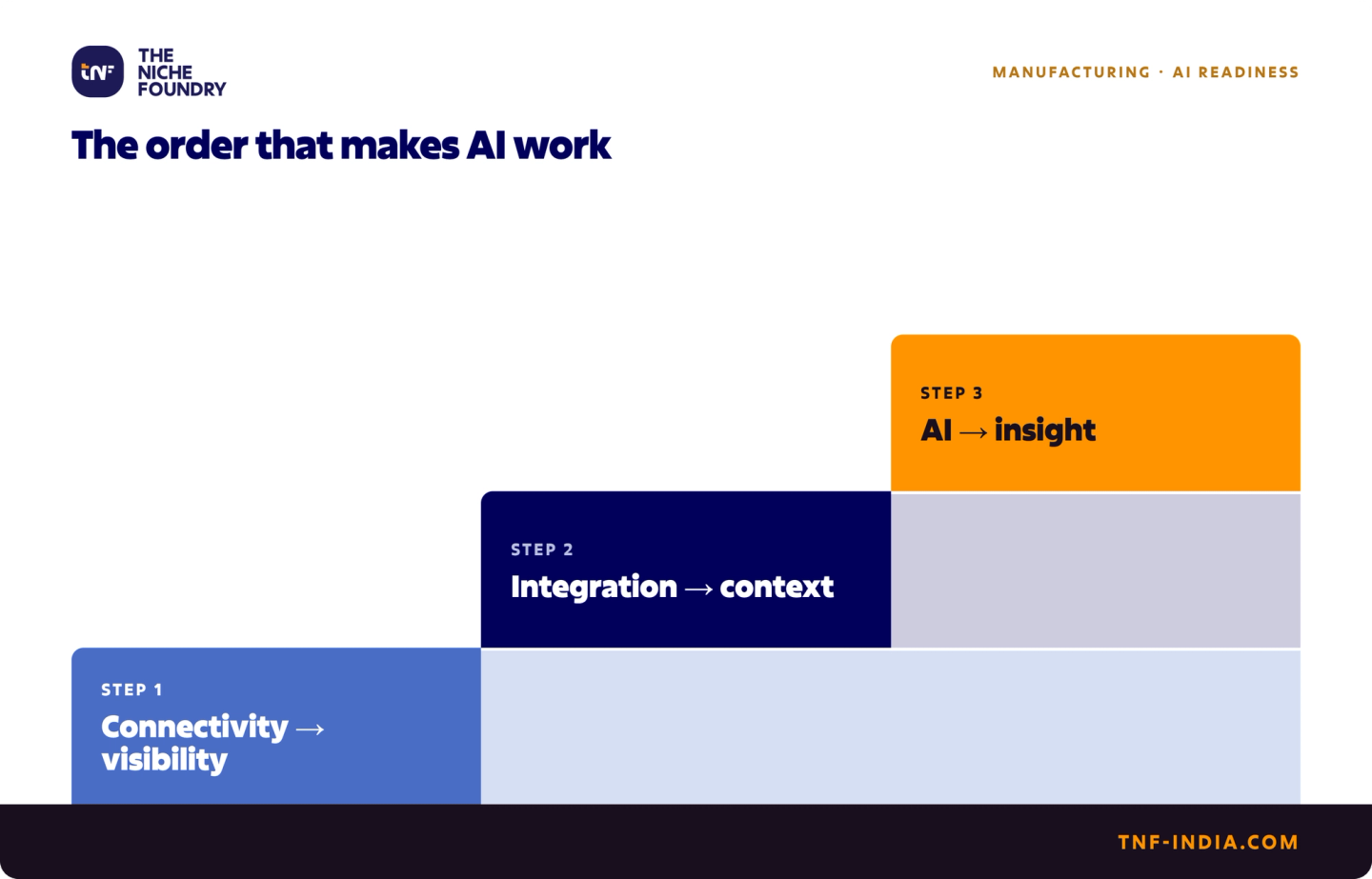
Connectivity creates visibility. Integration creates context. Only then can AI generate insight.
Digital transformation does not require replacing existing equipment, an expensive and usually unnecessary step. Indian factories run large fleets of reliable machines with years of productive life left. Their limitation is not performance but operational visibility.
Industrial internet of things (IIoT) retrofits offer a practical route: manufacturers fit existing equipment with sensors, collect operating data, and process it close to the machine using edge AI. However, connected machines only create data; they do not automatically create intelligence. The next step is to prove that data can move one number that matters.
Manufacturers rarely need an enterprise-wide transformation. They need one operational success. Predictive overall equipment effectiveness (OEE) offers the clearest starting point. Instead of waiting for failures, vibration sensors identify bearing wear before breakdowns occur. Instead of inspecting defects after production, computer vision detects quality deviations during production. Instead of reconstructing speed losses and micro-stops after every shift, managers track performance in real time.
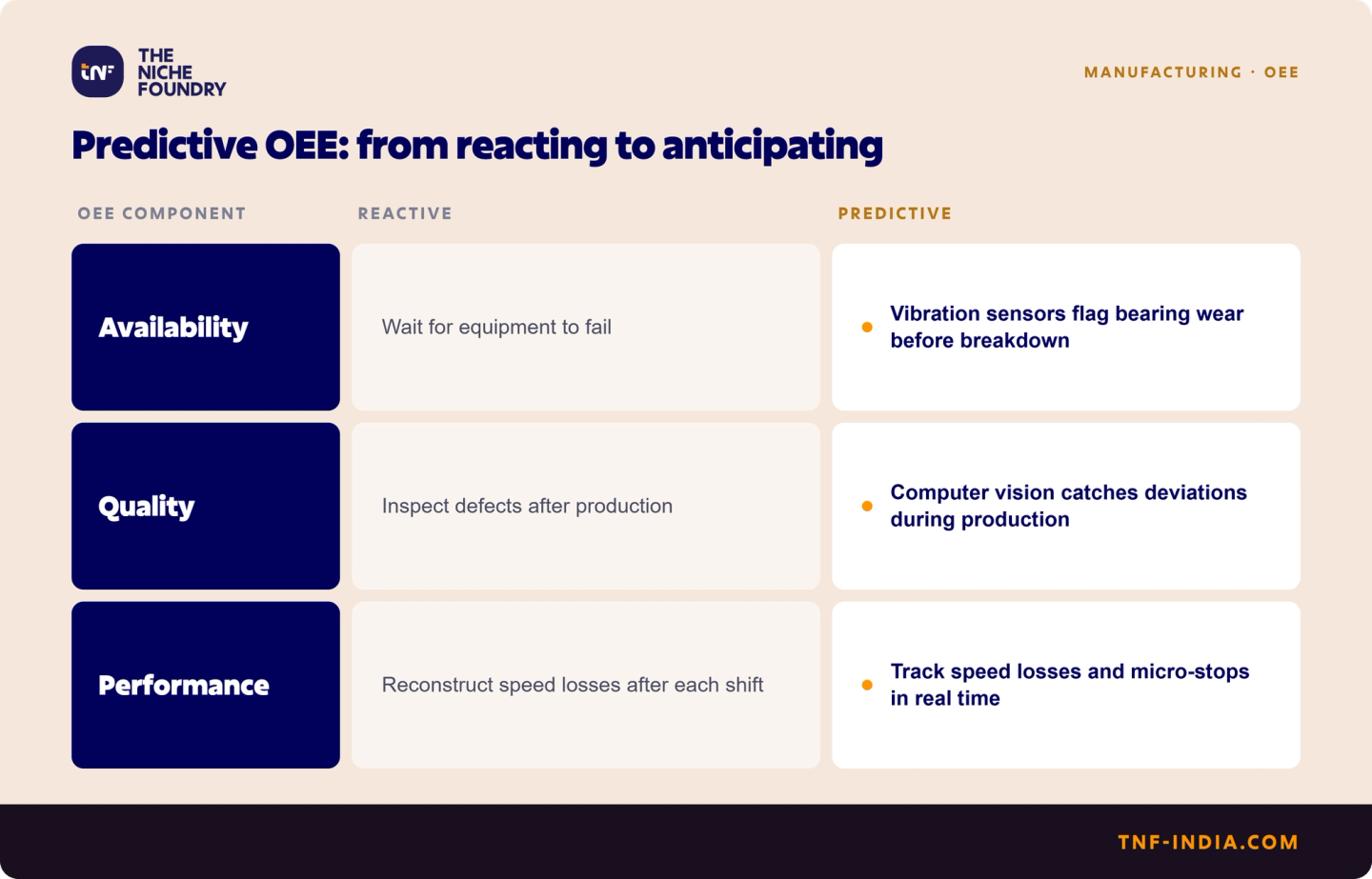
The lesson is straightforward. Do not begin with AI. Begin with one bottleneck or production line. Ensure one measurable improvement.
Before investing in advanced technologies, manufacturers should invest in making operational performance visible in real time. The objective is not more dashboards; it is measurable improvement in OEE.
Tilak also challenges a common assumption: that manufacturers lack the appetite to invest. In his view, they invest readily once they understand the commercial return. The real challenge lies in demonstrating measurable business value early enough to build organisational confidence.

Even strong digital foundations do not guarantee transformation. The second constraint is people.
Culture is often a harder obstacle than technology. Tilak identifies HR as one of the most overlooked functions in factory digitisation. According to him, involving HR early helps manage workforce communication, build trust and secure employee participation before resistance develops.
Wadhwa and Tilak independently make the same point: successful programmes are planned at the top and implemented from the bottom, with visible shop-floor improvements building confidence before wider deployment.
Wadhwa recommends viewing operational data through a Data–Information–Knowledge–Insight (DIKI) framework. Sensors generate data; context turns it into information; repeated learning builds knowledge; and knowledge applied to decisions yields insight. A spindle's vibration readings, for example, become information when linked to the part being machined, knowledge when a pattern ties them to tool wear, and insight when the plant changes its tool-change interval. Transformation, he argues, is the continuous discovery of operational blind spots.
A factory is not ready for artificial intelligence until its people share a common understanding of performance, trust data over assumptions, learn across functions, and understand how every operational decision affects customer value.Anup Wadhwa
Standard operating procedures (SOPs) do not transplant: a Lighthouse factory's playbook cannot simply be copied into an MSME, because the operating model differs. Competitive advantage depends less on replicating SOPs than on improving execution quality within each factory's own organisational context.
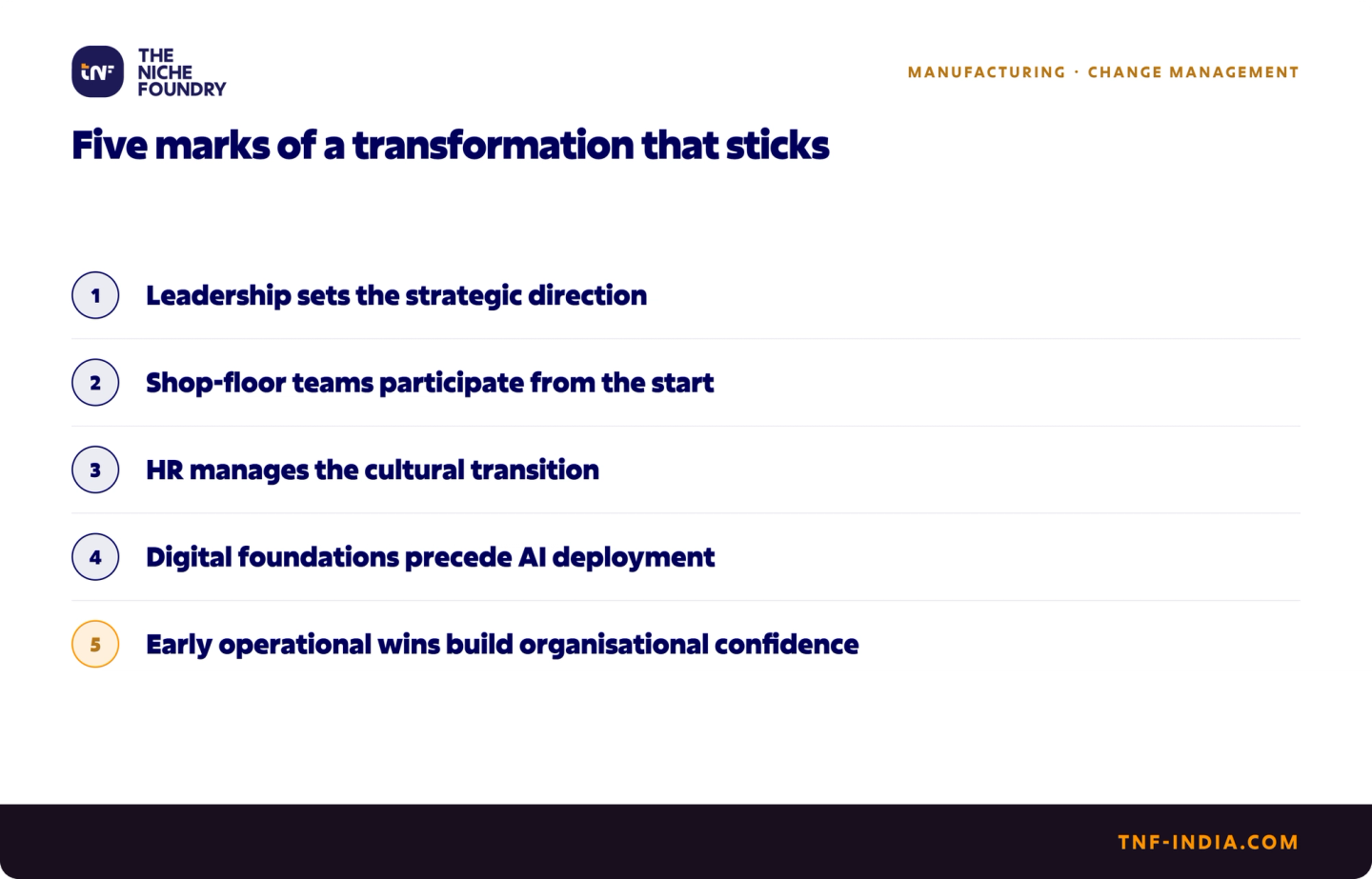
According to Tilak, successful transformations share five characteristics: leadership sets the strategic direction; shop-floor teams participate from the start; HR manages the cultural transition; digital foundations precede AI deployment; and early operational wins build organisational confidence.
The notion that digital adoption alone creates transformation is false. The intent behind transformation lies in the mind and heart of the owner. Technology simply amplifies that intention.Anup Wadhwa
Factories that use data to build trust, learning and continuous improvement become progressively more intelligent. Factories that simply digitise existing habits often struggle to realise meaningful returns.
The factories that lead will not automate first. They will improve shop-floor decision-making first. AI, robotics and automation will then amplify the quality of those decisions.
According to Wadhwa, "Five years from now the winners will not simply be the factories with the most robots or the most sensors. The real differentiator will be how effectively factories combine people, data, and decision-making. The competitive advantage will come from enabling people to perform at their best. That represents a culture of joy and meaning."
Disclaimer: Content provided by TNF India is for informational purposes only. While we aim to provide accurate data and strategic insights, information is subject to rapid market and technological shifts. This content should not replace independent due diligence or professional consultation. TNF India bears no responsibility for any actions taken, or financial losses incurred, in reliance on this material.
What an owner should receive at handover, and what actually arrives.