Friday, 16 October 2026
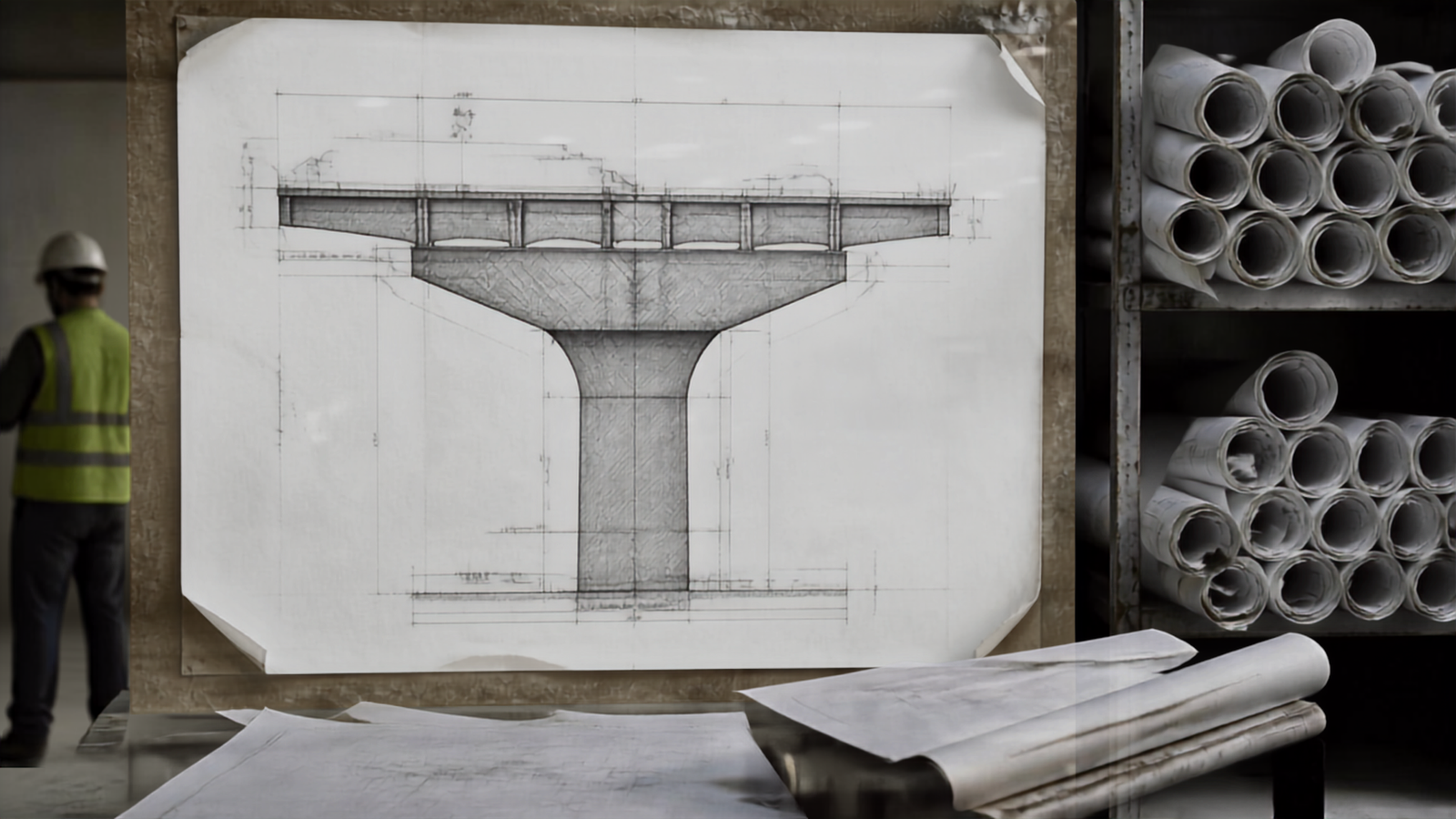
As India's metro network races past 1,095 km, cost, skills and scepticism are keeping most projects on 2D blueprints.
As India's metro network races past 1,095 km, cost, skills and scepticism are keeping most projects on 2D blueprints.
 Priya Dialani
Editor’s note: This article is the first in a series of three articles exploring BIM adoption in Indian metro projects.
India’s metro rail system is expanding fast. But most of it is still being built the way it was a decade ago: on paper, in silos, one delay at a time. Building information modelling offers a different way of working with one digital model that architects, engineers and contractors can see, question and update together, long before construction starts. The handful of projects that have tried it have already shown how using BIM can lower costs and deliver on shorter timelines.



The Indian metro network has expanded from 248 km in 2014 to 1,095 km by 2025, with metro services now operational in 26 cities, according to the Ministry of Housing and Urban Affairs. Yet the country's infrastructure delivery record tells a different story: large-scale projects routinely run behind schedule and over budget.
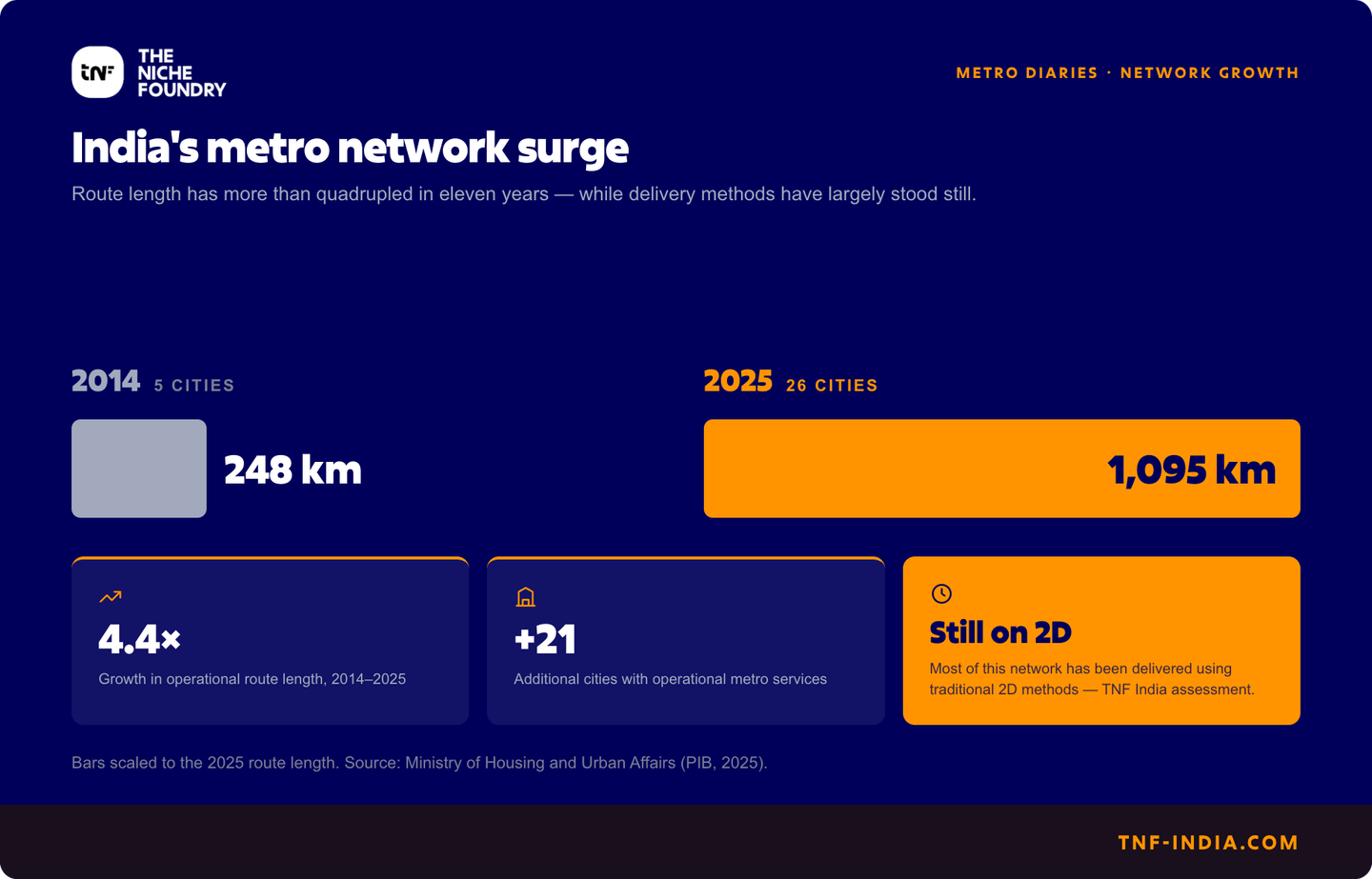
The majority of metro projects in cities such as Hyderabad, Mumbai, Bengaluru and Chennai have faced significant delays and budget overruns, a pattern confirmed by a parliamentary standing committee appraisal of metro rail implementation.
Complex land acquisition processes, public-private partnership (PPP) financial models, and bureaucratic delays have hampered project progress. In a 2018 article in the International Journal of Students’ Research in Technology & Management, land acquisition was cited as the single largest driver of delay across Indian metro projects, and change orders among the other leading causes.
Traditional construction methods fall short of managing the extreme complexity of integrating multiple assets, workflows, and stakeholders, including stations, tracks, signalling systems, and other utilities.
Building information modelling (BIM) addresses this challenge by digitising the construction process through a virtual model that embodies physical and operational elements, thereby enhancing efficiency and collaboration across the project lifecycle.
“BIM is not a new technique or new method; it is only a systematic way of working in a disciplined manner... so that at the end of the day you have a set of information which can also be used for operation and maintenance purposes,” says Mohan Gupta, Chief Engineer - Design, Delhi Metro Rail Corporation (DMRC).
“The complexities involved in interface management can be reduced using this model,” he adds.
BIM has already delivered measurable results. For the ongoing Phase IV expansion, the Delhi Metro Rail Corporation integrated multi-dimensional BIM and cloud-based Common Data Environments (CDE). As detailed in Autodesk's DMRC Phase IV Project Showcase and technical evaluations, this digital transition streamlined design-to-execution workflows, led to fewer on-site corrections and cost savings through pre-construction clash detection.
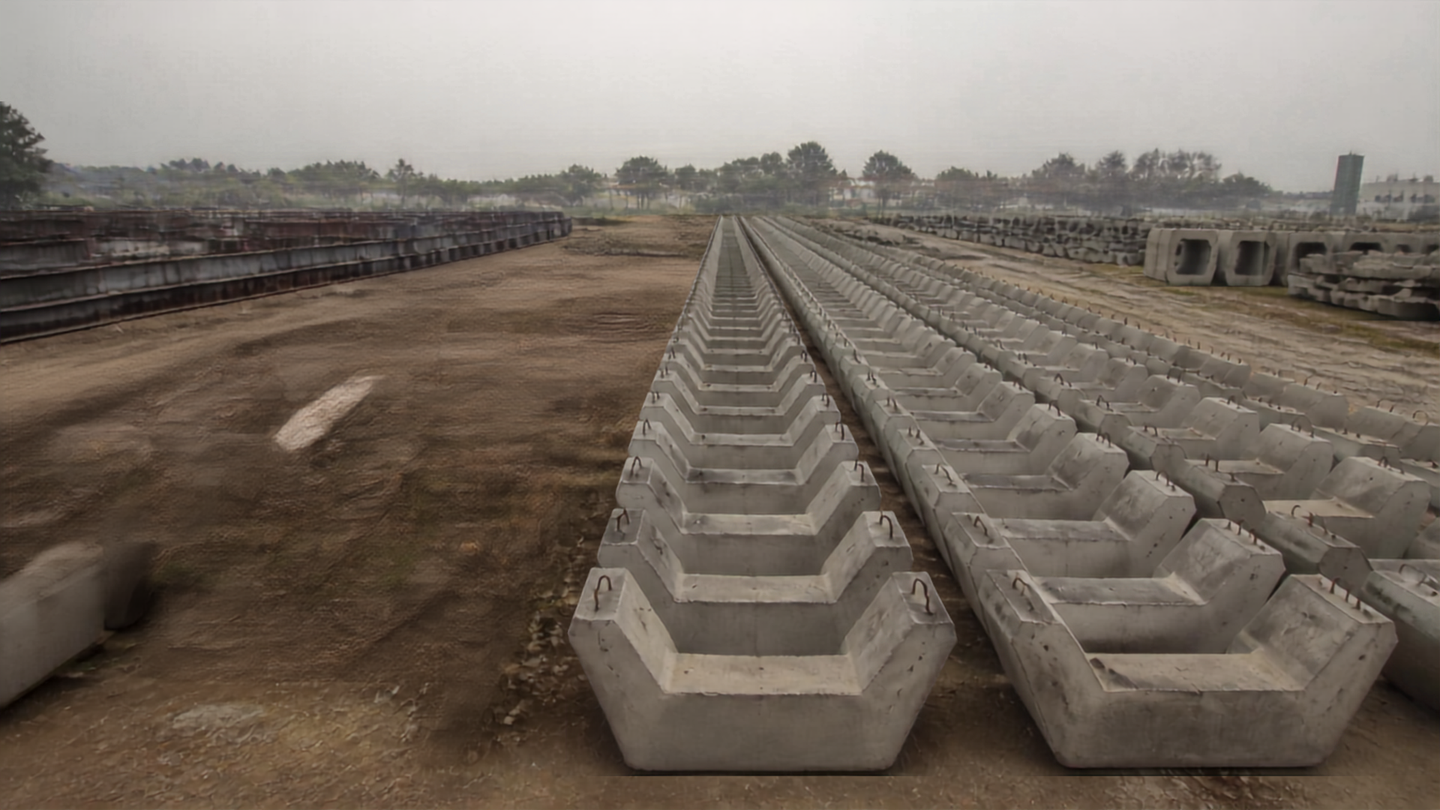
A major challenge of metro construction projects is coordinating the many stakeholders and teams involved: contractors, architects, mechanical, electrical, and plumbing (MEP) engineers, civil construction teams, and track alignment, signalling, and telecommunications specialists.
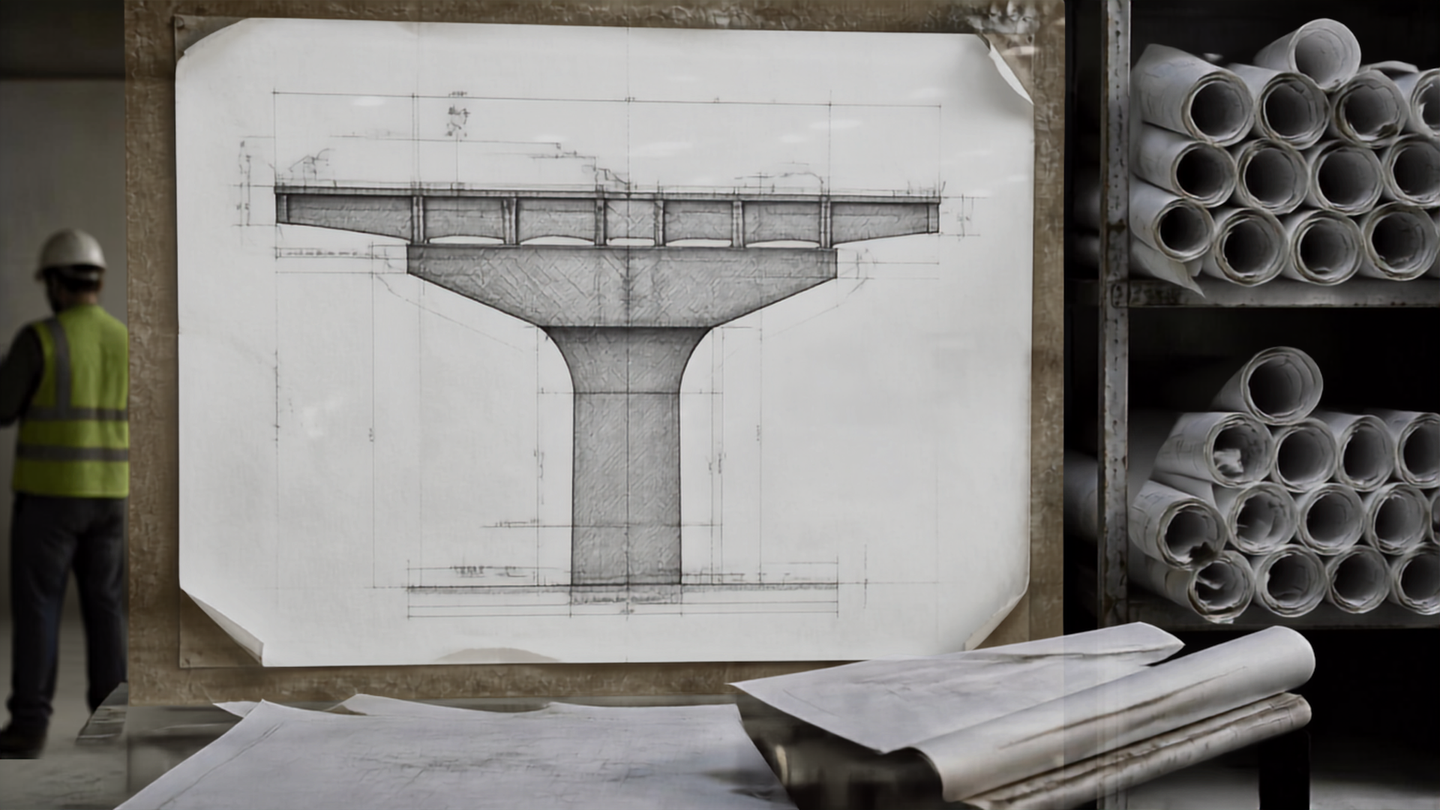
Achieving alignment and coordination across these multi-disciplinary teams is difficult, and the resulting gaps frequently lead to scope changes and inconsistent project data. Traditional metro construction relies on 2D plans, paper-based physical drawings, and complex blueprints. Data pertaining to each construction phase and team remains offline and disconnected from field workflow.
In addition to poor coordination, discrepancies in the data lead to execution problems that cascade into expensive rework, project delays, and higher costs. Additionally, insufficient real-time communication and data sharing obscure the state of project progress. This often results in inaccurate or rushed decisions that negatively affect the project outcome.
BIM digitises every phase of metro construction, from design and cost estimation to financial planning, construction scheduling, resource allocation, project tracking, and maintenance. Through better visibility and control across the project lifecycle, development authorities can optimise construction cycles, expedite challenge resolution, reduce potential delays, and facilitate data-driven decision-making.
The Nagpur Metro project is another example. The project used a 5D BIM digital platform integrated with other software to consolidate project data. Engineers and architects were able to visualise design and layout models, estimate resource projections, carry out 4D scheduling, and track progress in real time. It was the first project in the country to implement 5D BIM. In a case study by RIB Software, whose iTWO platform underpins the project, Maha Metro Managing Director Dr Brijesh Dixit, has credited the platform with saving 20–25% of project time and around 10% of costs.
Despite BIM's ability to ensure overall management efficiency, its adoption for metro projects is slow. The slow adoption stems from difficulty adapting to new workflows, a shortage of skilled BIM professionals, substantial upfront costs (software acquisition, licences, renewals), and clients' limited understanding of the benefits.
Additionally, lack of robust software, data interoperability issues (such as insufficient real-time updates and interactive processes), limited awareness, and difficulties in integrating BIM with existing workflows are other challenges in metro rail projects. A shortage of BIM professionals experienced with railway infrastructure tools, combined with insufficient technical modelling knowledge, is another barrier to adoption.Data ownership issues also aggravate the problem, with concerns over the proprietorship of designs, construction data, and manufacturing analysis. Accountability for design inaccuracies is complex in BIM because engineers, architects, and construction managers all work on a shared platform, it is difficult to pinpoint responsibility for errors.
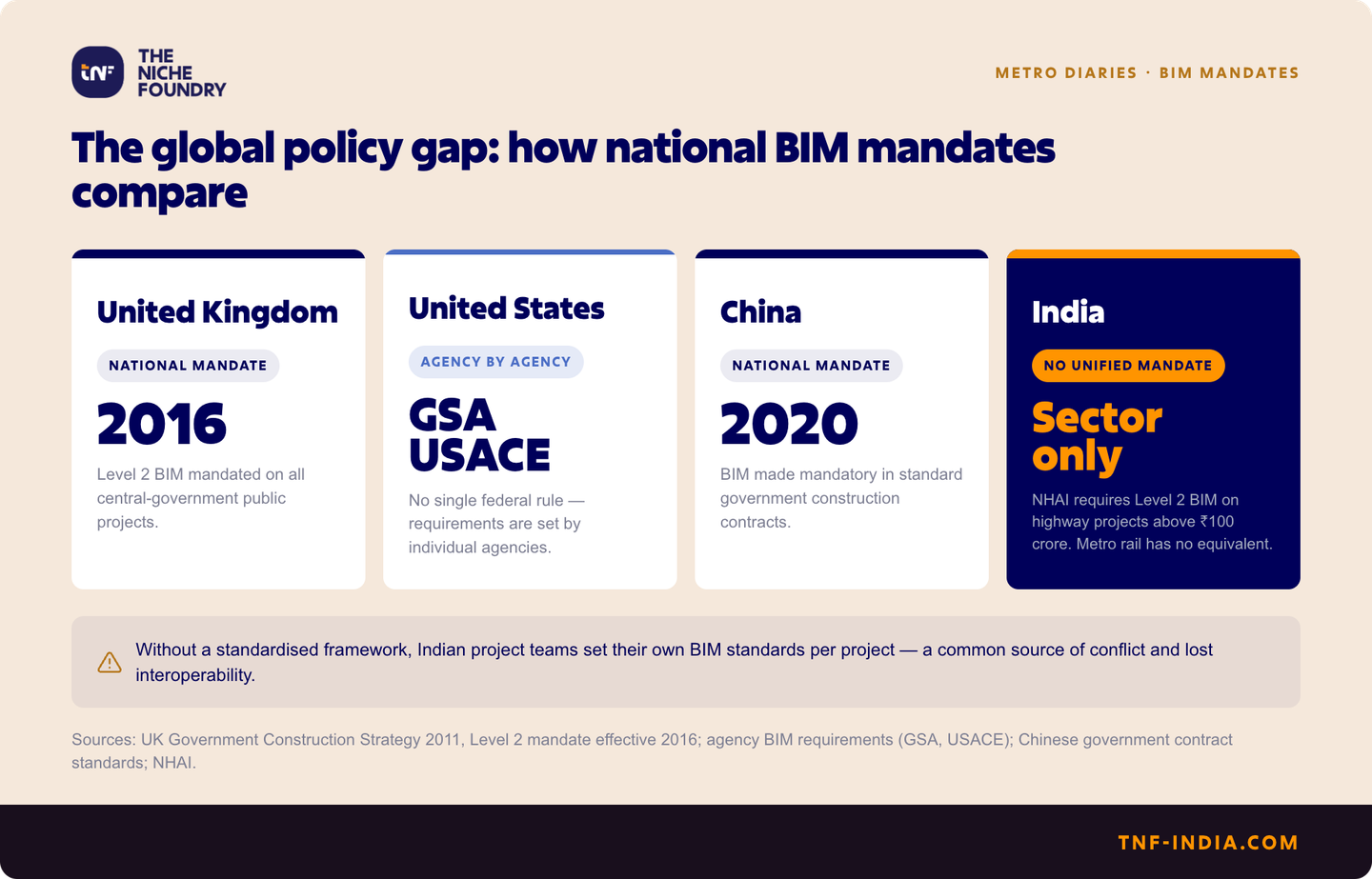
The absence of a BIM regulatory framework in India remains a significant barrier to integrating BIM solutions, though the National Highways Authority of India's move to mandate Level 2 BIM on highway projects above ₹100 crore offers a template metro authorities could push regulators to replicate.
In contrast, the UK has mandated Level 2 BIM on public projects since 2016, the US enforces BIM requirements agency by agency, and China has made it mandatory in standard government contracts since 2020. India's lack of a comparable, standardised framework undermines the benefits of enhanced collaboration. Instead, project teams and relevant stakeholders set their own standards and frameworks as per project requirements, which often result in confusion and conflicts.
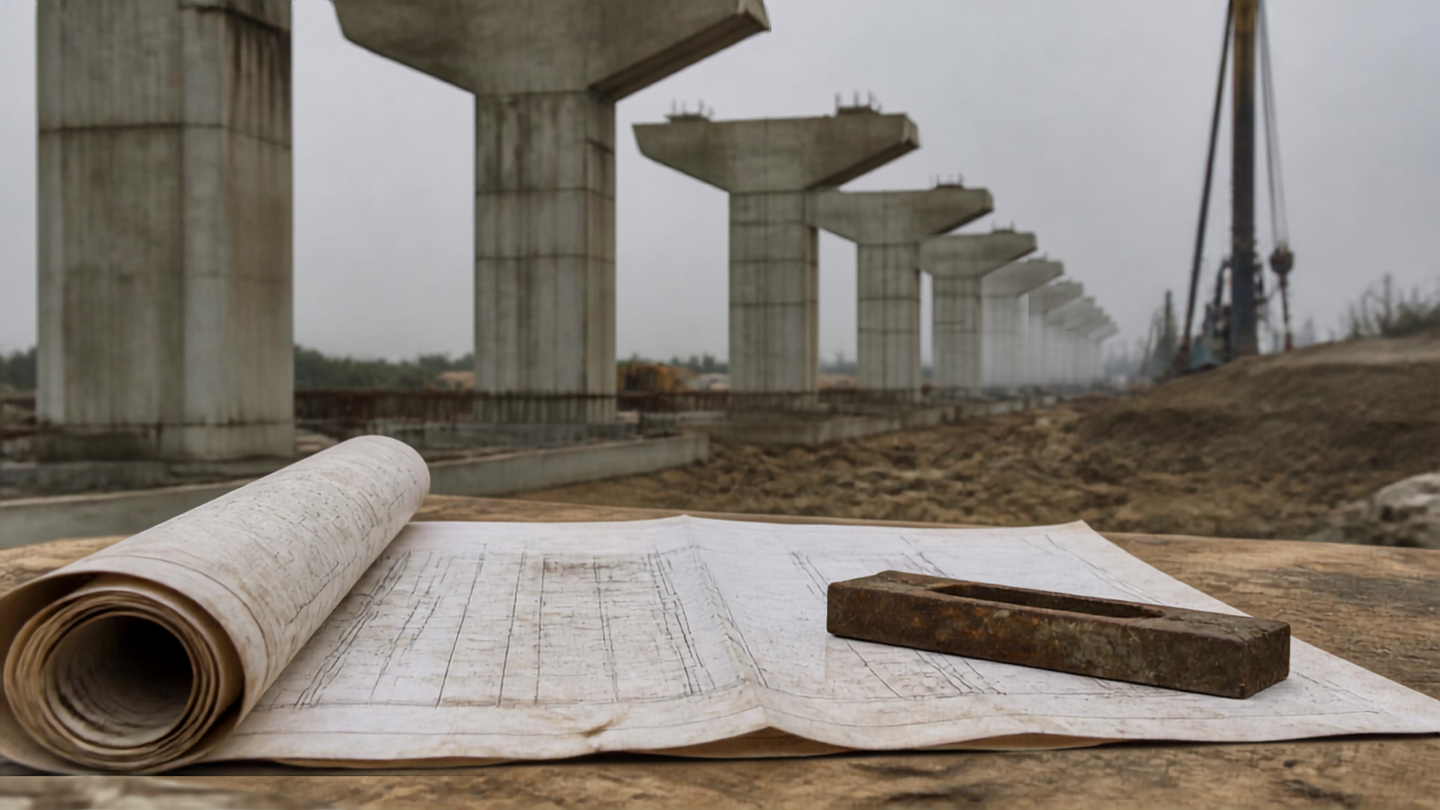
Like any other technology adoption curve, BIM faces stakeholders' scepticism. Resistance to change is a common and critical challenge observed not only in India but globally, including in Hong Kong and the Middle East. This resistance stems primarily from limited awareness of BIM's benefits.
"People consider [BIM] a process which is more time consuming, which is not true. It just requires a level of dedication and ownership," Gupta says. He adds that the core barrier to BIM adoption isn't a lack of technology or technical expertise, it's a fundamental misalignment in mindset.
On-site teams are often reluctant to adopt new solutions, remaining wedded to traditional approaches and resistant to unlearning established project management methods. Many contractors and engineers hold the view that traditional processes remain adequate.
They also do not account for how BIM can help with ongoing operations and maintenance. "It becomes much easier [for] repair, expansions, remodelings…you can extract the baseline parameters quite easily and then see what could be the reasons for the structure to be degrading over time," Gupta adds.
Minimal technical input from stakeholders during implementation also contributes to barriers that surface after adoption. Asset owners typically have the decision-making authority regarding which application or solution to implement during specific project phases. Many of them still stick with traditional CAD and blueprint-based collaboration, primarily due to limited awareness of BIM's advantages.
To manage scepticism and implementation challenges, organisations can start with a strategy to cultivate a digital-first culture. This involves:
Starting small: Rather than overhauling workflows all at once, organisations can identify specific areas where BIM delivers immediate value. Pilot projects can show BIM's tangible benefits before wider rollout.
Comprehensive training and clear communication: Training programmes must be tailored to each level of expertise, from project managers to on-site workers, so that every employee understands how BIM affects their role.
Demonstrating ROI: As most stakeholders are concerned about upfront cost, organisations should share quantifiable value achieved on past projects. Training sessions should showcase projects where BIM improved efficiency and reduced costs over the long run.
Setting BIM standards: Open standards enable seamless integration across software and communication channels. This encourages stakeholders to participate willingly and contribute to cross-sector data sharing.
Additionally, collaborative efforts between government and educational institutions are essential to ensure engineering professionals are equipped with the latest BIM skills.
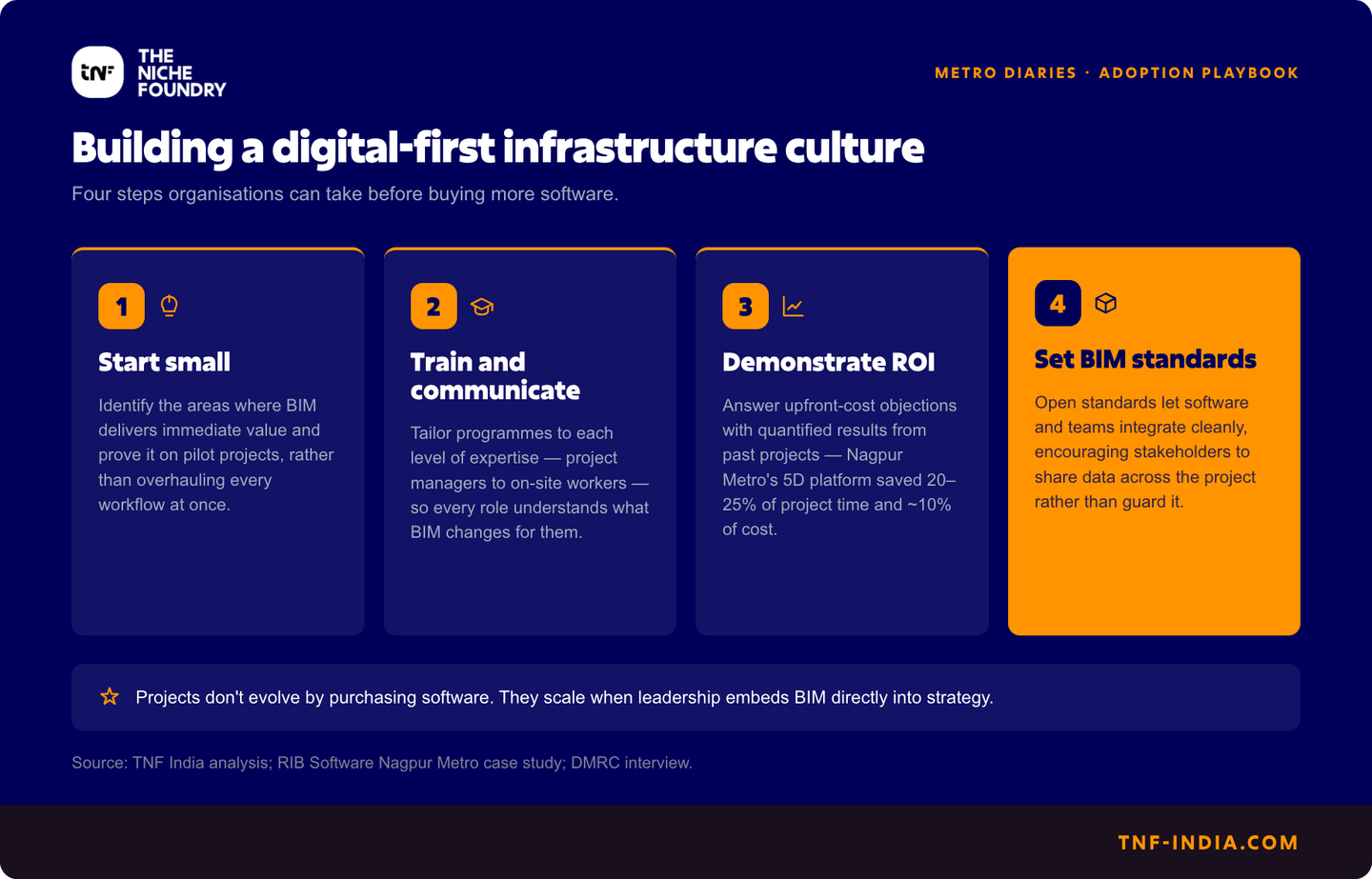
Top management support is critical to establish BIM as the operating norm rather than merely a replacement of traditional approaches. Projects don't evolve simply by purchasing software. They scale when leadership embeds BIM directly into overall strategy.
- With contributions from Varad Diwate
Disclaimer: Content provided by TNF India is for informational purposes only. While we aim to provide accurate data and strategic insights, information is subject to rapid market and technological shifts. This content should not replace independent due diligence or professional consultation. TNF India bears no responsibility for any actions taken, or financial losses incurred, in reliance on this material.
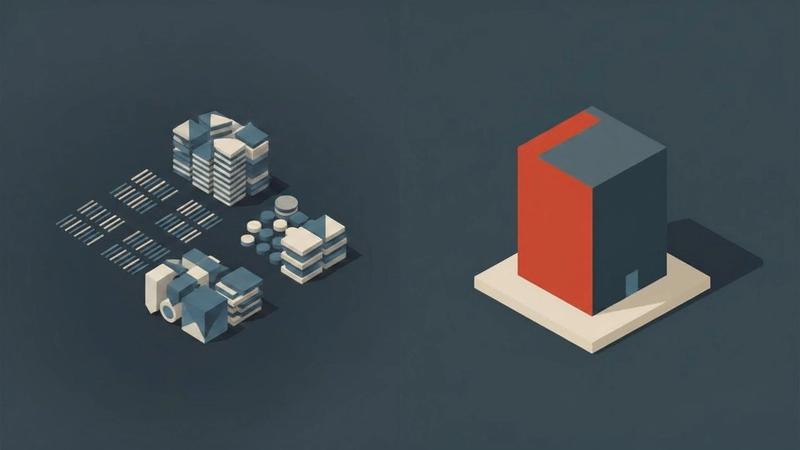
What an owner should receive at handover, and what actually arrives.