Tuesday, 13 October 2026
Direct-to-device satcom promises to eliminate India’s remaining dead zones, but hardware constraints and regulatory standoffs stand between early trials and commercial scale.
Direct-to-device satcom promises to eliminate India’s remaining dead zones, but hardware constraints and regulatory standoffs stand between early trials and commercial scale.
 Priya Dialani
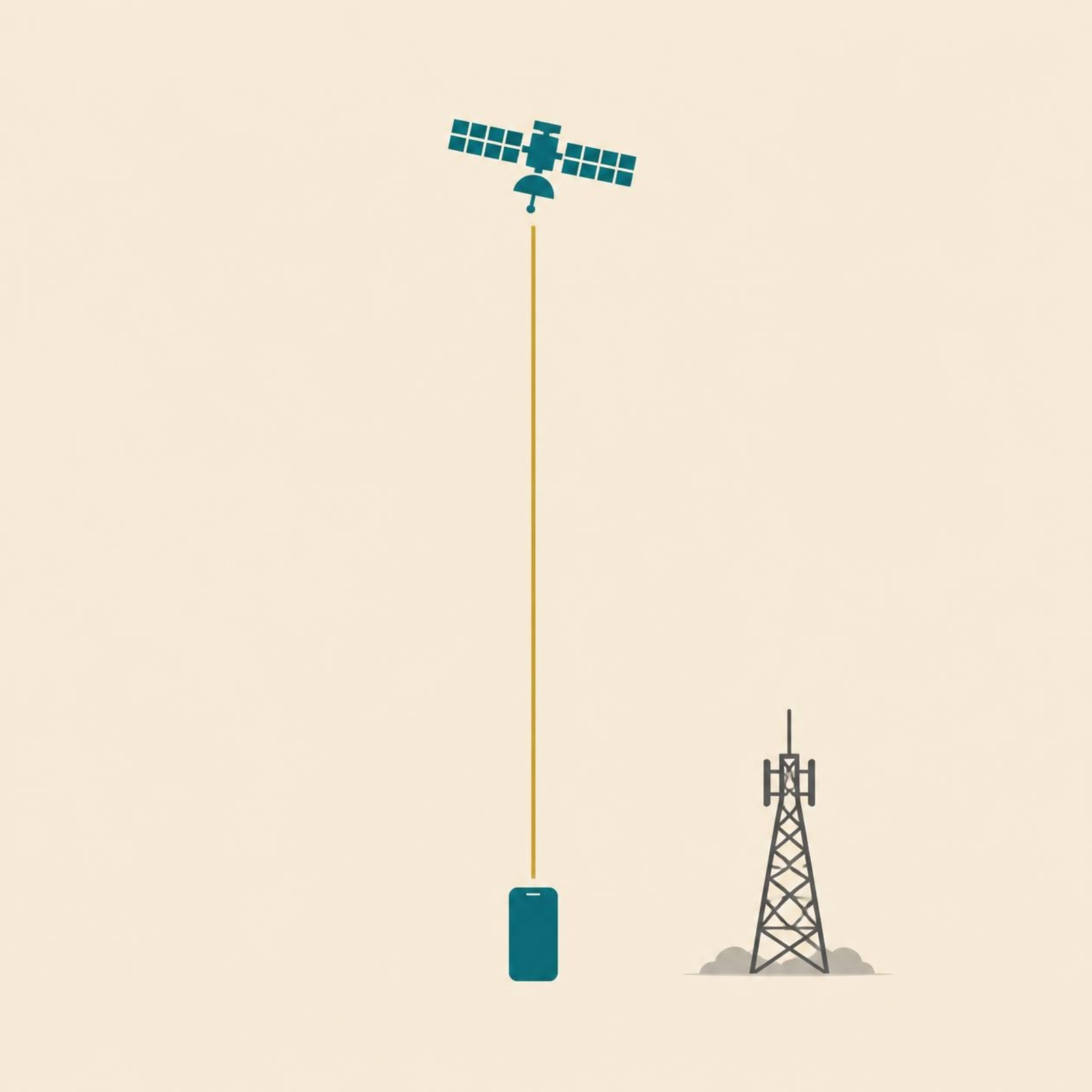
Your smartphone was never built to talk to a satellite. It has the wrong antenna, weak transmission power, and a battery designed for the nearest cell tower, not a link 500 kilometres into space. Yet BSNL, Vodafone Idea, Reliance Jio and Bharti Airtel have each staked a partnership on making it work anyway, all within the same year. The reason is simple: 99.9% of India's districts already have 5G, but forests, hills, oceans and disaster zones remain stubbornly out of reach. Direct-to-device satellite connectivity promises to close that last gap, no tower required. Getting there is another matter entirely.
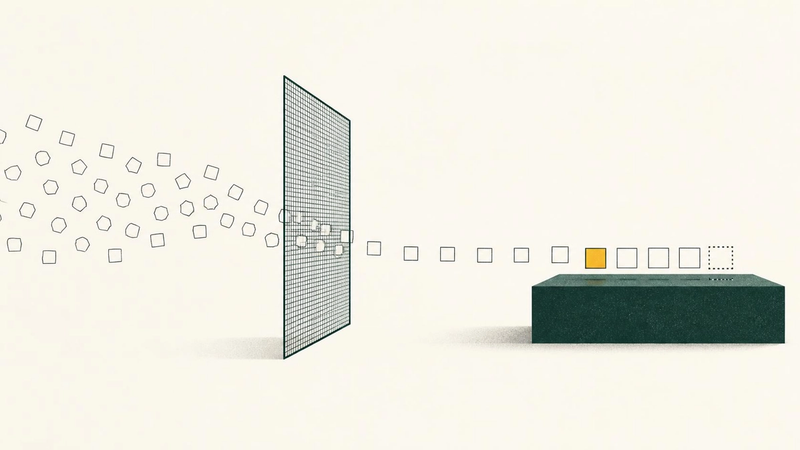





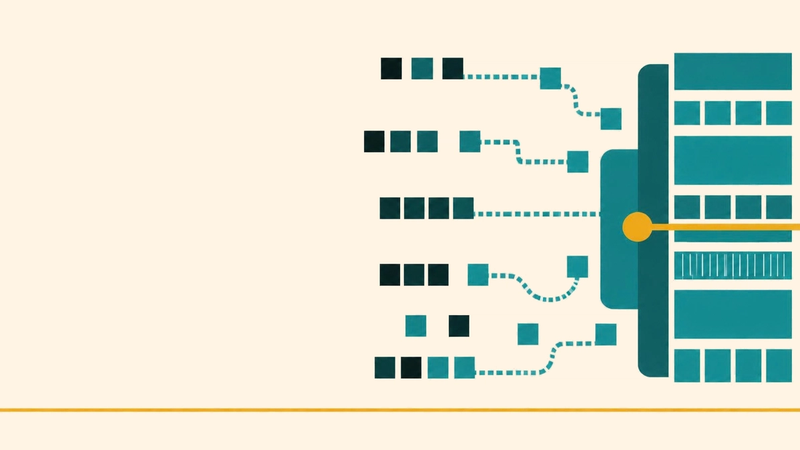
D2D technology establishes direct communication between devices and satellites without requiring cellular networks or terrestrial infrastructure. Devices include smartphones as well as IoT devices. This enables devices to maintain cellular coverage in oceans, deserts, and mountain ranges, bypassing the need for dedicated satellite hardware. Smartphones can quickly connect to orbiting satellites to gain connectivity even in so-called 'dead zones' or 'not spots'.
Ground devices receive signals from satellites in orbit using advanced antennas, typically low Earth orbit (LEO) or geostationary (GSO) satellites. LEO satellites play a crucial role in D2D technology as they function in the 500–2,000 km altitude range, ensuring low latency and stronger signal quality. Using Non-terrestrial networks (NTN), satellites and devices maintain two-way communication, allowing the device to receive calls, messages, and internet services through the telecom operator's network.
Currently, D2D satellite technology leverages the same mobile spectrum that telecom operators use, eliminating the need for additional hardware to connect to the satellite. Bharat Sanchar Nigam Limited (BSNL) is developing D2D satellite communication services in India. In 2024, the company demonstrated direct-to-device connectivity with Viasat, a US-based broadband provider, in a trial using licensed L-band spectrum. Using NTN technology, the trial connected users to satellites for emergency messaging.
Likewise, Vodafone Idea (Vi) partnered with AST SpaceMobile to drive D2D satellite broadband connectivity in India and expand access where terrestrial infrastructure is difficult to establish. Leveraging AST SpaceMobile's space-based cellular broadband network, Vi's service helps users connect to satellites for voice, text, and data streaming.
Reliance Jio and Bharti Airtel have signed separate partnerships with SpaceX to distribute Starlink's satellite broadband in India, a different category of service delivered through a dish and router rather than directly to an unmodified smartphone.
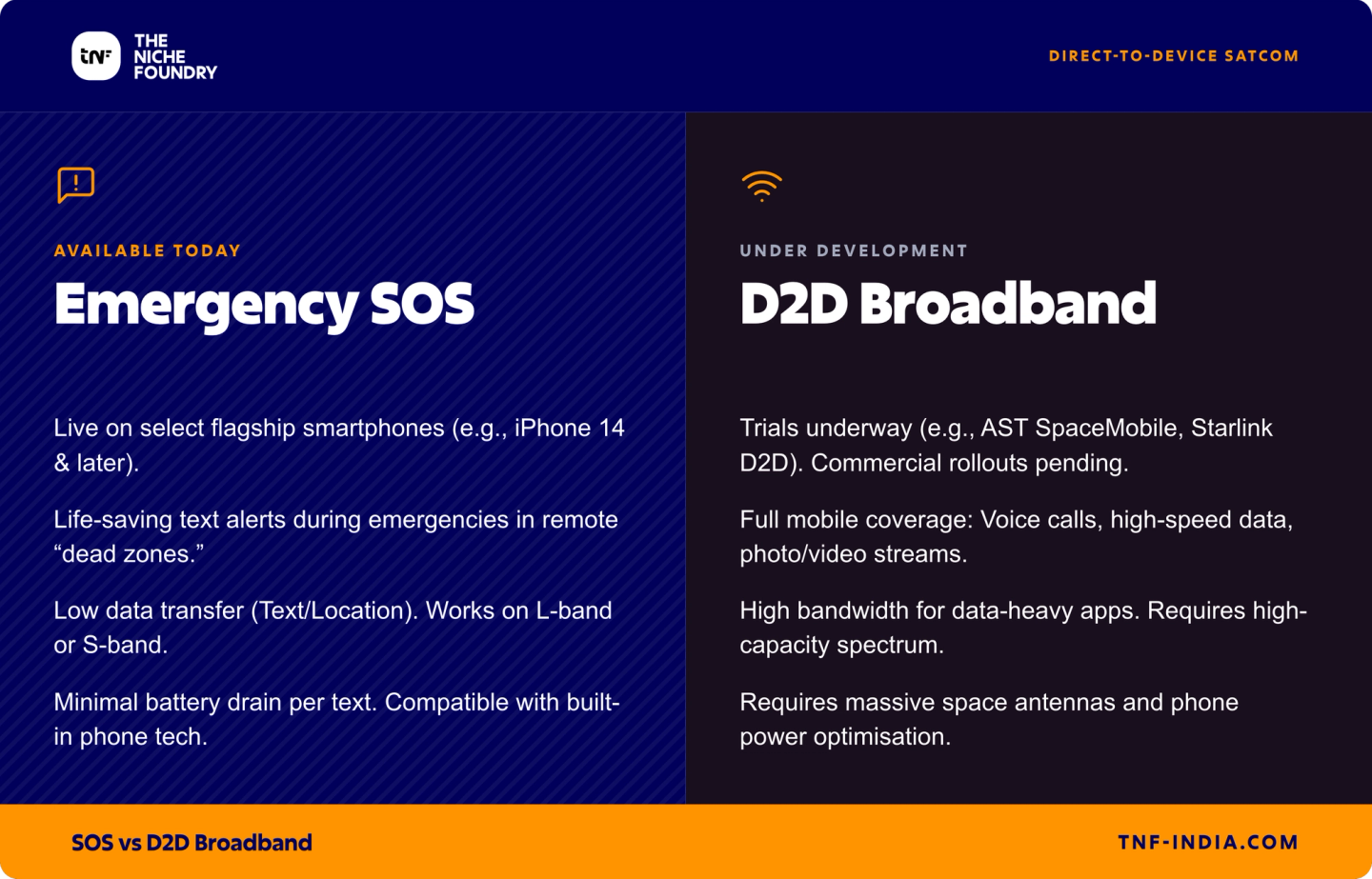
The 3rd Generation Partnership Project (3GPP) Release 17, which introduced NTN, allows flagship smartphones to connect with satellites using LTE, 5G NR, and Narrowband Internet of Things (NB-IoT) protocols. Emergency SOS, an initial satellite service, is now available on select flagship smartphones, including iPhone 14 and later. However, Emergency SOS is limited to text. For instance, Apple's partnership with Globalstar allows iPhone users to send text messages via satellite in remote locations or emergencies.
On the other hand, D2D broadband aims to offer internet access for voice calls and high-speed data. Currently, Starlink D2D supports photo messaging on certain phones, with developments underway for low-bandwidth voice and video calls.
AST SpaceMobile and Vodafone Group established mobile broadband connectivity with a video call using a standard 4G/5G smartphone from a coverage gap in Wales, UK, in January 2025, a milestone for the underlying technology rather than a claim about Vi's India rollout. AST SpaceMobile states its network is the only space-based system offering mobile broadband directly to standard smartphones without additional hardware; commercial roll-outs in India are pending.
SOS requires low data transfer and can operate through L-band or S-band satellites. However, D2D broadband depends on spectrum capacity that differs whether it is using terrestrial spectrum or mobile satellite services (MSS) spectrum.
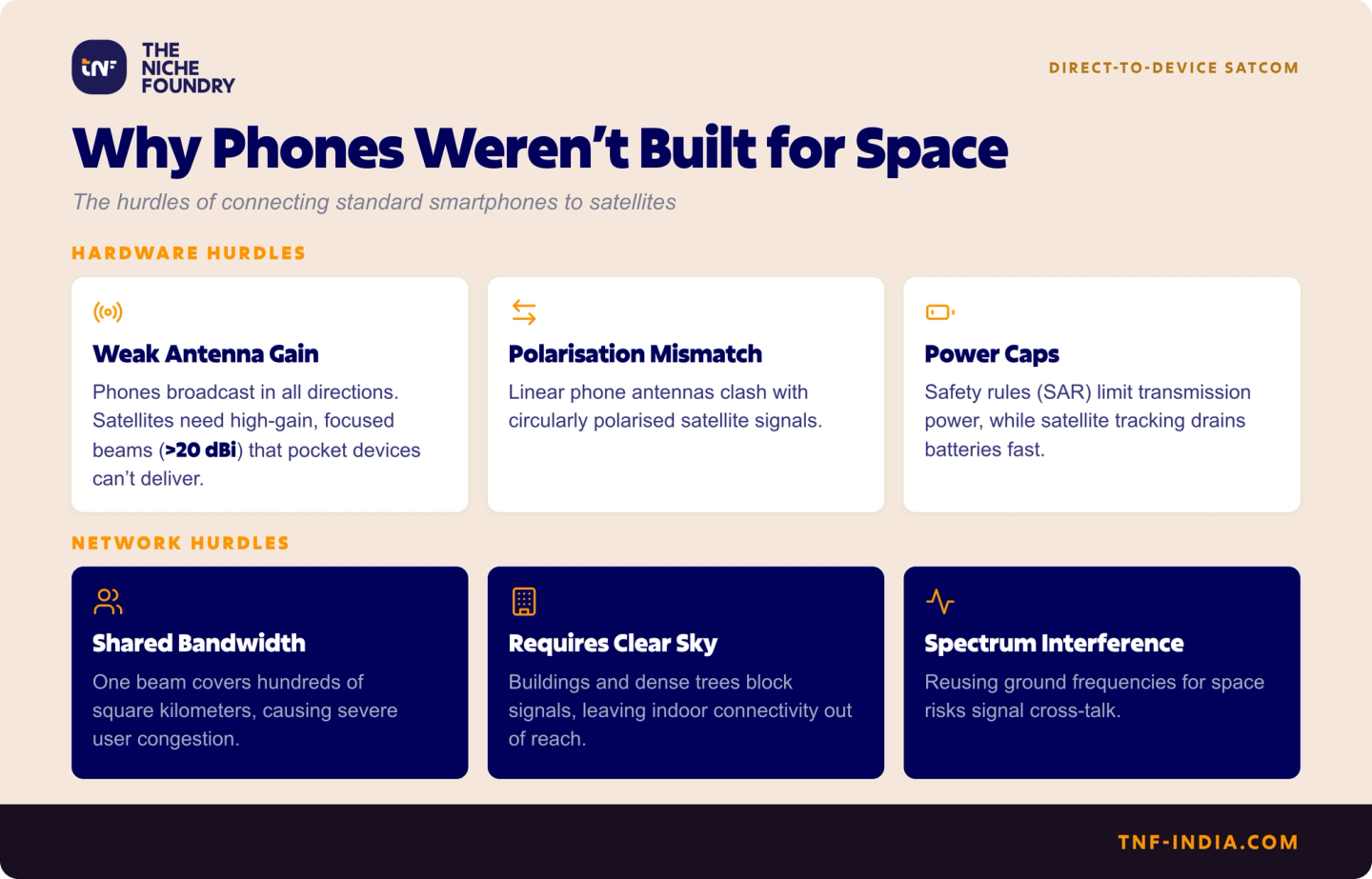
Besides efficient spectrum capacity, antennas play a crucial role in determining communication quality. An antenna gain of >20 dBi is required for the long ranges to a satellite and back. As smartphones are small in size and power, achieving high antenna gain is difficult. Satellites use directional antennas, whereas smartphones use omnidirectional antennas, making it hard to focus energy on the satellite. Robust transistors, high gain antenna arrays, and improved satellite receiver sensitivity can help offset the low gain of smartphones.
Furthermore, smartphones are typically designed to connect with nearby towers and their signal strength, battery capacity, and antenna gain function best for that specific range. Specific Absorption Rate (SAR) regulations limit a phone's transmission power, which can deter strong signal emission to space. Limited battery capacity also means smartphones struggle to maintain contact with satellites, which drains power and affects the overall lifecycle.
As satellites move across the sky, antennas need to constantly adjust to maintain a strong signal. They use circularly polarised signals to meet movement or changing angles. However, smartphones are equipped with linearly polarised antennas designed for terrestrial networks.
The incompatibility between satellites and smartphones weakens signal quality, especially while moving or when the phone is in a pocket.
Buildings hamper satellite signals, resulting in poor indoor connectivity. Users can get coverage when they have a clear view of the sky. Satellite beams cover much larger areas than mobile towers. While a telecom tower may cover only a few kilometres, a satellite beam can cover hundreds of square kilometres. This means many more users have to share the same network capacity, which limits speed and performance.
Technological advancements have significantly enhanced D2D satellite communication. Precise beamforming enables satellites to focus signals strongly on specific areas, while software-driven systems allow satellites to manage spectrum according to user demand in real-time. Further, robust power management systems have improved satellite energy efficiency and lifespan for more reliable communication. These developments are promising, but scaling them from pilot tests to commercial success requires serious time and capital.

While initial D2D developments look promising, widespread accessibility depends on technological progress regarding spectrum. D2D satellite connections bypass traditional terrestrial networks, and the Cellular Operators Association of India (COAI), representing Bharti Airtel, Reliance Jio and Vodafone Idea, has raised concerns about the impact on rural business and revenue.
Currently, satcom operators use the D2D-IMT (International Mobile Telecommunications) model, using Mobile Services (MS) spectrum by collaborating with MNOs. This can cause interference between terrestrial and satellite beams, leading to connectivity gaps and further concerning telcos.
Telcos are also raising concerns about spectrum allocation. Currently, India follows the global standard of administrative allocation of satcom operators instead of auctioning it.
Considering the current challenges, D2D satellite connectivity is not a substitute for terrestrial networks. In fact, it is a supplement for dead-zone areas like remote locations or disaster-hit areas where network availability is zero.
Satcom players operate in India through a Unified Licence (UL) and Global Mobile Personal Communication by Satellite (GMPCS) authorisation. Starlink, Jio Satellite Communications (Jio's joint venture with SES) and Eutelsat OneWeb (backed by Bharti Airtel) have secured GMPCS licences. These players pay a share of revenue to the government, similar in structure to the framework for terrestrial telecom operators, though telcos dispute whether the rates are comparable.
In its 9 May 2025 recommendation, the Telecom Regulatory Authority of India (TRAI) proposed that both GSO and non-geostationary (NGSO) satellite operators pay the higher of 4% of Adjusted Gross Revenue (AGR) or ₹3,500 per MHz annually, plus ₹500 per urban subscriber for NGSO-based services. TRAI recommended a five-year spectrum term, with a possible two-year extension. The Department of Telecommunications referred parts of this recommendation back to TRAI in November 2025 for reconsideration; TRAI responded in December 2025, and a final framework is still pending.
The Cellular Operators Association of India (COAI) has argued that since D2D satellite services resemble terrestrial services, the government should adopt a level playing field by auctioning spectrum.
The Department of Telecommunications (DoT) is consulting with TRAI to develop a framework for satellite operations, spectrum, and pricing. To promote commercial use, TRAI is exploring both the IMT and MSS spectrum. As of now, BSNL's D2D services are not yet fully available for public use due to regulatory issues. India still lacks a formal regulatory framework governing D2D satellite connectivity.
That all four of India's largest telcos have placed a bet on satellite connectivity within the same year says more about competitive hedging than imminent disruption. For now, D2D satcom in India remains in waiting for its regulatory green light.
Disclaimer: Content provided by TNF India is for informational purposes only. While we aim to provide accurate data and strategic insights, information is subject to rapid market and technological shifts. This content should not replace independent due diligence or professional consultation. TNF India bears no responsibility for any actions taken, or financial losses incurred, in reliance on this material.
What an owner should receive at handover, and what actually arrives.