Data Centre Power Connection in India: How the Grid Sets a Campus's Go-Live Date
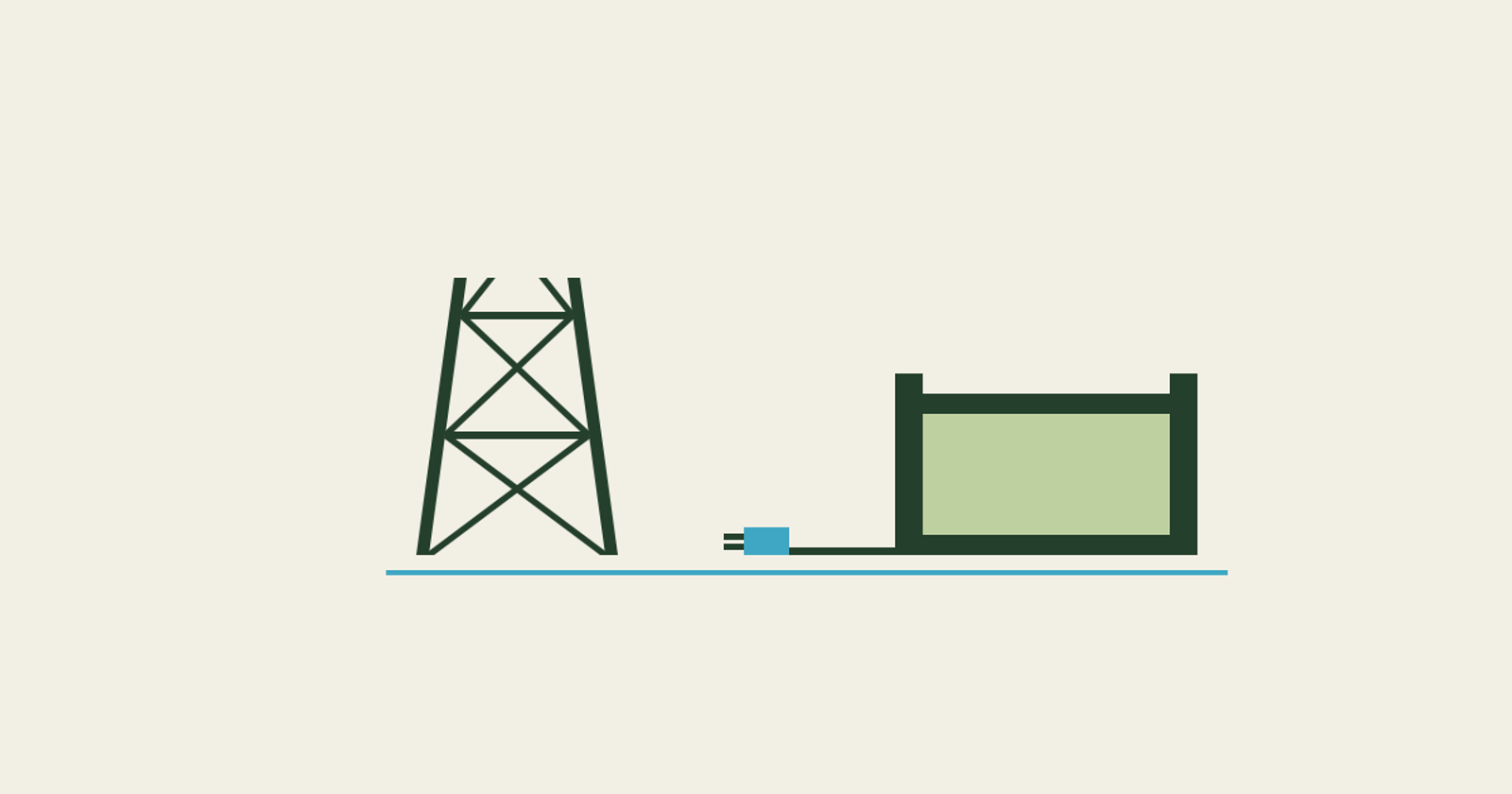
Grid timelines—from high-voltage transmission to environmental clearances—dictate an Indian data centre’s true commissioning schedule. Because a facility generates zero revenue until energised, the power grid's timeline, not civil completion, defines when revenue begins.
Grid timelines—from high-voltage transmission to environmental clearances—dictate an Indian data centre’s true commissioning schedule. Because a facility generates zero revenue until energised, the power grid's timeline, not civil completion, defines when revenue begins.
On Central Electricity Authority (CEA) benchmarks, the grid side takes two to three years, so the substation and line set when a campus starts earning revenue.
Bid schedules can lag reality. A line in Greater Noida bid at 18 months took about 29, and a Delhi line is running 10 months late after its tree clearances dragged into June 2026.
With no public tracking from application to energisation, lenders still judge delivery by civil progress. This remains the case even as NITI Aayog urges states to approve extra load only after grid assets are commissioned.
Powering a large data centre campus in India is no longer as simple as asking for a connection once the building is up. According to the CEA, a new substation on the inter-state grid has a standard implementation timeline of 24 months at 220 kilovolts (kV) and 36 months at 400 kV. CEA advises bulk loads, including large campuses on that grid, to time their financing and equipment orders to that timetable.
State governments are being encouraged to plan around the grid too. On 14 October 2026, the Frontier Tech Hub of the National Institution for Transforming India (NITI Aayog) published a framework advising states to approve extra load for data centres only after the required grid infrastructure is commissioned, and to publish indicative energisation timelines for each site or corridor.
This piece sets out how a campus connects to the grid, how long the grid side takes, which approvals decide the switch-on date and who pays for it.
How does a data centre campus in India connect to the grid?
A large campus needs more power than a city distribution line can carry. It connects at extra high voltage, which Maharashtra’s Supply Code defines as anything above 33,000 volts. The power arrives on an express feeder, a dedicated line running from a utility substation to the campus.
The voltage depends on the size of the load and the network nearby. NITI Aayog’s framework asks states to test a proposed campus against everything from 33 kV and 11 kV feeders to 132 kV, 220 kV and 400 kV substations, and to check that its dual feeds come from independent sources upstream.
Some campuses will bypass state networks altogether. The Central Transmission Utility of India projects that around 16 gigawatts (GW) of combined industrial and data centre demand will draw power directly from the inter-state transmission system by FY31. For those campuses, CEA’s timetable applies directly.
How long does the grid side of a data centre campus take?
In addition to establishing substation timelines, the CEA also sets construction schedules for transmission lines, providing the sole national benchmark identified by TNF India. Under these guidelines, a 220 kV line has 24 months, and a 400 kV double-circuit line 24 to 30 months, depending on length.
The National Committee on Transmission approved the schedule with room for an extra 6 to 12 months on lines through urban and industrial zones, which would take in Navi Mumbai and Greater Noida. CEA’s memorandum leaves out that buffer and does not define when the timeline starts.
Bidding schedules don't always match reality. Tata Power won the Jalpura Khurja 400 kV line in Greater Noida on a promise of an 18-month turnaround. Its annual report links the project to growing data centre demand. In practice, the line took about 29 months to commission on TNF India’s calculation. That is much nearer the 30 months CEA allows for similar inter-state lines.
Delays also occur on the inter-state grid. CEA’s August 2026 progress report notes that the 400 kV Jhatikara-Dwarka line in Delhi ran 10 months behind its February 2026 target, based on TNF India’s calculation, after forest and tree permissions were delayed until March and June 2026.
The approvals and costs that decide when a data centre is switched on
Multiple regulatory approvals and cost allocation rules determine when a data centre campus can finally switch on.
Green power approvals are relatively swift on paper. Under the Green Energy Open Access Rules 2022, a nodal agency must decide an application within 15 days, or it is deemed approved. The bottlenecks sit with the power line permits, as the late forest and tree clearances on the Delhi project show.
Cost rules vary by state, and they shape the return. In Maharashtra, the transmission licensee carries the network cost of an extra high voltage connection. A developer that funds the work itself is repaid only as its billing demand rises, and in full once it reaches 70% of sanctioned load. Uttar Pradesh’s data centre policy pays for a second grid connection to its first three data centre parks. For investors and lenders, a large sanction buys headroom but slows the payback on that spend.
That is why some developers now start with the grid. CapitaLand India Trust finished a 220 kV gas insulated substation at Hyderabad in the first quarter of 2024, before work on the building’s superstructure was due to start. Equipment buyers are moving early too. Hitachi Energy India says most of its data centre customers are already securing long-lead items such as transformers and switchgear.
Not a single document reviewed by TNF India tracks a campus from initial connection application to final energisation. Buyers and lenders judge delivery from building progress, whilst the date that matters sits with the substation and the line.
A facility’s value today hinges on when its power goes live, which gives sites with working substations and lines firmer dates than early-stage projects, and construction progress tells financiers little about when revenue starts. Equipment makers and utilities are gaining work as developers order early, and Tata Power says its data centre opportunity pipeline exceeds 2.8 GW. States that publish indicative energisation timelines, as NITI Aayog advises, and keep to them are best placed to win the campuses behind the demand our Part 1 of the series set out.
Disclaimer: Content provided by TNF India is for informational purposes only. While we aim to provide accurate data and strategic insights, information is subject to rapid market and technological shifts. This content should not replace independent due diligence or professional consultation. TNF India bears no responsibility for any actions taken, or financial losses incurred, in reliance on this material.
Next in The White SpaceEvery part, as it publishes
Niharika PahwaContent Manager, Construction & Infrastructure, Energy & Utilities at TNF India
Niharika Pahwa leads content coverage for the construction, infrastructure, energy, and utilities sectors at TNF India. She focuses on industry trends, investment activity, and the evolving policy and regulatory landscape.
An Economics (Honours) graduate with experience in market intelligence, Niharika combines an analytical approach with deep sector research to translate complex industry data into clear, strategic insights for business decision-makers.See every article by Niharika Pahwa