Why is Gujarat building a 600 MW solar plant for Telangana and Punjab?
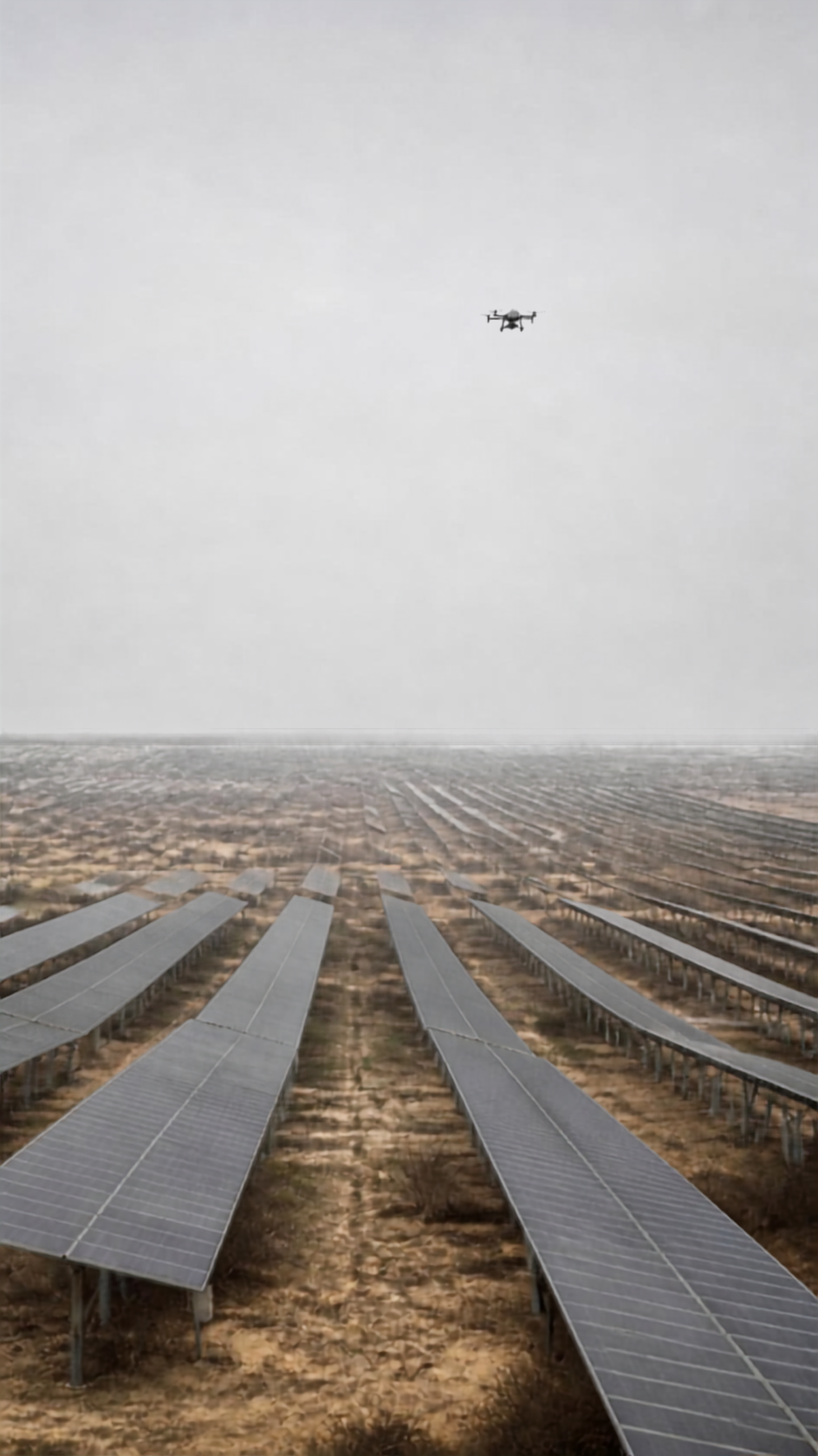
NHPC is building a 600 MW solar project at Khavda RE Park in Kutch, Gujarat, at a cost of ₹4,295.6 crore including five years of operation and maintenance. It is under construction now, with commercial operation estimated for September 2027. None of the power stays in Gujarat. 500 MW is contracted to Telangana’s Southern and Northern distribution companies and 100 MW to Punjab State Power Corporation, evacuated through a 15 km, 400 kV line to the KPS-III interstate substation.
This is what the central public sector undertaking scheme is actually for. Kutch has the irradiance, the land and almost no local demand. Telangana and Punjab have the demand and neither the land nor the sunlight. The project is a transmission decision as much as a generation one, and the 15 km of 400 kV line is the part that makes the long-distance sale possible.
The technical shape tells you how the economics work. The plant runs a DC to AC ratio of 1.5, meaning roughly 900 MWp of direct current capacity is being installed to deliver 600 MW alternating current at the meter. That is heavy oversizing, and it is what you do when land and modules are cheap and you want a flatter output curve across the day rather than a sharp noon peak. Design energy is 1,766.55 million units at a capacity utilisation factor of 33.59%.
NHPC states the commercial operation date as estimated. Treat September 2027 as the developer’s own projection, not a commitment.
Who should act
Module, tracker and mounting-structure suppliers, on the basis that a 1.5 ratio means the module order is half again the headline capacity. Transmission contractors for the 400 kV evacuation. And long-term operations and maintenance providers, because five years of comprehensive O&M is inside the same contract rather than tendered separately later.
Next step
Read the offtake structure before you price anything. A plant selling to two distant state distribution companies has a different revenue risk and a different payment record from one selling to its host state, and the distribution company’s payment history is the number that should shape your terms.
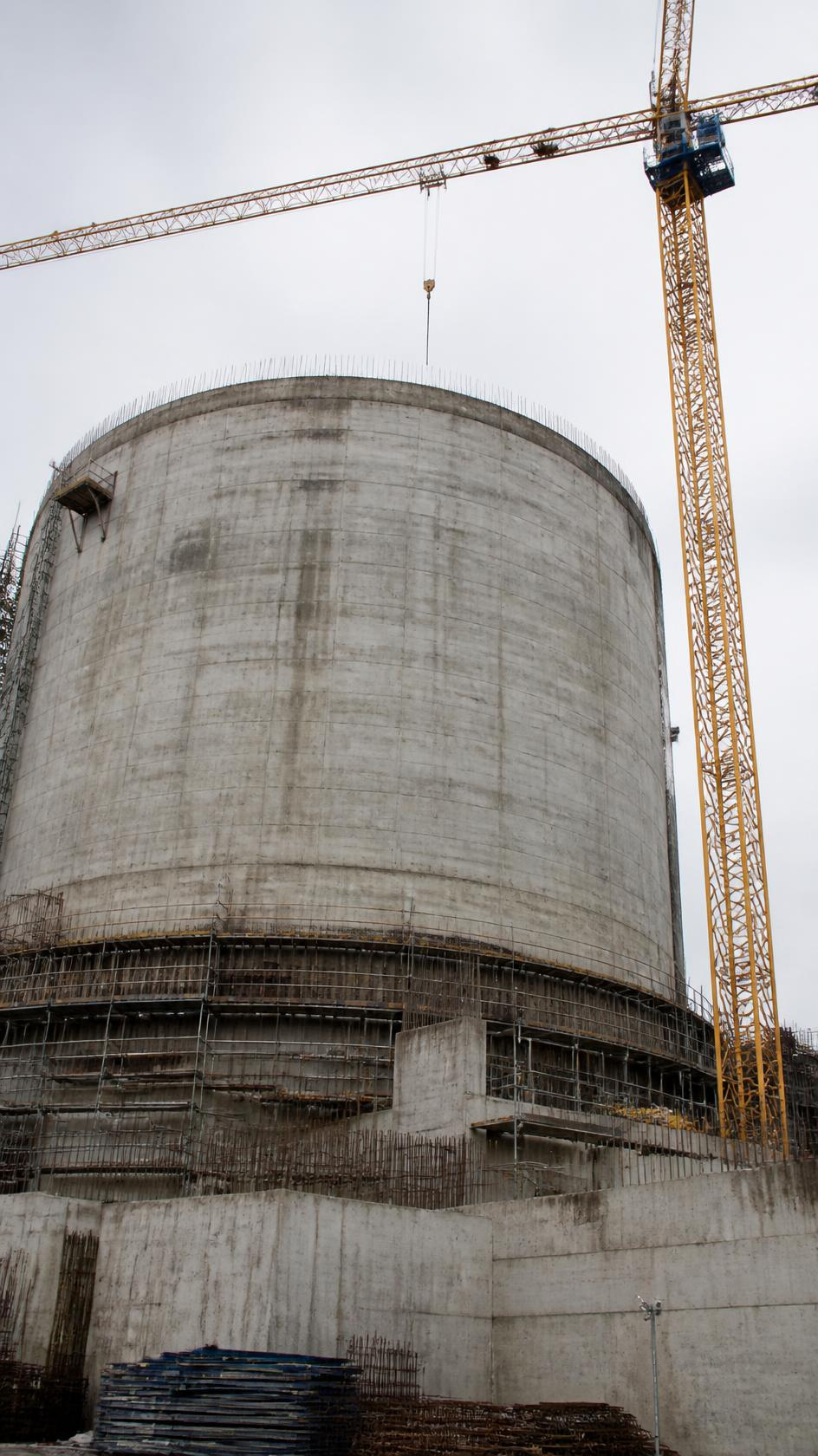
Reactor containment under construction. Illustrative.
What is being bought for Mahi Banswara and Kudankulam right now?
Components, which is the tell. On our count of 28 August, four of the six live energy tenders on the national portal were nuclear, and not one of them was a feasibility study or a concept design. ASHVINI is seeking an engineering and construction prime for the nuclear island at the Mahi Banswara plant in Rajasthan, the largest scope on the board. NPCIL is separately buying three packages for Kudankulam Units 5 and 6: the main electrical works, a combined package for common services, ventilation and mechanical plant, and one for material handling equipment.
Component-level procurement means both projects are past financial close and into build. This is not a pipeline, it is a construction programme. The qualification barrier around nuclear work means the realistic bidder list is short, stable and knowable, which is unusual: most Indian infrastructure categories carry a long tail of possible bidders. This one does not.
The unbundling at Kudankulam is worth noting on its own. Three separate packages for one pair of units means the operator is managing interfaces itself rather than handing a single prime the whole scope, which opens the work to specialists who could never carry a turnkey nuclear contract.
Who should act
Heavy mechanical, electrical and material-handling suppliers with nuclear qualification, and specialists who can win one unbundled package without carrying the whole station. For everyone else the realistic route is as a named subcontractor to a qualified prime, and those conversations happen before the tender closes, not after.
Next step
The three Kudankulam packages close on 15, 22 and 29 September, and Mahi Banswara has until 26 October. Start with the nearest, because nuclear prequalification cannot be assembled in three weeks.
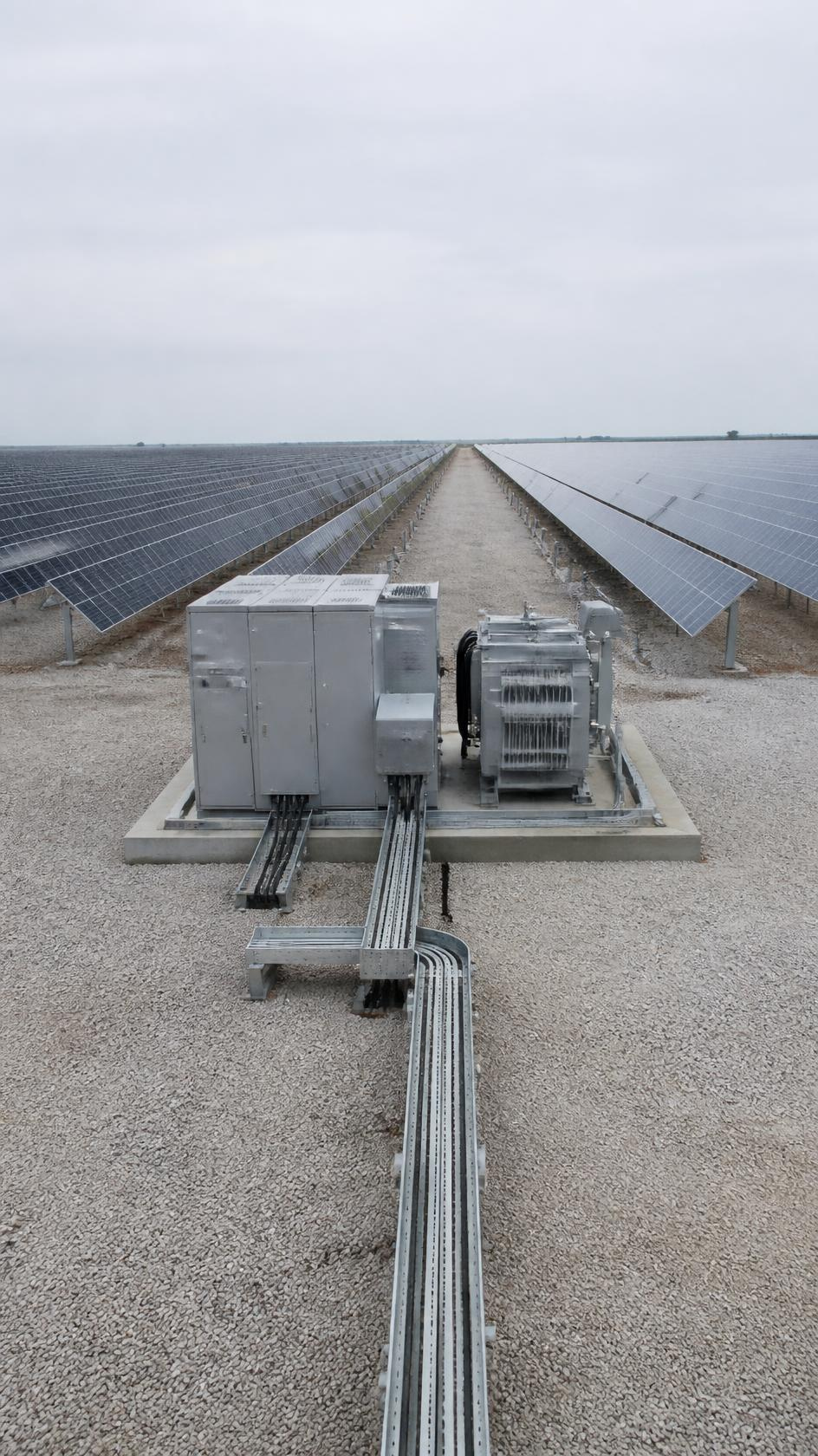
Inverter station within a solar plant. Illustrative.
What solar work is GAIL buying, and why are the two packages nothing alike?
GAIL has two solar tenders open and they sit at opposite ends of an asset’s life. One covers building a 600 MW solar plant and then running it, the largest renewable scope open on the portal and the nearest deadline. The other adds 1.2 MWp of capacity to the 5 MW plant it already operates at Ramgarh.
The Ramgarh job is quietly the more interesting. India’s earliest utility-scale solar is now old enough to uprate. The site, the grid connection, the land and the permits already exist, so what is being bought is higher-efficiency modules, inverter replacement and structural work on a live asset. The buyer is an operations team working to an availability constraint, not a development team working to a tariff.
That is a different sale with a different cycle. Greenfield solar is won on levelised cost and financing. Uprating is won on how little generation you lose while you do it, and on whether you can work around an operating plant.
Who should act
Solar EPC contractors for the 600 MW package, and today is the last day to decide: it closes tomorrow afternoon. Module and inverter suppliers should read Ramgarh as a signal rather than an opportunity: it is small, but the fleet behind it is not.
Next step
On the central procurement portal set Tender Type to Open Tender and Product Category to Power/Energy Projects/Products. It is a short list and takes a minute to read in full. For anything beyond it, go to the generators’ own portals, because this board is not the market.
Dates to mark
The 600 MW package closes tomorrow, 1 September. The Ramgarh upgrade closes 14 September.
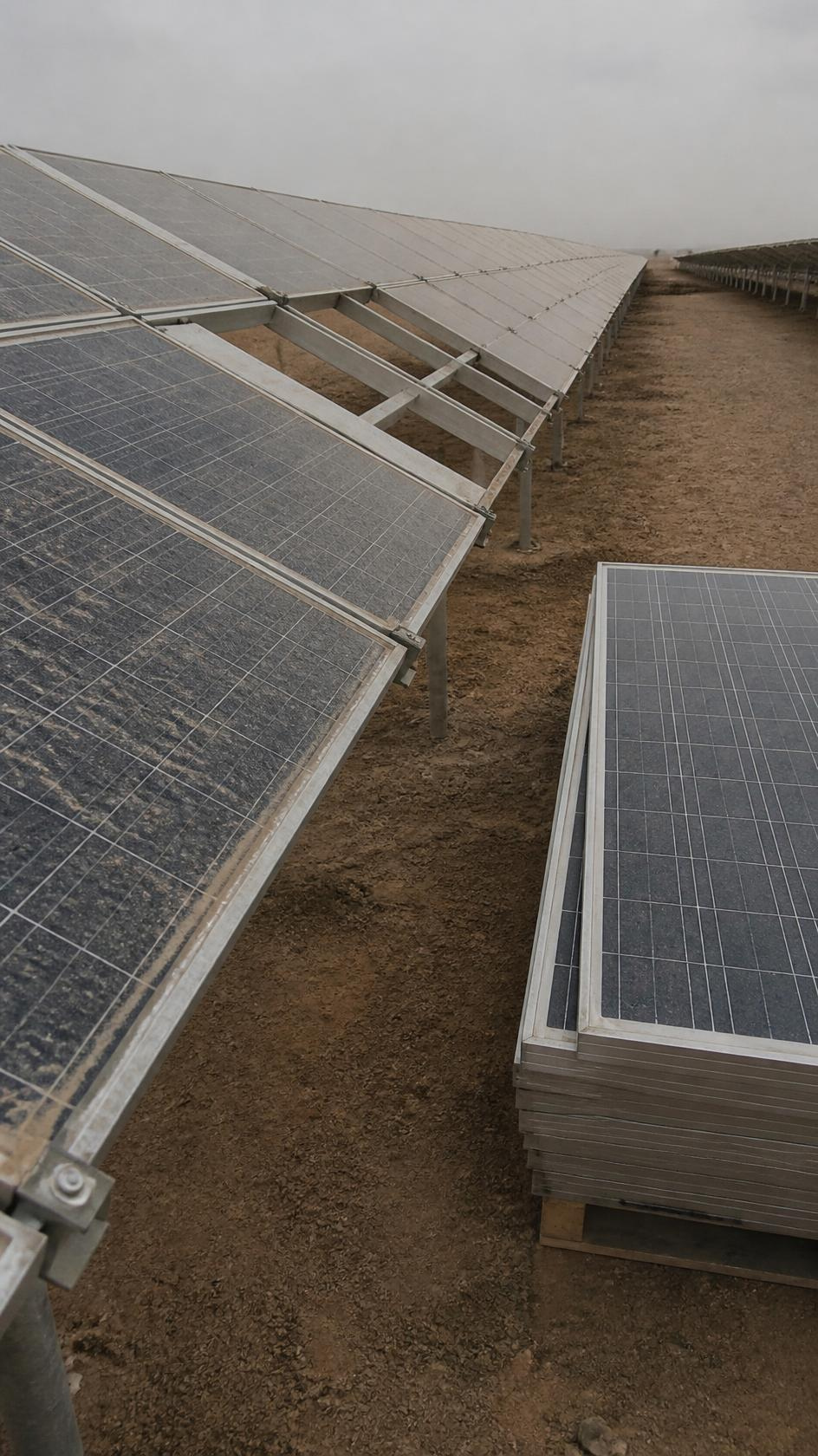
Module replacement on an operating solar plant. Illustrative.
As stated in the tender: 1.2 MWp added to 5 MW already installed, roughly a 24% capacity addition with no new land.
How much more can you get from a solar plant without buying more land?
About a quarter. GAIL is adding 1.2 MWp of direct current capacity to an existing 5 MW plant at Ramgarh, on the same site, the same connection and the same permits.
Land and grid connection are the two things that take longest and cost most in Indian solar. An uprate buys capacity that skips both. For an operator with a fleet of plants commissioned before 2018, the cheapest megawatts available are the ones already sitting on land they own.
Why this matters
If a quarter more output is available on existing sites, the economics of a fleet change. The comparison is no longer new build against new build, it is uprate against greenfield, and uprate wins on time to power almost every time.
Next step
If you operate Indian solar commissioned before 2018, run the uprate case on your own fleet before your next greenfield decision. If you supply modules or inverters, that fleet is your addressable market and it is not being sold to.
Source and reference
Central Public Procurement Portal. Figures as stated in the tender’s own title. MWp direct current and MW alternating current are not the same unit; the ratio is indicative, not a performance calculation.etenders.gov.in · advanced tender search
Where does India’s grid-scale energy work actually get tendered?
Not centrally. NTPC’s green arm has been letting wind and solar packages at Bellary, Davangere, Anantapur and Dhule. None of them appeared on the national portal. They sit on NTPC’s own listing, because NTPC runs its own procurement system. Separately, SECI blocks automated access to its listing altogether.
We tested whether the work was simply filed under a different heading. It is not. The electrical category is street lighting for the Municipal Corporation of Delhi, air conditioning for the Reserve Bank and terminal electricals for the Airports Authority. Solar, wind and battery barely register in it, and electric vehicle charging and green hydrogen do not appear at all.
The buyers that are present on the central portal are a different population entirely: an explorer, a biofuels producer, a regional utility, a river board. Useful if you sell upstream. Useless if you sell generation.
Why this matters
There is no single national board for Indian energy procurement, and building a market view on the assumption that there is one is the expensive mistake. Coverage has to be assembled buyer by buyer.
Next step
Ask any procurement data supplier which portals they cover for energy, by name. If the central portal is the only answer, the coverage is thin whatever the headline record count says. Then build your own list of the ten largest buyers in your segment and check each weekly.
The Signal lands every Monday morning with five reads for Energy and Utilities, each one traced to the record it came from.
One email a week. Change industry or unsubscribe from any issue.
We use your details to send The Signal and, where relevant, to tell you about TNF India events. Privacy notice
All tender references in this edition were re-verified against the live listings on the morning of 31 August 2026. Figures on live listings change; confirm dates on the portal before acting. Images are illustrative and do not depict the projects or people described. Corrections and grievances